

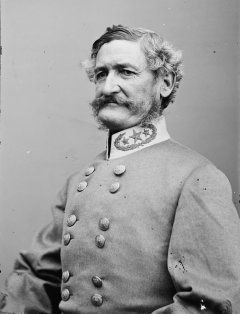
John B Magruder
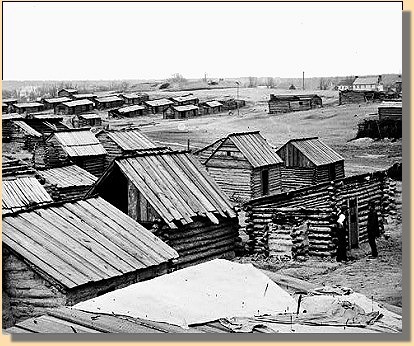
As McClellan began the Virginia Peninsula Campaign by pushing his large army (about 120,000) from Fort Monroe, his troops soon encountered a small Confederate army (no more than 15,000) near Yorktown. Commanded by Major General John B. Magruder, they were dug in across the peninsula of the York and James Rivers in a position called the Warwick Line (behind the Warwick River).
Magruder – a colorful personality with a knack for the theatrical – marched his meager forces back and forth over the same ground accompanied by much noise and loud orders. This appearance of a much larger force than actually existed fooled McClellan, causing him to order the construction of siege fortifications. The time required to bring up the heavy guns allowed Johnston to gather forces from varied areas of eastern Virginia (swelling the Rebel force to 50,000) – thus taking away the massive advantages that would have been enjoyed by the Union had more aggressive means been employed.
The Warwick Line even used some of the trenches originally dug by Cornwallis in 1781, although Magruder could adequately man none of the defensive line completely.
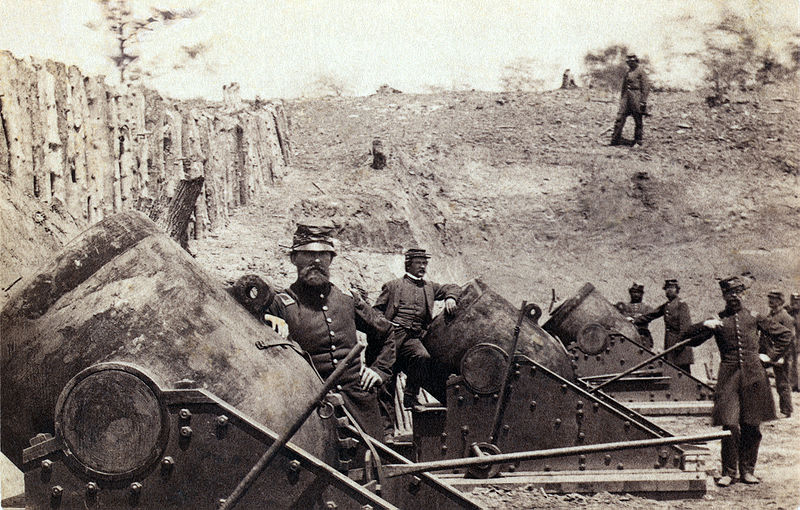
Eventually these lines would be probed on April 16 in an engagement called the Battle of Dam Number 1 near present day Newport News. The nature of the conflict convinced McClellan he was facing a force of 100,000. When the line was next attacked in early May, the Confederates were found to have fallen back toward Richmond. The rear guard was engaged on May 5th in the first major conflict of the campaign at Williamsburg.
Some bonus material on John Magruder …
I have written most of a book on the life of Abner Doubleday and hope to someday complete it. Doubleday wrote several hundred pages of notes about the old army of the USA before the Civil War – notes I believe he hoped to publish in a book, though he never did. Much of this information talks about the era of the Mexican War, and of course it includes a great deal of communication about men – then early in their military careers – who would later become famous in the War between the states. Here is an excerpt from my chapter on this old army material, picking up with Doubleday’s orders to head to Mexico:
Joining other companies at Fort Columbus on Governor’s Island in New York Harbor, Doubleday set sail for Texas at the end of August of 1845. The journey aboard the U.S. Store Ship Lexington was long and tedious, with nearly a month being consumed in transit. Doubleday seemed to most remember the voyage for the entertaining presence of John B. Magruder, (who as a future Confederate general would be remembered for the theatrics employed in fooling McClellan in the Peninsula Campaign by marching the same troops repeatedly past the same location, and for a Confederate victory at Galveston). Magruder, who was a fine singer, organized a glee club, and in many other ways proved to be the master of entertainment with varied anecdotes, etc. He was known as “Prince John” amongst his friends, and stories abounded in Doubleday’s accounts of the antics of Magruder in several old army posts.
And another excerpt from a bit later:
Doubleday was much amused by the colorful nature of the population of Corpus Christi at this time, describing it as a charming place for people who dislike the restraints of civilization. Prior to the arrival of the army, Doubleday said that the only law recognized was that of the Bowie knife and pistol. Commenting upon how many people there were in Texas who were criminals—having fled there to escape justice from altercations in the United States—questions concerning a man’s antecedents were thought to be in very bad taste. Doubleday recorded the comment of another officer who pondered, “It’s odd—but every gentleman I have been introduced to since coming here has distinguished himself by committing murder.”21
Magruder again found his way into Doubleday’s narrative. The enterprising officer so fond of amusement arranged for a theatrical company to perform. Doubleday seemed to enjoy their performance, which was well patronized. A humorous incident involved the account of Magruder getting a bit roughed up from apparently venturing too close to the dressing rooms of some of the performers!









 Randy Buchman
 Enfilading Lines