The 60th New York Ancestor at Antietam

In 2007, one of the very first tours I ever did involved an older couple who arrived with a family heirloom paper mentioning the history of a grandfather wounded at the Battle of Antietam. We tour guides REALLY like this sort of thing! It is very cool! But, it is easier to do if we have some advanced notice … especially if the unit involved is a bit more on the fringe of things.

The couple’s grandfather (W. Leahy) was listed as in the 60th New York. A quick look at the Order of Battle I always carry with me in my tour notebook told me that this was part of Greene’s Division of the 12thCorps. When we think of Greene’s Division at Antietam, we think of the final successful Union push across the Cornfield to the valley just below the Visitor’s Center … and as well, a later push into the West Woods behind the Dunker Church.

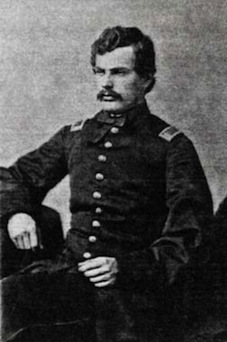
60th NY Officers - early in the War in Virginia

However, the 60th NY was a part of Goodrich’s Brigade of Greene’s Division, and as such was actually detached from the Division to assist with efforts more to the northwest in conjunction with the 1st Corps attacks. Here is how it is described on one of the iron tablets at the Park:

Goodrich’s Brigade was detached from its Division, when east of Joseph Poffenberger’s, and ordered to the assistance of Doubleday’s Division. It crossed the Hagerstown Pike near Miller’s, formed in the north part of the West Woods and on the open ground east of them and, supported by Patrick’s Brigade, advanced in the direction of the Dunkard Church. When nearing this point it was stubbornly resisted by the enemy posted in the woods immediately southwest of this, and Colonel Goodrich was mortally wounded. The loss in the Brigade was heavy and it was obliged to retire.

The scant information page about this ancestor also revealed that he was later wounded twice at Lookout Mountain, Tennessee. In the coming days, I was able to spend some research time in securing and looking through a copy of a history of the 60th NY; and sure enough, the grandfather was listed in this account of the fighting at Lookout Mountain:

“Rushing through and over these works, the 60th, in conjunction with the 102nd, 137th, and 149th N.Y.S. Vols., swept on, carrying the 2nd and 3rd line of the rebel works, and leaving in their rear two brass field-pieces, from which they had driven the enemy, and, at which place, Major Thomas was badly wounded in the face and neck. Sergeant Leahy, who bore the colors, being twice hit, fell to the ground, and, on the Adjutant’s shouting, “The colors are down! Who will take them?” Sergeant Buck sprang forward, seized the flag, and, with a coolness of bravery undisturbed by the whiz of bullets, which came thick and fast, steadily bore it in advance of the regiment, and planted it, at last, on that point of the mountain where the rebels had boasted that the Stars and Stripes should never wave again.”   [1]

Guests often make some sort of remark like, “How in the world do you remember all those names and numbers and dates?”  Well, all the Antietam Guides are walking encyclopedias of information – much of it remote and obscure. But for even the best, it is but a fraction of what can be known.

If you had an ancestor at Antietam, we LOVE to hear about and research it and show you exactly where they walked. But it is really helpful to know it in advance, if possible!  🙂

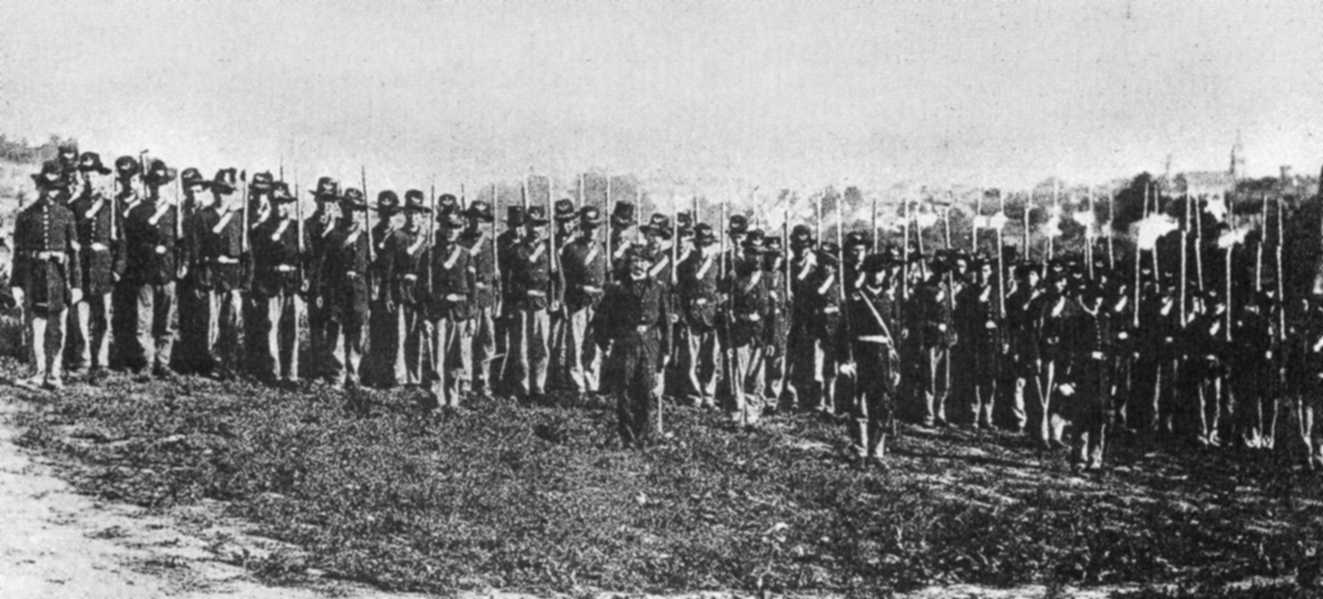
60th NY veterans dedicating monument at Culp's Hill in Gettysburg - 1888

[1]  Eddy, Richard. History of the Sixtieth regiment, New York state volunteers, from the commencement of its organization in July, 1861, to its public reception at Ogdensburg as a veteran command. Philadelphia: Crissy & Markley, printers, 1864.

150 Years Ago In Williamsport, MD

Though I do tours at Antietam – situated just outside Sharpsburg, MD – I actually live about 5-6 miles from the Battlefield, closer to the town of Williamsport. I’m literally on the edge of the two zip codes. The property on the other side of the fence of my south border is in the Sharpsburg postal region, while I am Williamsport.

My children have gone to Williamsport High School, and I have been the Head Cross Country coach there for the past 12 years. Everyone connects me with Williamsport, and I’m mighty proud of it. I’ve lived in this area for 18 years, being originally from New Jersey. Though there are more than a few highly educated and professional people in the Williamsport area, it remains a working class town and region … especially by New Jersey standards.

150 years ago this winter, Williamsport was the host of another bunch of Yankees – the 13th Massachusetts. The bulk of these soldiers were from Boston and its environs, and they were an educated and cultured bunch – much evidenced by the content of their letters home.

I really have to laugh at some of the remarks they made as descriptive of Williamsport and its people in 1862. Here are some excerpts:

From the writings of John B. Noyes (letter from 1862)

John B Noyes of the 13th Mass

I have never given you a description of the town of Williamsport which contains within it a goodly number of secessionists. 

The sheriff is a very intelligent gentleman, but most of the “crowd” are tradesmen & farmers of very moderate attainment, their chief occupation now being to sit all day in the bar room, taking a glass now & then, and to walk by way of  variety 3 times a day to the dining room for the purpose of supporting their constitutions. 

From the writings of Charles E. Davis (reflections from 1907)

Our regiment reached Williamsport, Md., early in October. The town was situated on the north bank of the Potomac river and prior to the war had acquired an unenviable reputation by reason of its being the winter rendezvous of canal boatmen who made the place lively with drinking and gambling, to the very great annoyance of the good people who resided there and whose feelings were often outraged by disturbances that grew out of cards and alcohol – a combination that rarely brings pleasure or happiness to a peaceful community.

Charles E Davis of the 13th Mass

There were some pretty girls in Williamsport and we had the pleasure of meeting and becoming acquainted with some very charming people during the five months we were stationed there…

But apparently not all the girls of Williamsport were Southern sweethearts, as Davis goes on to speak a great deal about one in particular – a Marie Antoinette Lydia Corbay – who made her first acquaintance to the 13th by threatening them on the streets with a raised fist, saying she could lick any of them … and apparently they believed her!

The next time we had the pleasure of meeting her was while stationed in the bar-room of the Eagle Hotel. It was during the morning, after the early drinkers had subdued their thirst, and an interval of quiet had occurred before the eleven o’clockers appeared, that she made her appearance. Our interest in “southern ladies” was renewed and we carefully inspected her appearance. Marie Antoinette Lydia Corbay was not a beauty and took no pains to supply the defect … She resembled that tribe of Amazons we read about as inhabiting the forests and banks of the mighty river of that name … It is difficult for a person brought up in New England, enduring the rigor of a fickle climate, to appreciate so artless a nature.

Two years or more after our departure from Williamsport we learned that Marie Antoinette Lydia Corbay, being impressed with the idea that divided skirts were more suitable for one of her disposition, had adopted the habit later worn by Dr. Mary Walker, commonly known as trousers, and proved conclusively that she was a freak.

Well, the more things change the more they stay the same! About Williamsporters? No! About Bostonians and their condescension!

Nah!  I’m just kidding (I think). As an Orioles sportswriter, I’m actually only thinking of Red Sox fans!

[This is from a collection of materials at Harvard University, and may be viewed at http://oasis.lib.harvard.edu/oasis/deliver/~hou00214]

Another good source for the 13th Mass is the web page http://www.13thmass.org/index.html

150 Years Ago Today: The Battle of Roanoke Island

Folks who are only familiar with the stories of General Ambrose Burnside at Antietam and Fredericksburg often wonder why he was thought of highly enough by President Lincoln to have had the Army of the Potomac offered to him on several occasions. It is because he had other successes earlier in the War – not a commodity for Union leaders – and one of those happened 150 years ago today on the coast of North Carolina. This battle was known as “Roanoke Island,” or sometimes also as “Fort Huger.”

Roanoke Island was an important position for the Federals to hold in order to effectuate a blockade of much of the northern coast of North Carolina. Burnside secured permission from General McClellan in late 1861 to develop a coastal division for this sort of operation.

The Burnside Expedition comprised a total of 12,000 men, including 16 gunboats, while Confederate General Henry Wise had but about 3,000 men and 32 heavy guns on the island.

On February 7th, Burnside landed 7,500 men on the southwest corner of Roanoke. The Confederates held the northern part of the island, believed to be well-protected from any attack from the south due to the existence of but a single well-defended road. On either side of this path were swamps, thought to be sufficiently impenetrable by infantry. But on the 8th – 150 years ago today – the Federals waded through waist deep muck, flanking the Confederate defenders, and ultimately surrounding them on the northern portion of the island. Captured were 2,500 Confederates. Total losses were: Union – 37 dead, 214 wounded, 13 missing, for a total of 264; Confederates – 23 dead, 58 wounded, 62 missing, along with the aforementioned surrender of 2,500.  (Some escaped, including General Wise.)

The capture of Roanoke Island granted Union control to most of the North Carolina coast.  Over the next several months, the Confederates lost Elizabeth City (2/10), New Berne (3/14), South Mills (4/19), and Fort Macon (captured on 4/26 after a siege). Wilmington, on the Cape Fear River, was therefore the only port in North Carolina still in Confederate possession.

One political fallout from the Battle of Roanoke Island was a scandal in Richmond that forced Jefferson Davis to remove Secretary of War Judah Benjamin; although, before long, he was serving as Secretary of State.

Ambrose Burnside possessed a high “likability factor.”  This was enhanced on this expedition when he chose to identify with the men on the small ships (who were suffering much from seasickness) by leaving a larger vessel to be with them.

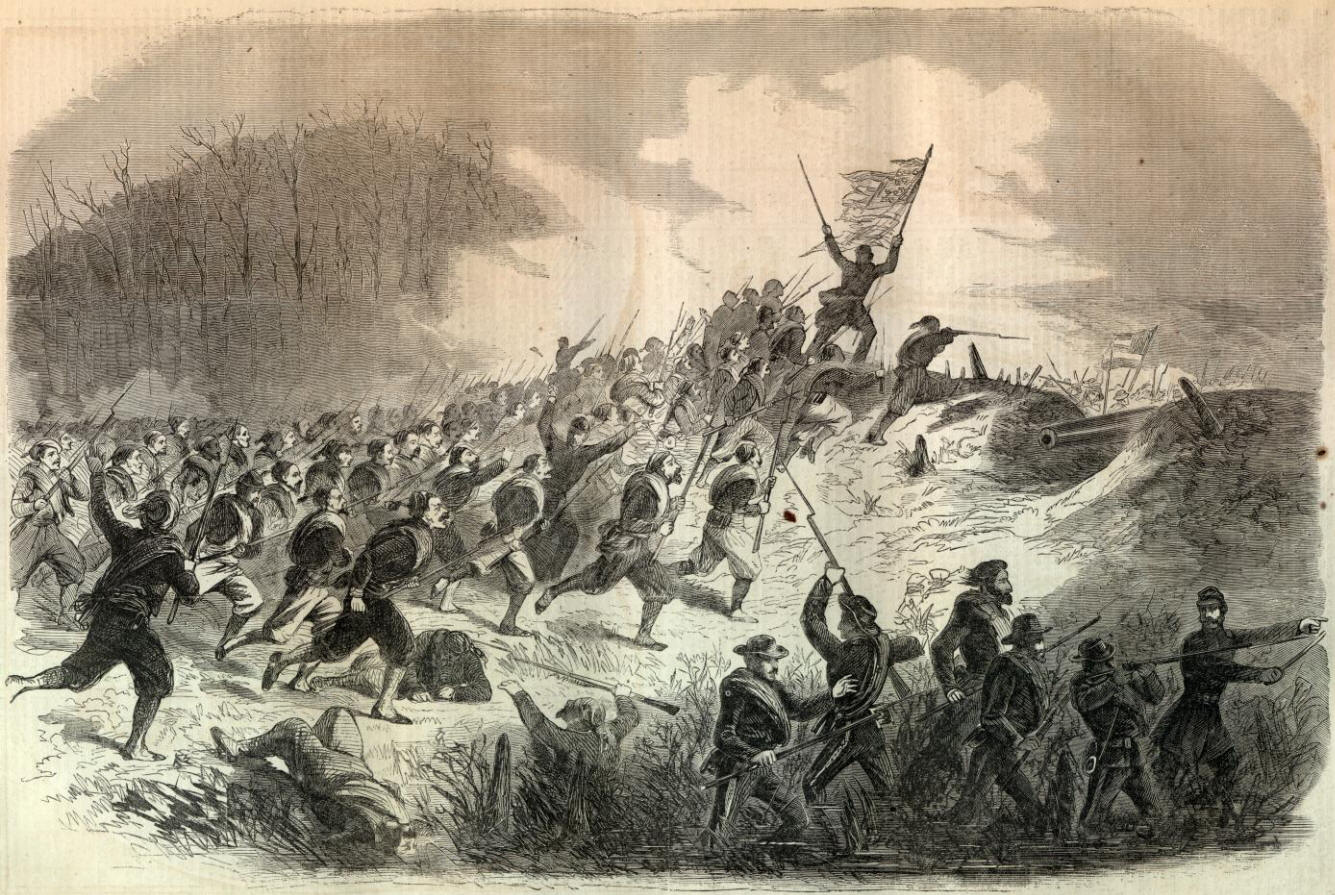
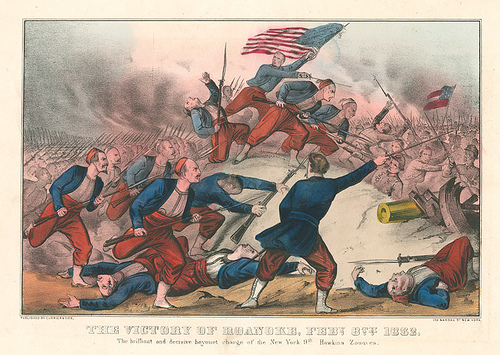
Both of the attached sketches depict the attack of the 9th New York – Hawkins Zouaves – who will of course later in 1862 gain notoriety at Antietam with their aggressive advance late in the afternoon upon the Confederate right … placing them in position to suffer severe losses to A.P. Hill’s arrival from Harpers Ferry.

Western Men in an Eastern Army

Though soldiers from Western states like Minnesota, Wisconsin, and Indiana were not rare in the Army of the Potomac at Antietam, the vast majority were from Eastern states, particularly Pennsylvania and New York.

Probably the most famous of brigades of Western men was the Iron Brigade of General John Gibbon – who opened the fight at Sharpsburg with their attack through the Miller Farmstead and along the Hagerstown Turnpike into the cornfield at dawn of day. This brigade was comprised of the 2nd, 6th, and 7th Wisconsin, along with the 19th Indiana. They were the 4th Brigade (of 4) within Doubleday’s 1st Division (of 3) within Hooker’s 1st Army Corps.

7th Wisconsin, Company K

Today, we don’t think of these states as the West. But in the mid 1800s, these were often men from the frontier – probably some pretty tough guys. They fought exceedingly well!

A story I like to frequently tell while parked along the west side of the cornfield is of the style of fighting of Western men as compared to Eastern men; and I do this by referencing an account by Abner Doubleday in his journal.

Though Gibbon’s Iron Brigade of Western men was fighting under Doubleday at Antietam on September 17th, just three days earlier on South Mountain, Doubleday was a brigadier general on the same level as Gibbon (Doubleday being promoted to divisional command during the action at South Mountain). A part of Doubleday’s brigade at South Mountain was the 7th Indiana.

Doubleday was clearly impressed with the tenacious nature of their fight, as he wrote the following anecdote in his journal:

The men of the 7th Indiana fought differently from the Eastern men.  Instead of loading and firing in silence, they constantly encouraged each other by calling out, “Give it to them, Issac” . . . “Stand up to them, Bill” . . . “ Don’t give way, John”, etc.

When it became evident that our shots were being wasted on the rocks while the Rebels were crouched down in safety saving their ammunition, orders were given to stop firing. One Western man who was fighting with great fury, with his hat off and long hair falling over his neck, could not be induced to stop for some time.  At last he called out angrily, “Who says stop firing?” “Gen. Doubleday says so, as says the staff officers.”  “Then let him make those big boys over there stop shooting at me . . . they began it!”

Doubleday’s after action report on South Mountain further describes some of the fighting at this juncture of the battle:

Here General Hatch was wounded and turned over the command to me, and as during the action Colonel Wainwright, Seventy-sixth New York Volunteers, was also wounded, the command of my brigade subsequently devolved upon Lieutenant-Colonel Hermann, Fifty-sixth Pennsylvania Volunteers. Phelps’ brigade being few in number, and having suffered severely, I relieved them just at dusk with my brigade, reduced by former engagements to about 1,000 men, who took position beyond the fence referred to, the enemy being in heavy force some 30 or 40 paces in our front. They pressed heavily upon us, attempting to charge at the least cessation of our fire. At last I ordered the troops to cease firing, lie down behind the fence, and allowed the enemy to charge to within about 15 paces, apparently under the impression that we had given way. Then, at the word, my men sprang to their feet and poured in a deadly volley, from which the enemy fled in disorder, leaving their dead within 30 feet of our line.

Doubleday really enjoyed leading men from these Western states, and he had a profound respect for their fortitude in battle.


150 Years Ago Today: Special War Order No. 1

The Winter of 1861-1862

Abraham Lincoln was not perfect. But the more I read about him, the more I am amazed at his talents and judgments. The tasks before him were often completely inscrutable – the ultimate presidential conundrum weighing varied and equally unpopular and controversial choices.

In my previous post in this sesquicentennial series (January 13th), I wrote of his choice of Stanton – such a bold and unexpected move, given their polarities of personality, affiliations and backgrounds. And of course, a major challenge for Lincoln was how to handle and deal with

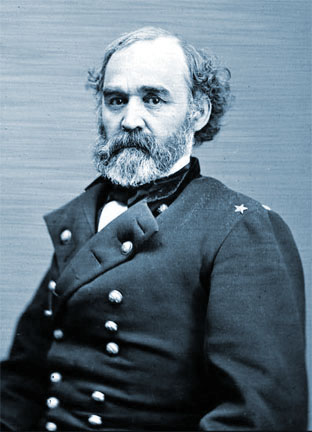
Montgomery Meigs

General George B. McClellan – who was a man who brought both significant assets and major liabilities to the table. It is my view that Lincoln gave McClellan every opportunity to succeed (even within some limiting parameters), and that the President tolerated the General’s eccentricities well beyond a reasonable level of forbearance.

In January of 1862, the Confederate force was camped just outside Washington at Manassas Junction, Virginia, while the Army of the Potomac was organizing and training – though sitting, under a lead general suffering with typhoid. Lincoln is oft quoted as saying on 1/10/62 to Quartermaster General Montgomery Meigs, “What Shall I do? The people are impatient, Chase has no money and he tells me he can raise no more, and the General of the Army has typhoid fever. The bottom is out of the tub. What shall I do?”

Meigs’ answer was to consult with some of the other major generals, which Lincoln did in coming days with Irvin McDowell and William Franklin. Within three days of this initial set of meetings, McClellan had rallied enough to attend a gathering on the 13th. He assured all that he had a plan, though was reticent to reveal its detail. Even as this heartened Lincoln, after several more weeks of uncertainty and minimal appearance of action, the President employed his position as Commander-In-Chief to begin to write some war orders. These were, of course, with a view toward goading some action.

General War Order No. 1 – issued on 1/27/62 – called for a simultaneous movement of all Union land and naval forces on a targeted date of 2/22.

Special War Order No. 1– issued 150 years ago today on 2/1/62 – called for a specific action of the Army of the Potomac to move directly to the southwest against the enemy at Manassas Junction.

George B. McClellan

These orders came in the midst of McClellan’s activity with his own very different plan to float the army down the Chesapeake and land 50 miles east of Richmond. There, a major flanking assault on the Confederate Capital would draw away the threatening Rebel forces from outside Washington, and a successful operation put an end to the Rebellion.

Lincoln clearly preferred the frontal assault, and on February 3rd wrote to McClellan in summary of the situation, “You and I have distinct, and different plans for a movement of the Army of the Potomac—yours to be down the Chesapeake, up the Rappahannock to Urbana, and across land to the terminus of the Railroad on the York River—mine to move directly to a point on the Railroad southwest of Manassas.”

Lincoln then posed a series of questions to the General – about the expenditure of time and money, the length and quality of lines of supply for each army from their base, and the expectations for success. Ultimately, while retaining a dubious assessment regarding McClellan’s plan, Lincoln would yield to the military professional, resulting eventually in the Peninsula Campaign.

Doubleday in Florida

I am in South Florida this week, and it is amazing to believe that this entire area was essentially a total wilderness 150 years ago on the eve of the Civil War.

Abner Doubleday is my most singularly studied of Civil War personalities, as I continue to threaten to someday finish a book on his life. Someday!

Doubleday’s war-related story begins of course with the first conflict of the War, as he sighted and fired the first shot from Fort Sumter in response to the Confederate attack upon that installation in April of 1861.

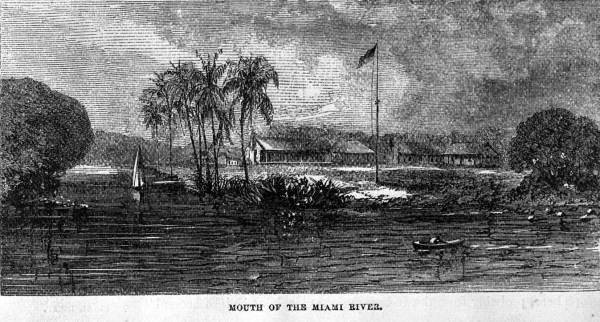
Old Fort Dallas - Certainly later than what Doubleday saw

But just prior to being stationed in Charleston in 1859 at Fort Moultrie (as an assignment in his career service in the Regular Army), Doubleday was posted in Florida at Fort Dallas – in the area of modern-day Miami.                 .

He served there at the end of a third Indian “war” – a series of conflicts to essentially find and force native populations to Indian lands in Arkansas and Oklahoma. The Third Seminole War, also known as the Billy Bowlegs War, commenced in 1855 when a United States surveying party clashed with the Seminoles of Chief Billy Bowlegs, destroying crops and inciting retribution. The response of the United States government was to hunt down the remaining Indians, and have them forcibly removed to western lands. It was to such an assignment that Abner Doubleday was dispatched with his company.  Though Bowlegs would eventually surrender with a mere contingent of 40 warriors in May of 1858, agreeing to leave for Oklahoma with about 165 of his tribe, the operation was largely very unsuccessful. Doubleday wrote much of the frustration and difficulty of actually catching any of the natives.

Billy Bowlegs

I fear if accurate statistics were available they would show that the cost of catching or killing a Florida Indian runs in the neighborhood of one hundred thousand dollars a head. . . . Those soldiers were in the main, foreign immigrants, wholly ignorant of woodcraft. They had no chance whatever, weighted down with accoutrements, and strange to all about them, of catching the naked light-footed savages who knew every path, and root, and covert of the swamps.

Doubleday, with his wife Mary, arrived at Fort Dallas on the west side of the Key Biscayne Bay.  The fort was constructed in 1836 on the plantation of William English as a military post for the government efforts in dealing with the Seminoles. The army artillerist in Doubleday chaffed at the idea of such a simple gathering of buildings with no fortifications being termed a “fort,” and commented that it seemed to be the customary pattern to apply this title to any spot in Florida or Texas occupied by a garrison. Doubleday related a humorous incident of their first night in the “fort.”

Upon our first night at Fort Dallas, Lieutenant F___ slept in a wall tent. Towards midnight, a large he-goat walked in and stood motionless beside the bed. F___ waked up and fancied he heard someone breathing. Reaching out in the dark, his hand fell on a long beard. He drew it quickly back, but again extended it. This time he felt a pair of horns. He drew it back still more quickly, and began to wonder if his visitor was the devil—horns, beard and all. Just then, the goat backed out and bleated aloud. It was not a musical cry, but it relieved F___’s mind not a little.

The primary activity of the battalion was the formation of scouting parties to search for Indians, of whom there were many evidences, but few actual sightings. A paradigm of their operations called for one company to guard the post while the other was away on an expedition. Of the typical expedition, Doubleday wrote: After walking all day through clinging tangle, we slept soundly at night with nothing softer than a blanket and a few palmetto leaves, and heedless alike of snakes or alligators, both of which abounded. They were indeed as plenty as Indians were scarce.

Their post was a mere ten miles from the edge of the Everglades. Doubleday did lead a particular scouting party into the Everglades that discovered the very recent abode of Indians, who had obviously seen the army coming and evacuated without detection. Describing the sights and sounds of camping in the midst of this large swamp, Doubleday said: Bears and alligators abounded in this vast swamp. Every night when we lay down, the alligators came grunting around our boats. . . . There were many things indeed to murder sleep. The swamp was full of night birds whose raucous cries were shriller, and more ear-piercing than the noise of the alligators. Above all, we caught sometimes the long blood-curdling wail of a panther. We were glad to get away, though we had not captured an Indian.

Doubleday’s engineering skills were put to the test, as upon arrival in Florida he was ordered to construct a roadway. Along with Captain John Brannan (who would later be a major general in the Civil War) he supervised the construction of a roadway to the north—which would eventually serve as the route for a future federal highway between Miami and Fort Lauderdale. Other Indian scouting expeditions took Doubleday’s command as far to the northwest as Lake Okeechobee, and as far south as the islands in the Florida Keys.

Mansfield Picture Correction

It is interesting already in this short time that I’ve had this blog/page in operation as to how many people have seen it and who they are by their varied comments and emails.

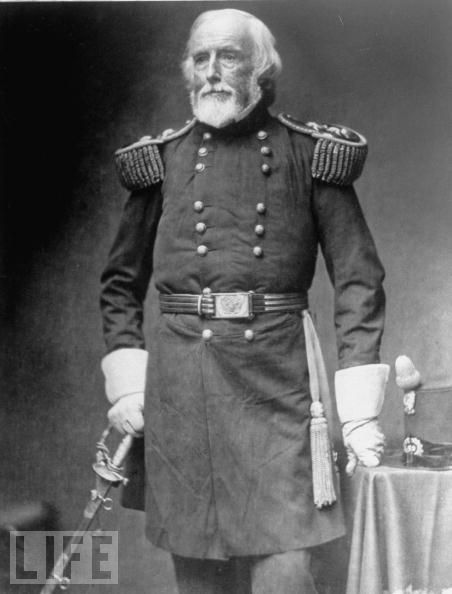
The several posts about General Mansfield have revealed that there are quite a number of folks out there with a special interest in this man and his life.

One individual in particular – who possesses an interesting collection of varied items from the General’s life – has written to say that the picture I used in the Mansfield posts is not actually the General. Apparently it is exceedingly common that this errant picture is placed with Mansfield in many places. The writer pointed out that, if one looks at both the picture on the $500-bill and this apocryphal version, there are as many differences as similarities. Indeed!  Actually, the appropriate picture is the one on the currency.

NOT Mansfield

The correct General Mansfield

Additionally, the writer has seen the Mansfield collection in Connecticut and reports that there are literally boxes of correspondence to and from him. Cool! There is nothing more salubrious than a day in the bowels of a library digging through old manuscripts! It just doesn’t get any better than that!

John Mead Gould Report on the Mortal Wounding of General Mansfield

Another Old Document from the Files

While digging through the Joseph Mansfield files at Antietam Battlefield, I have come across another copy of a document of similar vintage to that written about in this blog on 1/6/12. This handwritten report, like the former letter of Dr. Flood, is apparently from the Mansfield Papers at the Middlesex County Historical Society in Middletown, MD.

The document is written by John Mead Gould – Lieutenant and Acting Adjutant of the 10th Maine Regiment – and is dated as December 2, 1862. The opening lines reveal that the purpose of the report was to definitively assert the details of events occurring upon the mortal wounding of General Mansfield in the vicinity of the East Woods.

Gould begins by saying, “It is now more than two months since the battle of Antietam, yet I have never seen in print a single item relating to the death of our Genl Mansfield. The circumstances are so peculiar and witnessed by so few that I deem it important to make a brief statement of the facts coming under my observation.”

Brief Biography of John Mead Gould

John Mead Gould - 1865, Credit: http://www.johnmeadgould.com

Gould was among the first of the country to answer the call of Abraham Lincoln to suppress the Rebellion, and he joined the 1st Maine Regiment for the term of 90 days (all that was anticipated would be needed to put down the Southern ruffians). The 1st Maine was in Washington during The Battle of 1st Bull Run. They could hear the rumble of artillery, but soon after, with their time of commitment served, they returned home.

John M. Gould was immediately volunteering again, serving in the 10th Maine. The 10th suffered very heavy losses in the Battle of Cedar Mountain, Virginia (5 weeks before Antietam), and Gould was promoted that day to the position from which he writes in this document of interest.

On the morning of September 17th, the 10th Maine was a part of Mansfield’s 12th Corps and was sent into Antietam at a particularly vulnerable part of the battle near the East Woods (as the report will describe). Here, the regiment was hotly engaged and the General mortally wounded – witnessed by Gould.

After Antietam, the regiment was sent to Berlin, Maryland (now Brunswick) along the Potomac to guard a pontoon bridge there. This is located about 15 miles southeast of Antietam Battlefield, and is the location where the bulk of the Army of the Potomac had crossed in movement toward the next large engagement in Fredericksburg.
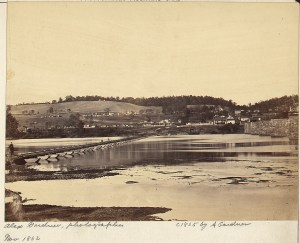
Gardner photo of the pontoon bridge at Berlin, MD

After a time, Gould’s period of commitment expired and he returned to Portland, Maine for 8 months. For a third time he volunteered – on this occasion for the 29th Maine. Gould continued with this regiment until the end of the War. He wrote from the area near Harper’s Ferry that multiple firings of artillery signaled the consummation of the great conflict upon the surrender of Lee’s forces in early April of 1865.

Gould’s Special Interest in Mansfield

John M. Gould was a thorough person by nature (as a banker), and regularly maintained a detailed diary of his war adventures from 1861-1866 (published in recent years). He was therefore also the natural choice to be the historian of the 1st-10th-29th Maine Regiments. For many years after the War, he was active in details of battle reporting and construction of the historical record. And he was never more scrupulous in detail than with the depiction of the events of Mansfield’s demise, contributing many hundreds of documents to the Antietam Battlefield Board.

Historians credit his accounting as the most accurate – detailed in his published 1895 work called “Joseph K. F. Mansfield, Brigadier General Of The U.S. Army: A Narrative Of Events Connected With His Mortal Wounding At Antietam, Sharpsburg, Maryland, September 17, 1862.”  In the beginning of this account, he speaks to the ongoing controversy about the event by saying, “It was bad enough and sad enough that General Mansfield should be mortally wounded once, but to be wounded six, seven or eight times in as many localities is too much of a story to let go unchallenged.”

In this 1895 publication, Gould mentions an accounting of the events that he wrote soon after Antietam — “… a few weeks after the battle I wrote an account and forwarded it to my father, who sent it to the Hon. Benjamin Douglas, a prominent citizen of Middletown, Conn.—Mansfield’s home, Mr. Douglas acknowledged the receipt …”  But it would almost appear that this content was lost even to himself three decades later?

Here then is the transcription of the report written some 33 years earlier than his published accounting. In that I do not have a ready copy of his diaries or the biography of his life, I am not certain that this is a document not generally available. However, I can say that I’ve been unable to find it online anywhere. Perhaps fellow blogger John Banks (http://john-banks.blogspot.com) can trace the original to the Middletown Museum as he did with the previous letter of Dr. Flood.

General Mansfield

Headquarters Fourth Maine Regiment

Berlin Maryland December 2, 1862

It is now more than two months since the battle of Antietam, yet I have never seen in print a single item relating to the death of our Genl Mansfield. The circumstances are so peculiar and witnessed by so few that I deem it important to make a brief statement of the facts coming under my observation. General Mansfield, on ordering forward the 1st  Brigade (Crawfords) of Williams’ Division, which brigade was the first one of our Corps to enter the fight, — personally attended to its deployment; and having got the new regiments, which formed the center, in line, came down to the left and rear, where the Tenth Maine Regiment in attempting to follow his orders, were opposed by an equal force of the Enemy, posted behind trees, logs and a ledge. This small force of the enemy was far in advance of any other of theirs, and the General imagined them to be Union troops into which we had commenced firing by mistake. He immediately ordered “Cease firing” – “They are our own men” – which was enforced with great difficulty by the company officers as the men had become satisfied of the character of the troops in their front. The General now took out his glass, but immediately his horse was shot in the right hind leg, and became unruly. I am [over to page 2] told by an officer who stood near him, that the General was shot a few seconds afterwards, but it was not observed by the men, who thought only the horse was wounded. Passing still in front of our line and nearer to the enemy, he attempted to ride over the rail fence which separated a lane from the ploughed land where most of our Regiment were posted. The horse would not jump it, and the General dismounting led him over. He passed to the rear of the Regimental line, when a gust of wind blew aside his coat, and I discovered that his whole front was covered with blood. I had watched the General for more than five minutes expecting every moment to see him shot, but this was the first knowledge I had of the accident.

I ran to him and asked if he was hurt badly. He said “Yes” – “I shall not live” – “shall not live” – “I am shot” – “by one of our own men.”  He was attempting to mount his horse again, but I informed him that the horse was wounded, and suggested his taking the orderly’s, (the orderly was the only person who was with him during the perilous passage). He turned to do so, but his strength now failed him, and he said “No” – “Take me off” – “I am shot” – “I shall not live” – and he directed the orderly to look after his horse. Sergeant Merrill of Co “F” happened also to discover the Generals condition, and caught him as he was falling, in the [over to page 3] attempt to remount. A third person whom I cannot recollect came up shortly after as we were bearing him off, but being now in the rear I had much difficulty in getting the fourth. I had to send a wounded man to find the nearest Surgeon; and after having borne him some distance and got relief for the first four, I ran myself to find a spot to carry him to.

Lieut Witman of Genl Crawfords Staff who was sent by that officer to assist General Mansfield found a Surgeon and cared for him otherwise.

I saw the General put into an ambulance and then started forward for my regiment.

The General was shot by the enemy whom he took to be the Union forces, from their nearness to our lines and distance from all other rebels. It is now known to have been the Twentieth Georgia regiment. Sergeant Merrill went with him to the hospital and made him as comfortable as possible, but I did not see the General again.

John M. Gould

Lieut + Actg. Adjutant 10th Maine

Final Notes

  • It is an error to say that the 20th Georgia was involved against the Maine troops … as the 20th was gaining fame overlooking the Burnside Bridge. Rather, it was the 21st Georgia.
  • There is a web page by a great, great grandson of John M. Gould, and I hope to hear for him and report further.
  • I have yet another letter to share from this Mansfield file – but not with connection to the museum in Connecticut, so far as I can tell.

A Quick Clip from the 51st PA

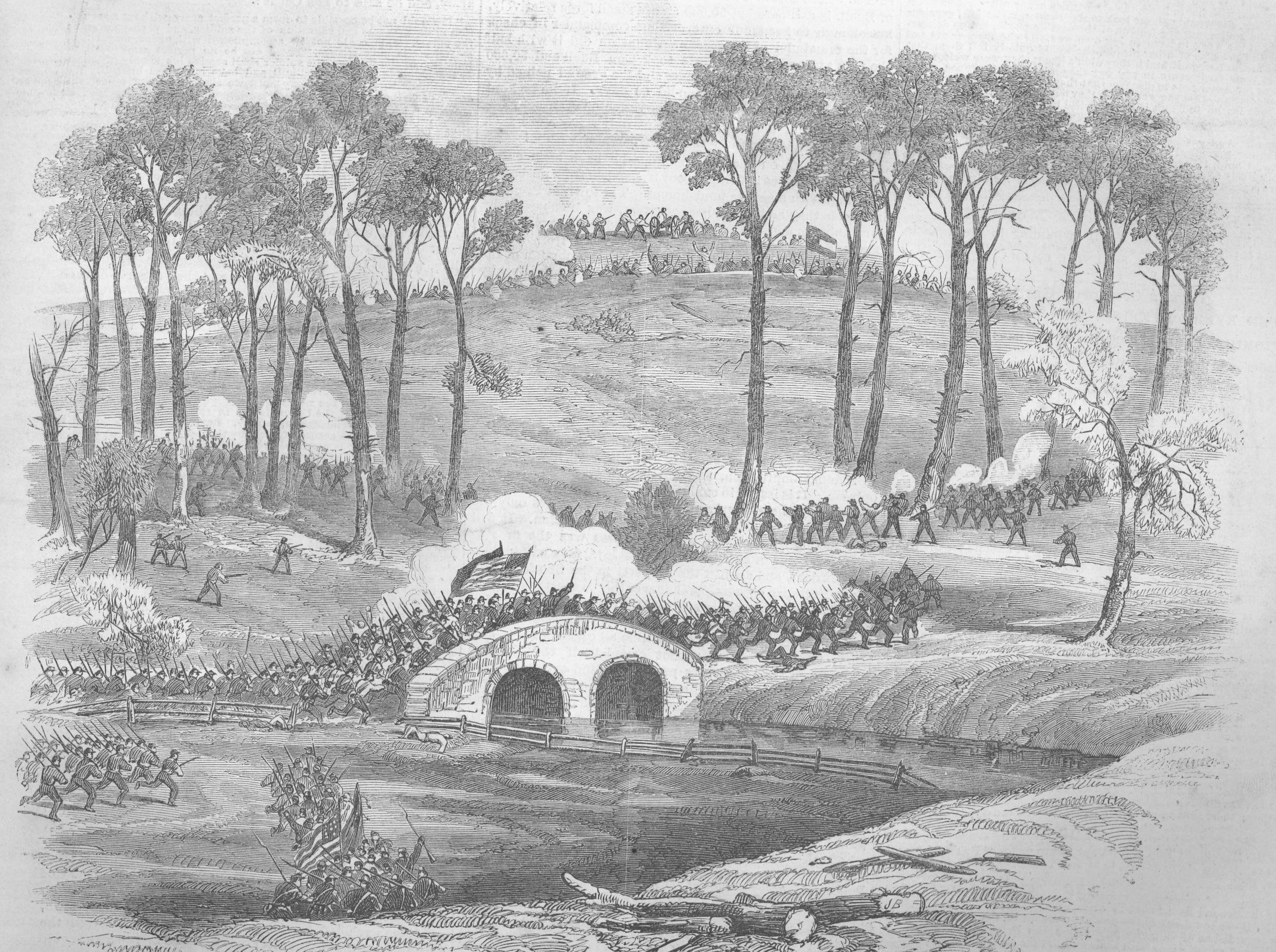
One of the more interesting regiments at the Battle of Antietam was the 51st Pennsylvania. Their story is told on every battlefield tour, not only because of their role in carrying the Burnside Bridge, but also for the famous account of whiskey being promised to them for a successful outcome.

Sketch of the 51st attacking the Burnside Bridge

All Antietam accounts relate the extensive nature of the pollution of the landscape upon which the battle was fought. In that most of the Army of the Potomac did not move for many weeks after the battle, it was necessary for health reasons to spread out over a wide region. They established new camps, additionally for the purpose of observing any potential enemy movements – especially along the length of the Potomac River.

The historian of the 51st – Thomas Parker – wrote the following about their new location – set up about 10 days after the battle. I had to chuckle at the following paragraph:

This camp was beautifully located, and the white tents of McClellan’s vast army dotted hills and plains as far as the naked eye could discern. It became a wonder whence all the troops could have possibly come from, for not one-tenth of them had been seen at either South Mountain or Antietam, and it was always a source of wonder to the men while on a march that it was while moving there were always apparently enough troops in the column to swallow up the whole Confederate force, but when in a fight, two or three brigades would be about all that could ever be seen, and that after the battle would be over it should be found that every command had been engaged. (excerpt from “History of the 51st Regiment of Pennsylvania Volunteers and Veteran Volunteers”by Thomas H. Parker, p. 234)

Col. Hartranft of the 51st PA

Truthfully, not all of the 87,000 or so troops that McClellan had with him at Antietam were engaged. In fact, as many as 20,000 were held in reserve. Along with the smoke of battle and the hyper concentration upon the task immediately at hand, it is easy to imagine how isolated the common soldier must have oft felt in the midst of the fight.

The Enigmatic McClellan

150 Years of Controversy

How do we interpret General George B. McClellan? This is a challenge for us as Antietam Battlefield Guides, though the challenge is not a new one. The men of Lincoln’s Administration held varied opinions, as did Congress, as did the officer corps, and as have historians ever since.

General George B. McClellan

There is a pervasive narrative that McClellan was overly cautious, slow, fearful, and bumbling. Material exists to feed this position. Yet, a substantial body of more recent scholarship has taken a less harsh tone in evaluation, seeking (and finding in the historic record) cause for a significantly more balanced approach.

The controversy rages on just a bit among the members of the Antietam Battlefield Guides, who have a good-natured ongoing discussion upon this subject!

There is no doubt that the leader of the Army of the Potomac was well-loved by the vast majority of the troops he commanded. And perhaps that affection was never more largely felt than in the week preceding the Battle of Antietam.

Accounts are bountiful of the very public expressions of common soldiers upon the sight of their lead commander. Here are but three of these stories, and if you read to the end of the final quote, even there – you are able to see the seeds of the enigma.

George Kimball of Boston served in the 12th Massachusetts of Rickett’s Division within the 1stCorps, and

George Kimball

described how wherever McClellan went in the days after Bull Run and on the march to Western Maryland that …

“Men threw their caps high into the air, and danced and frolicked like school-boys, so glad were they to get their old commander back again … The climax seemed to be reached, however, at Middletown, where we first caught sight of the enemy. Here, upon our arrival, we found General McClellan sitting upon his horse in the road … As each organization passed the general, the men became apparently forgetful of everything but their love for him. They cheered and cheered again, until they became so hoarse they could cheer no longer … A great crowd continually surrounded him, and the most extravagant demonstrations were indulged in. Hundreds even hugged the horse’s legs and caressed his head and mane. While the troops were thus surging by, the general continually pointed with his finger to the gap in the mountain through which our path lay. It was like a great scene in a play, with the roar of the guns for an accompaniment.”[1]

Another scene from Middletown, Maryland (about 10 miles from Antietam) was recorded by a Private H.W. Burlingame of the 104th NY Infantry of Hooker’s 1st Corps…

 “…We began to hear cheering away in the rear of us, it kept growing nearer and increasing in volume and we all fell to wondering what the cause of it all was. Soon we began to see the men throwing their caps into the air and cheering with all of their might. The cause of the tumult soon became apparent. General McClellan with his staff officers came riding down the pike, his hat in his hand, bowing and smiling as he passed through the line of men on either side of the road.”[2]

Here also is a third account – probably from a day or two before the first quotes – from Frederick Hitchcock, a rookie soldier in the 132nd PA (2nd Corps) …

Frederick Hitchcock of the 132nd PA

 “On our third day’s march we were halted for rest, when an orderly rode through the lines saying to the different colonels, ‘General McClellan will pass this way in ten minutes.’  This meant that we were to be ready to cheer ‘Little Mac’ when he came along, which, of course, we all did. He came, preceded by a squadron of cavalry and accompanied by a very large and brilliantly caparisoned staff, followed by more cavalry. He was dressed in the full uniform of a major general and rode a superb horse, upon which he sat faultlessly. He was certainly a fine-looking officer and a very striking figure. But whether all this ‘fuss and feathers’ was designed to impress the men, or was a freak of personal vanity, it did not favorably impress our men. Many of the old vets, who had been with him on the Peninsula, and now greeted him again after his reinstatement, were very enthusiastic. But notwithstanding their demonstrations, they rather negatived their praises by the remark, ‘No fight today; Little Mac has gone to the front. Look out for a fight when he goes to the rear.’” [3]

The application point to be taken from all of this is to be reminded that all great men have, yes, great capabilities, but ALSO often many great liabilities. The challenge in leadership is to maximize strengths while delegating in areas of weakness with trusted cohorts.

Our job as historians and guides is to be fair to the full record, evaluating the merits and weaknesses of our forebears, and learning those timeless lessons that yield application to our own day and contexts.

[1] pp. 550-551 of “North to Antietam: Battles and Leaders of the Civil War” by Robert Underwood Johnson

[2] quoted from “Crossroads of War” by Roger Keller, pp. 106-107

[3] From pp. 39-40 of “War from the Inside” by Frederick L. Hitchcock