Milliken’s Bend – 150 Years Ago Today

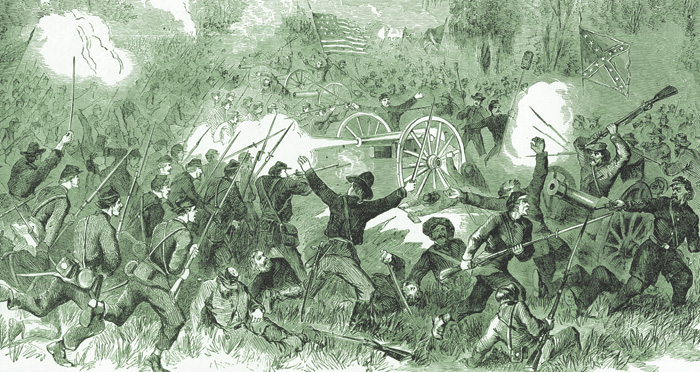
Not every battle in the Civil War was significant merely in terms of its size or tally of casualties. On this date of June 7, 1863 – 150 years ago today – was fought the relatively small battle of Milliken’s Bend, Louisiana. This was at the location of a Union Mississippi River supply depot 15 miles to the northwest of Vicksburg that was critical for the ongoing Union siege operation of U.S. Grant.

At a time when the political climate of the country involving the unpopular nature of the draft and the Vallandigham affair (check back here in 5 days for details!) were causing hostility towards the whole issue of slavery and emancipation, African-American troops would make a significant contribution as combatants at Milliken’s Bend. Colonel Hermann Lieb with the African Brigade and two companies of the 10th Illinois Cavalry were driven into Milliken’s Bend from a reconnaissance by the Confederate forces of Maj. Gen. Richard Taylor – specifically a division of Texans under John Walker, known as Walker’s Greyhounds.

Even as the Rebels were getting the best of the battle by flanking and laying down an enfilading fire, the Union gunboats Choctaw and Lexington appeared and fired upon the Rebels. Fierce fighting continued for a time, with the Confederates ultimately retreating and unsuccessful in their primary effort. However, the Union casualties were about 650 to less than 200 for the Rebels (though I have seen widely varied casualty counts for the latter). But among the Union dead and wounded were many colored troops. Assistant Secretary of War Charles A. Dana wrote, “The bravery of the blacks completely revolutionized the sentiment of the army with regard to the employment of negro troops.”

And a Captain M.M. Miller wrote, “I never more wish to hear the expression, ‘The niggers won’t fight.’ Come with me 100 yards from where I sit and I can show you the wounds that cover the bodies of 16 as brave, loyal, and patriotic soldiers as ever drew bead on a rebel.”

Millikens Bend

Book Review: Gettysburg – the Last Invasion, by Allen Guelzo

I will begin by declaring myself to be the second most Civil War history-engaged graduate of my college, now named Cairn University – a small school in the Philadelphia suburbs known more for producing religious leaders, musicians, and social workers than historians. And perhaps there is someone I am unaware of who should rightly rank between myself and the foremost Civil War scholar, but there is no doubt that Allen Guelzo has the top spot by a great distance.

Guelzo is the author of the recently released “Gettysburg: The Final Invasion.” As the Henry R. Luce III Professor of the Civil War Era, and Director of Civil War Era Studies at Gettysburg College, he is particularly well-positioned to pen this most recent summary work on the 1863 invasion of Pennsylvania.

guelzo book coverThe book is especially commendable because of its excellent summaries – not only of the complex actions on the three days of the Battle proper, but also of the many varied themes leading up to this critical point of the War. Guelzo maintains a balanced and thoughtful approach throughout, deftly walking through the decades-old controversies, while reasonably and dispassionately rendering best opinions and analyses upon the time and placements of events.

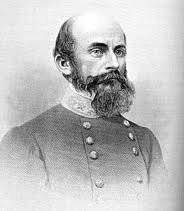
Though our mutual time in college only overlapped one year, and though we have never been connected in any way beyond the most distant acquaintance, I do remember Allen as a colorful college personality – oft on display in the dining room. This too I have observed in lectures in recent years, where his humor and mordant dry wit rise to the surface. The written expression of this trait makes the pages turn more easily and provides something much beyond yet another recitation of the most studied and researched battle of the Civil War. By way of illustration, consider his initial description of my favorite general Abner Doubleday (of whom I’ve researched and written much) as a man “with a large Johnsonian face that sagged like a sinking battleship …”  I could be offended and take a defensive posture about my beloved biographical character, or I could simply admit that the statement is hilariously true!  But this is actually less demeaning than the description of the Confederate General Richard Ewell, a fellow “with a peculiar pop-eyed look and a bald, domelike head which gave him something of the appearance of a nervous pigeon.”  (See picture for the apt description!)  I could jocularly point out that Guelzo himself looks like some sort of library-incarcerated professor of Civil War studies at a historic institution of higher learning, but in the rare event that he might actually read this and retaliate with his more creative verbiage, I’ll stop there!

Richard Ewell

Richard Ewell

The narrative is especially enlivened by Guelzo through the device of embedding a plethora of actual words of veterans in a majority of all sentences. This is not a rare historical writing modality, though I’ve never seen it so universally deployed, and the result is an energetic authenticity. Portraying the pinnacle moment of Pickett’s Charge, “To James Crocker, in the 9th Virginia, it seemed as though ‘men fell like ten-pins in a ten-strike.’ The thickening banks of powder smoke darkened the air ‘with sulphurous clouds,’ and even the sun, ‘lately so glaring, is itself obscured.’ Garnett’s brigade ‘had to climb three high post-and-rail fences,’ or else crowd through ‘at the openings where the fences had been thrown down,’ temporarily making superb targets for Union cannoneers. In the 53rd Virginia, “every man of Company F’ was ‘thrown flat to the earth by the explosion of a shell from Round Top,’ and the 19th Virginia was struck end-on by shells ‘which enfiladed nearly our entire line with fearful effect …’”  (Forgive me for especially liking quotes with “enfilading” in the sentence!)

The abundance of snippets and quotes also adds a continual human element to the drama, lifting the script above being just another detailed manual of battlefield logistics. The same 9th Virginia fellow – James Crocker – returns to the narrative near the end in a description of the Battle’s aftermath. Captured and but slightly wounded in the final charge, he strangely obtained a pass and walked into Gettysburg unattended. As an actual graduate of the Pennsylvania College, he was visiting his old college town and happened upon the son the school’s president Dr. Henry Baugher, amazingly receiving an invitation to dinner. Guelzo writes, “Given that ‘old Dr. Baugher’ had buried another son in the Evergreen Cemetery who died of wounds at Shiloh, the unannounced appearance of an unrepentant Confederate might have made for a highly indigestible meal. But <quoting Crocker> ‘the venerable Doctor saw before him only his old student, recalled only the old days, and their dear memories.’”

Here now with less than four weeks until the sesquicentennial of the Battle of Gettysburg, I strongly commend Guelzo’s book that provides either a refreshing and vivid view for veteran Civil War enthusiasts, or an accessible, yet detailed study for those delving into this Campaign for a first time. And it is important to understand and honor this history of the preservation of the Union and the emancipation of American slaves, for as Guelzo writes in his Acknowledgements, “neither would be possible without the triumph of the Union armies. And Gettysburg would be the place where the armies of the Union would receive their greatest test, and the Union its last invasion.”

First Movements toward Gettysburg

On this date of June 3, 1863 begins what is essentially the Gettysburg Campaign.  On this Wednesday of that year, Lafayette McLaw’s Division of Longstreet’s Corps departed the Fredericksburg area in a westerly direction, with the ultimate aim of crossing into Pennsylvania north of Harpers Ferry.

It is not that General Lee decided at this time that he was going to begin a large-scale movement with a target of Gettysburg, PA as the ultimate site for a decisive battle. Rather, it was Lee’s strong belief that fighting a defensive war in the South was a losing proposition. He believed the only way to ultimately win against such superior resources was to break the will of the Northern people to sustain the effort at retaining the Union.

Just four days before this breaking of camp, Robert E. Lee had reorganized the Army of Northern Virginia into three corps under his three ranking officers: James Longstreet, A.P. Hill, and Richard Ewell. Previously, it had consisted of Jackson and Longstreet. But with the loss of Stonewall, along with a force now in excess of 75,000 men, Lee did some reshuffling of veterans and additions of new troops into a three-corps structure. Longstreet would be retained, but choosing the other two was a less-clear, more-complicated matter.

Though A.P. Hill had the sufficient fighting credentials, Allen Guelzo (in his recently released book, “Gettysburg: The Final Invasion”) describes him as “a nervous, wiry man with a persistent chip of underappreciation on his shoulder and a bevy of chronic illnesses when under stress <and who> had managed to antagonize nearly everyone else in Jackson’s corps, including Jackson himself, whom Hill denounced as ‘that crazy old Presbyterian fool.’”

Richard Ewell

Richard Ewell

The third command would go to Richard Ewell – himself a less than stellar candidate, being more than a bit lacking in confidence after having his leg previously amputated from the 2nd Battle of Manassas. Similarly, Guelzo writes of him, “a queer character, very eccentric, with a peculiar pop-eyed look and a bald, domelike head which gave him something of the appearance of a nervous pigeon.”

But apart from a few dapper fellows like JEB Stuart, George Custer, and George Pickett, Confederate officers were not much selected for their fine appearance – including Lee himself, who never dressed in a manner befitting his rank. But they could fight and lead men into a fight, and such a movement toward such a result was now underway.


Sesquicentennial Thoughts: Turning the Calendar Over to a New Season

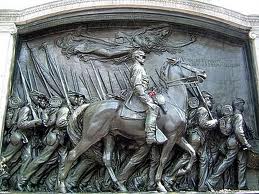
As the calendar turns over to the month of June, looking back 150 years ago to 1863, it had recently been an active time – with the Chancellorsville Battle dominating the early days of May and the Vicksburg Campaign now in a siege situation. Climactic events are coming on both fronts in early July, and the movements leading toward Gettysburg in particular are about to unfold.54th Mass monument

Activity, planning, and preparation was afoot everywhere, along with tension and trepidation. Leaving Boston on May 28th of 1863 was the first Negro regiment from the North. The 54th Massachusetts Volunteers depart for Hilton Head, SC where they will achieve fame in the July 18 attack upon Fort Wagner (check back then!), depicted of course in the movie “Glory.”  The regiment was led by Colonel Robert Gould Shaw, along with officers largely from abolitionist families. Speaking of Shaw, in my Abner Doubleday research I came across a letter from Robert Shaw written to his mother from Charles Town, VA (now WV) on July 18, of 1861 where he mentions that he had the opportunity to meet Major Doubleday. In that this was very early in the War and but months after Fort Sumter, Doubleday was well-known as one of the officers involved in that initial affair, and was hence a person of notice in a way that he would not be later.

Even as we live in a time where political scandal and controversy are dominant in the press, so also did such dominate the news 150 years ago – including the order of General Burnside (6/1/63) to shut down an anti-Lincoln Administration paper, saying, “On account of the repeated expression of disloyal and incendiary sentiments, the publication of the newspaper known as the Chicago Times is hereby suppressed.”  He also referred to their journalism as “rank treason.”  This engendered a protest in the streets that evening of 20,000 people, and three days later the Times reopened as Lincoln recommended to Secretary of War Stanton that Burnside suspend the order.

Another controversy that dominated news at this time surrounded the Ohio Democratic leader of the Copperhead faction – Clement Laird Vallandigham. Again it was Burnside in May who had him arrested, tried, and sent over to the South for treason. Lincoln’s major written statement on the justification of this action would be on June 12th – and on that date I’ll make a post about the entire affair.

Though the situation is soon about to change, the Army of the Potomac and the Army of Northern Virginia had been staring at one another across the Rappahannock River in the Fredericksburg area. Odd behavior and communications with General Hooker had Lincoln scratching his head yet again.

It is all going to get much more interesting!

We are ALL Custodians

I had a terrifically fun morning today with a group of 4th grade students from Fountaindale Elementary School in Hagerstown, MD.  This was the second group of 4th graders from our home area of Washington County, Maryland that I have had in recent weeks. Apparently the teachers have done some curriculum revamping, and that certainly seems like a positive – as the kids are really engaged in the history and are well-informed with many basic facts and skills when they arrive.

Something that caught my ear today was the teacher telling me that there is a custodian at the school who is a Civil War enthusiast – apparently much involved as a re-enactor. He is a reference for the teachers and students on their studies in this realm. This took me back in my memory exactly 50 years to when I was an elementary student in Harmony Township, Warren County, NJ.  The school custodian was a man named Carl Morrison, and he was REALLY into the Civil War – having travelled many dozens of times particularly to Gettysburg. I guarantee you that every person that went to that elementary school would first think of this man when the subject of the Civil War is brought up – even all these decades later. He knew so much more about it than any of the teachers, that when the topic came up in history class, it was a foregone conclusion that Mr. Morrison would be summoned from whatever he was cleaning at the time to drop it all and come teach. He was very interesting, and I probably owe much of my original interest to this very, very kind man.

As a kid, every adult seems old to you. I remember him as a latter-middle-aged fellow. And now with the internet, one can research anything … so I found his death notice in the local NJ paper from 1990, where it said he was age 79 upon his passing. It also said simply this:  “He was a custodian for the Harmony Consolidated School for 20 years before retiring in 1976. He also lectured there on the Civil War.”  He sure did! So he would have been age 53 when I was the same age as the kids I saw today. And since I’m age 58, these kids probably looked at me as an old dried-up raisin ready for the grave!Burnside descendent

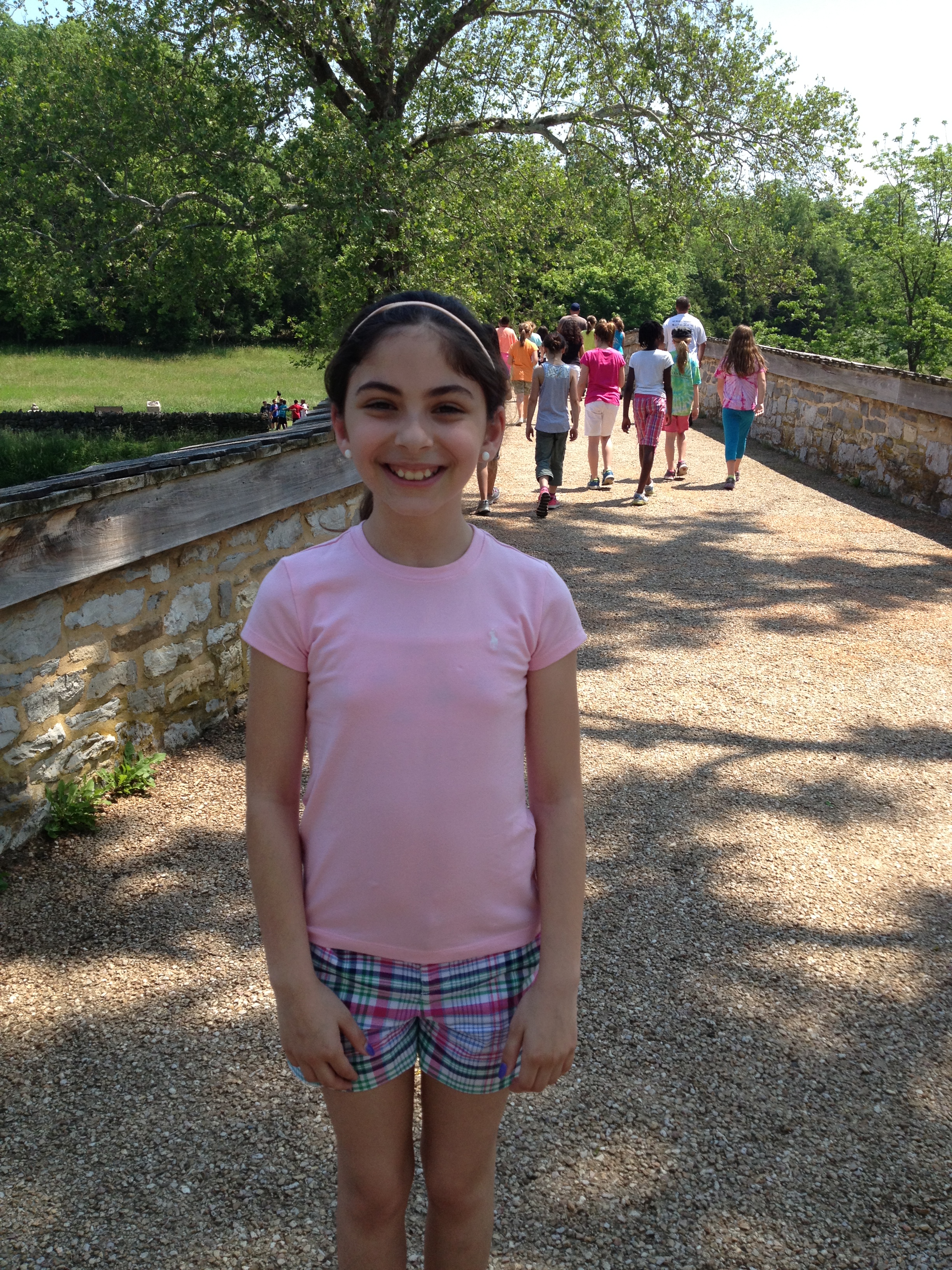
One of the little girls told me quite a story at the Burnside Bridge. She said something like, “Burnside’s first name was Ambrose, right?”  And she went on to say that he was an ancestor in her family … I got lost at about the 7th great-grandfather on one or the other side. But in any event, she was related to that handsome fellow of the 19th century. So I took her picture on the bridge named after her famous forefather.

I really do love kid groups, and I hope I can be a sort of “Mr. Morrison” character for them and plant a seed that might grow into something else. I know my old school janitor would love to see what I’m doing, and I’m sure he would have never missed anything I write were he to have been able to see it.

It would be accurate to say that we are all “custodians” – not in the janitorial sense, but in the preservation/generational sense – passing through for a time, with reflections upon those who went before, that those who come behind us may also be thankful for their sacrifices.

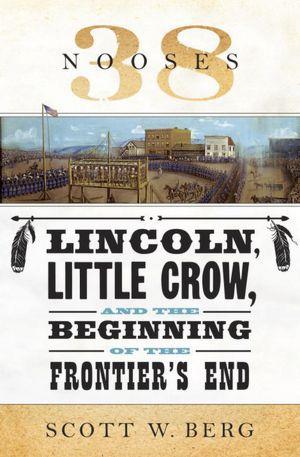
“38 Nooses: Lincoln, Little Crow and the Beginning of the Frontier’s End,” by Scott W. Berg

This book review was actually posted by me in December of 2012. For some reason, it is the subject of multiple spam comment attacks on a daily basis. So I am re-posting it now and deleting the former.

150 Years Ago Today (12/26/1862): The Largest Mass Execution in American History

Some of my colleagues who compose Civil War blogs will occasionally include book reviews. This is a worthy task – one that I need to begin to incorporate here with Enfilading Lines. So this is a first review (actually my first in over 40 years – since in high school, I had a combined History/English honors class that made us do this over and over, and I hated it … but, I have at long last recovered!).

At first glance, 38 Nooses by Scott Berg may appear a strange book to highlight in a Civil War blog, but it is not that odd whatsoever. The setting is 1862, the Lincoln Administration policy in the midst of the War is a major theme, and our 2nd Bull Run friend General John Pope is a major character.

1berg1202There is a tendency to imagine Abraham Lincoln investing his time 24/7 dealing with Civil War demands. Though certainly no president likely had to concentrate so specifically upon one consuming event as did Lincoln, there were other issues around the country drawing some measure of attention. Among these was the Dakota War that broke out in Minnesota in the late summer of 1862.

When reading about the complexities of issues both causing the eruption of hostilities and the subsequent responses on all sides, it is difficult to find a truly innocent party anywhere. Stating the relationships of whites and natives in the terms of a Facebook status would be like saying, “it’s complicated.”  The clash of cultures from westward expansion fueled by Manifest Destiny insured that the destiny that became manifest for the native population was their certain and gradual elimination.

A series of treaties engulfing Indian lands involved government annuity payments – introducing a system upon which the tribes became dependent for their existence. Like so many programs of government then and now, the system was inefficient and involved a series of mediating agents who took cuts all along the way. Rumors spoke of a late 1862 payment possibly not going to be met, speculating that the Civil War in the east and south were draining all resources.

In the white settlement of Acton, a group of four Indians – foolishly liquored up and hungry from an unsuccessful hunt – through a series of circumstances killed five whites. It was a spark that ignited the accumulated fuel of desperate Indian frustrations resulting in additional depredations and killings along the frontier settlements, igniting also a white panic – replete with ethno-cultural condescension, prejudices, exaggerations, and opportunism.

For the Dakota leader Little Crow, it was a fork in the road. He had been even to Washington, seen the industrial world that other Indians could never even imagine, met with President Buchanan, and signed the last treaty in 1858. Though he understood the near impossible odds of fighting white expansion, his sense of justice pushed him to the reluctant decision that a time had come for a unified Indian front to draw a line against further encroachments. To this end, his efforts and leadership would prove unsuccessful; yet the vision would find fulfillment with the coming together of other tribes further west in another decade – there being the story of Custer and Little Big Horn in 1876.

The Dakota War of 1862 did not involve much in the way of actual battles or sizeable conflicts. Ultimately, one group of Indians would surrender to U.S. authorities, while another band under Little Crow would escape to the west.

Being sent west to deal with these problems was General John Pope, the arrogant and bombastic failure for the Union Army at the Second Battle of Bull Run.  The newly created Department of the Northwest presented a perfect opportunity to send this brash fellow away from the army, and away from the press in the east. Pope saw this for what it was – a demotion. Angry and bitter that he had been so disrespected and unsupported by McClellan and the Administration in Washington, Pope followed orders that soon landed him in the relatively new state of Minnesota.

Travelling with Pope was his mouth. Not learning terribly much from his Army of Virginia verbiage that had even earned him the title of a “miscreant” by Robert E. Lee, Pope was returning to geography he had visited some 12 years earlier. As a surveyor in the Corps of Topographical Engineers exploring the Territory of Minnesota, he was struck by the natural beauty and abundant resources of this vast region. As much as he was awestruck by the natural landscape, his view of the indigenous people was much the opposite. He wrote, “I can only attribute to ignorance of its great value the apathy and indifference manifested by the government in failing as yet to extinguish the title of the Indian, and to throw open to the industry of the American people a country so well adapted to their genius and their enterprise.” Pope’s view had not moderated over the recent dozen years, therefore as trials of the captured Indians commenced, he was much in favor of the soon execution of the 303 found guilty.

Since death sentences from a court-martial could only proceed with executive authentication, the fate of the condemned Dakotas was in the hands of President Lincoln. Though justice demanded some measure of severity in punishment, Lincoln’s sense was more than accurate that the number of 303 was very expansive. He would subsequently say that he was “anxious to not act with so much clemency as to encourage another outbreak on the one hand, nor with so much severity as to be real cruelty on the other.”

In the end, through a set of criteria established by Lincoln and an Administration team, 38 would be condemned for execution – an event happening by simultaneous hanging on a gallows on this date of December 26 – 150 years ago.

That is but the most basic outline of this compelling story brought to life by Scott Berg. The account is narrated alternatively through the eyes and perspectives of a handful of interesting characters – including (along with Lincoln, Pope, and Little Crow) a white woman hostage named Sarah Wakefield, and the first Episcopal Bishop of Minnesota – Henry Whipple.

Telling a story is what Berg does best; his style is easy and flowing – filled with color, emotion, and analysis. As a professor of nonfiction writing and literature at George Mason University, Berg has a special academic interest in narrative history. He says of this genre, “it rests on an often-contested belief that not only do we use story to organize and make sense of our own lives, we also use story to make sense of our past.”

It is at this point that I board the train with Berg, as narrative history has become my primary interest in recent years. Narrative history brought me back to books and scholarship, having been previously burnt-out by such at the end of my doctoral studies. Fiction is great, and I don’t condemn any who enjoy it. But I am of the opinion that there are so many nonfiction topics and writings about which I know nothing, that I have no time for the created story. But neither do I want to be continuously lost in geeky tomes of facts, dates, and events of a dry history. It has been narrative history that has rescued me from literary oblivion. And were I to contribute in any way by my writing, I would desire it to be within this genre.

Beyond history and the writing thereof, the use of “story” and its interpretation is what the major component of my life is about. As a pastor who speaks weekly on the themes of Scripture, I am essentially dealing with the idea of story – relating the story of stories, the meta-story from which all others are derived, and from which we make sense of our lives and even our future.

I’d better end or I will soon segue into another book review – on the Bible … and I have a different blog for that!

Read 38 Nooses! Spend some of your Amazon gift card Christmas present money on it. You’ll enjoy it.

 

Union Assaults and Siege Operations in Mississippi

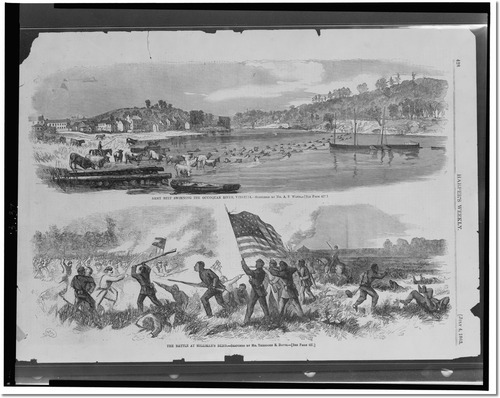
During this season of late May in 1863, the Union army was successfully staging final operations to secure the free flow of shipping along the entire Mississippi River, driving a wedge into the Confederacy.

With Pemberton’s Confederate troops drawn into strong fortifications in Vicksburg, Grant attempts twice (19th and 22nd) to break through the defenses – each attack unsuccessful. He will then set up siege operations. There is no hope of outside assistance, and facing starvation, Pemberton will surrender the strongest citadel along the river on July 4th.

Grant and Pemberton discuss the terms of surrender at Vicksburg (Library of Congress)

Grant and Pemberton discuss the terms of surrender at Vicksburg (Library of Congress)

Additionally, at another Confederate river position at Port Hudson, General Nathaniel Banks’ troops will likewise attempt and fail in two assaults (on May 27 and June 14). And likewise, Rebel General Franklin Gardner will hold out until July 9 – surrendering in the wake of the fall of Vicksburg.

David Dixon Porter and Farragut also had these positions sealed off by water. The Vicksburg batteries fought valiantly on the 22nd of May in particular, inflicting heavy damages upon Union vessels. In the days after the Battle of Gettysburg, word arrived at Washington of the fall of Vicksburg, causing Lincoln to exclaim, “Thank God, the Father of Waters again goes unvexed to the sea.”  But, to quote from McPhearson’s War on the Waters, “The Mississippi now did flow unvexed to the sea—except for Confederate guerrillas, who continued to be very vexatious indeed.” (p.169)

Gonna Be Writing A Lot About Winchester!

< Read through to the end, as several pictures are placed full-sized in the middle of the this post >

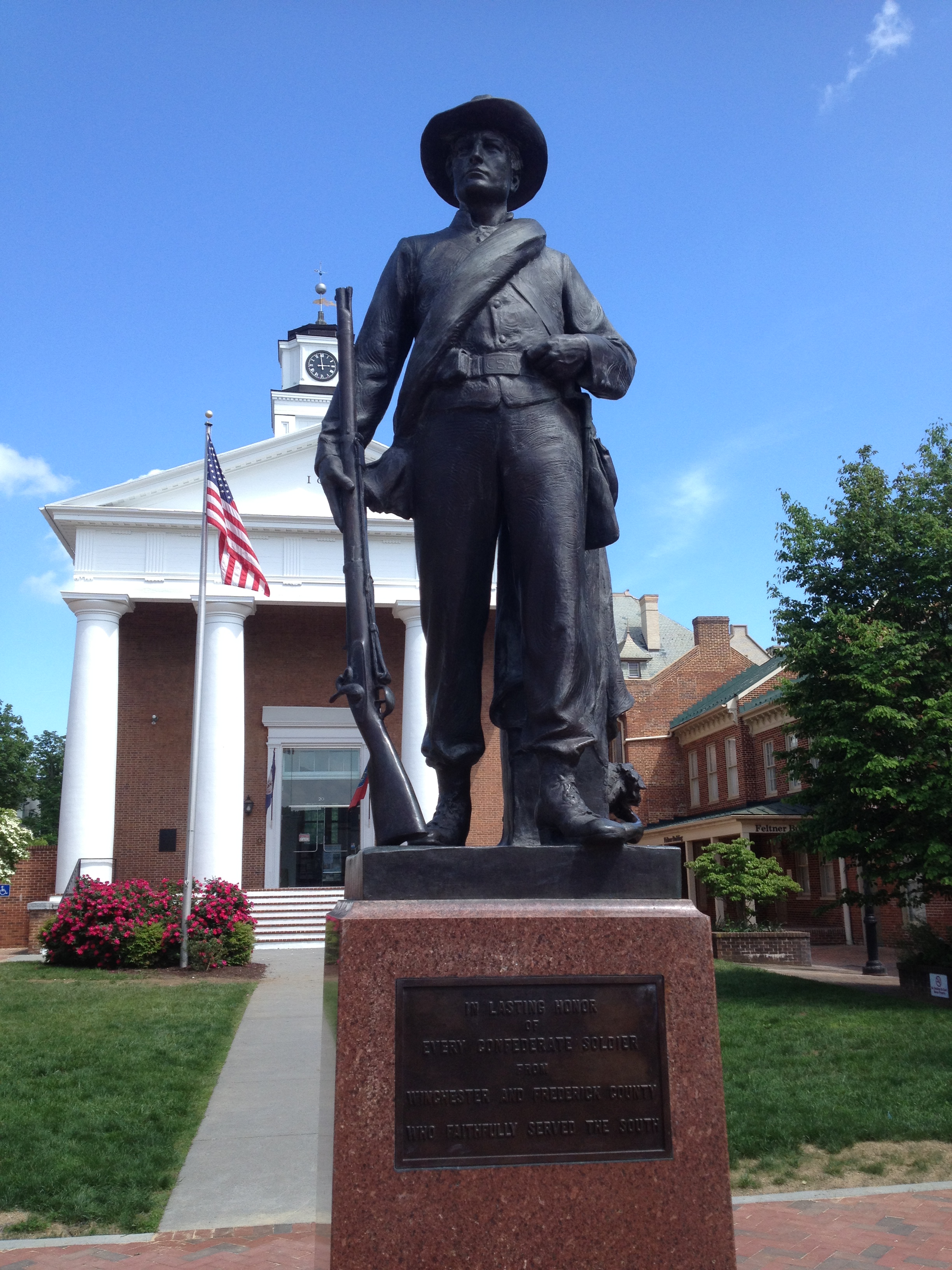
Today, my family bought the ownership of an additional franchise business in Winchester, Virginia. Though I have little hands-on involvement in this retail endeavor, I needed to be there for the transfer and paperwork, etc.  Now, it is not like I do not know or understand quite a few details about the role of Winchester in the Civil War, I’ve just never seriously scouted it all out – especially not recently enough to write about it in this blog. But that is going to change.IMG_0620

There is Civil War history close enough to our store to spit upon it! We are located on Loudoun Street which is the old Valley Pike – serving formerly as the main north/south road through town. This is now, for several blocks, a walking mall in an area called Old Town, Winchester. It is very well-done and a good model for urban renovation of a historic area.

I will have to research what our exact location was in the Civil War era, but immediately next door to the north of us is the currently ongoing renovation project of The Taylor Hotel.  Built and opened by Bushrod Taylor in 1848, its 70 rooms served travelers and functioned as a mail and stagecoach stop in the 1850s. Stonewall Jackson used the hotel as his first headquarters in 1861 while commander of the Valley District. During the War, the structure was a hospital location for wounded, particularly after the First Battle of Kernstown (March, 1862) and the Third Battle of Winchester (September 1864).

IMG_0623

Less than 100 yards to the south of our store and on the opposite side of Loudoun Street is the 1840-built County Courthouse. It was likewise used as both a hospital and a prison. The place was so crowded that the courtyard in front (seen in the picture) was used to contain prisoners. Writing about this in The History of the 118th PA (the Corn Exchange Regiment) was Sergeant Henry Peck – one of 63 prisoners captured at the Battle of Shepherdstown on September 20th, 1862. He wrote:

In Winchester we were consigned to the court-house and the enclosure between it and the street. There was already in these precincts a crowd of some 300 rebels, stragglers, conscripts and the riff-raff a provost-guard can pick up — a miserable lot — who did not fraternize with our men, and who were so filthy in clothing and habits that our men remained of choice in the open yard without tents or blankets, even during nights of hoarfrost, to avoid contact with those in the court-house, which we were otherwise free to occupy.

Owing to restricted diet and exposure, without any covering whatever from the frosty night air, all of our men suffered more or less with dysentery. No medical attention was offered them. Their previous robust health, however, and the hope of soon getting back to our own lines, kept them up, and not one became helpless.

For one or two nights we had small but very hot fires made of beef bones, which we found burn surprisingly well. On the morning we were sent away we were brought into the court-house, one by one, to sign the following parole paper:

 I, ___________ , do solemnly swear that I will not do or undertake any act or exert any influence in favor of or for the advantage of the United States or against the government of the Confederate States; and that I will not divulge anything that I have seen or heard, or may see or hear, to the prejudice of the Confederate States; or engage in any military act whatsoever during the present war until regularly included in an authorized exchange of prisoners.

Sworn before me this 29th day of September, in the year of our Lord one thousand eight hundred and sixty-two, at Winchester, Virginia.    …Major W. Kyle.  

By order of General Robert E. Lee.  

IMG_0624IMG_0625


Battle of Big Black River Bridge

On this date of May 17 in 1863 occurred the Battle of Big Black River Bridge. Pulling back toward Vicksburg at their defeat at Champion Hill on the 16th, the Confederates threw up a delaying defense on the east bank of the Black River. Three divisions of McClernand’s 13th Corps engaged the Confederates under the command of John S. Bowen.Big Black River Bridge

Burning the bridges behind them, Bowen’s men did what they could, though their losses totaled about 600 with close to 1800 captured. A bold charge by the men of General Mike Lawler on the Federal right flank had set the southerners into a panicked flight – some even drowning in the river in an attempt to escape. The Union forces threw up their own bridges and continued to follow the next day. Federal losses were only about 300 in total.

The three corps of Sherman, McPherson, and McClernand approached the Vicksburg defenses on the 18th. Assaults on the 19th and 22nd were not at all successful, revealing the strength of the arc of Confederate works around the city. Hence Grant concluded that a siege would be the only successful way to cause the fall of Vicksburg.

54761_black_river_lg

Battle of Champion Hill – 150 Years Ago Today

On this date of May 16 in 1863 was fought the Battle of Champion Hill (a.k.a. Baker’s Creek) – the name coming from a family who lived on the site. This was the primary battle of the Vicksburg Campaign and featured – in broad numbers – about 30,000 Union to 20,000 Confederate combatants. Pemberton had roughly twice that number in the larger vicinity at the onset of the campaign, but they were widely scattered and many cut off from connection due to the recent Battles of Raymond and Jackson.

Harper's Weekly sketch depicting the chaotic fighting Champion Hill (National Park Service)

Harper’s Weekly sketch depicting the chaotic fighting Champion Hill (National Park Service)

The battle began in the early morning along a 3-mile defensive front on the crest of a ridge overlooking Jackson Creek. Grant wrote of this, “Where Pemberton had chosen his position to receive us, whether taken by accident or design, was well selected. It is one of the highest points in that section, and commanded all the ground in the range.” McClernand was on the Federal left with McPherson on the right. Delayed in arriving at the center was Sherman in his march from Jackson, MS.  The left flank of the Confederate line was on Champion Hill where the most severe fighting was waged. Attacks and counter-attacks ended with the weight of the Union cause pushing the Confederates toward Vicksburg across the Big Black River Bridge – the theme for tomorrow.

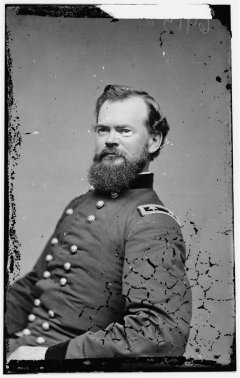
Major General James B. McPherson

Major General James B. McPherson

A “champion” of the Champion Hill Battlefield site was the late Margie Bearss – wife of famed Park Service / Civil War historian Ed Bearrs.  She was the co-editor of My Dear Wife – Letters to Matilda: The Civil War letters of Sid and Matilda Champion.

Of the battlefield she wrote: “Years later, after I met and married Ed Bearss who at the time was the historian at the Vicksburg National Military Park, we visited Champion Hill where Ed was checking out the battlefield sites and drawing maps. The upper section of the crossroads had been opened and was passable from the site of the Champion house to the crossroads. I was amazed at how near the crest of Champion Hill was to the crossroads and to the upper section of the old Jackson Road. That stretch of road has now been closed for years. As Ed and I climbed the side of the hill, I began to feel uneasy and apprehensive. Too many men had died in the various charges on this hill. It was a solemn place of death. As I reached the top, my hair stood out from the back of my neck and my arms broke out in chill bumps. I could almost feel the menace of the Yankee charge breaking across the field. I have never since felt such unease and apprehension on the hill.”

A historian of the 30th Illinois regiment wrote, “There was not much time for burying the dead, and a good many of them was laid in a ditch and covered over. After the surrender of Vicksburg we were back over the battlefield and the rain had washed the dirt off and their knees were sticking out, and some of their teeth were shining.”  <from Granville B. McDonald of the 30th Illinois>

I noticed in my research that the great-grandson of Jefferson Davis will be the speaker this Saturday at the sesquicentennial celebration of the battle. To read about it, click HERE.