Gettysburg Day 1 – Doubleday’s Best Day

Well now, it is July 1, and the big day has arrived to begin the sesquicentennial celebration of the great Battle of Gettysburg. I am sure there is great excitement today in Adams County, but I will be content to be at Antietam. I will be connecting with two groups, as our Battlefield Guides organization is pleased to cover many of the Park duties while the bulk of our Rangers are helping at Gettysburg.

I will openly confess that I am far from an expert on Gettysburg. There is so much to know and learn, and I’ve not done this work in great depth. Someday, I will. Until then I’ve got plenty to do to continue to grow in understanding the Maryland Campaign and the Battle of Antietam.

But on this first day of Gettysburg, I will include here a few Abner Doubleday items … returning to these pages again in two days for some more information.

Without doubt, this day was Doubleday’s finest day in the War. Upon the death of John Reynolds, he found himself in command of the 1st Corps. His men fought exceedingly well though much outnumbered. They were compelled to fight an orderly retreat to Cemetery Hill.

A humorous story from the first day involved the capture of Confederate General James Archer. The following is an excerpt from the February 1891 issue of The North American Review, where Doubleday contributed an article (along with several other veteran commanders) entitled “Gettysburg Thirty Years Later.”

Reynolds hastened forward with the nearest troops at hand—two small brigades of Wadsworth’s division—and directed me to bring up the remainder of the corps as soon as possible. Having withdrawn the pickets and put the other two divisions en route, I galloped ahead and reached the field just as the contest began between Cutler’s Brigade on the right against Davis’s Confederate brigade. Meredith’s brigade was still on its way a quarter of a mile to the rear. In the meantime I had sent an aid to ask for orders, and received this message from General Reynolds in reply: “Tell Doubleday I will hold on to this road, and he must hold on to that one.”

James Archer

James Archer

This was the last order he ever issued. Archer’s Confederate brigade, however, which formed the right of the attacking column, did not advance by the lower road, but attempted to take possession of a piece of woods between the two roads. Reynolds imprudently rode in there, almost unattended, to reconnoiter. As he turned his head to the rear to see how near we were, one of the enemy’s sharpshooters must have seen him, and put a bullet through his neck, killing him instantly. As Meredith’s men came on, I made a short address to them, telling them that this was the decisive battle of the war and that the result would decide whether the Confederate President or Abraham Lincoln was to rule the country. I urged them to take the wood and hold it at all hazards. Full of the memory of their past achievements, they replied: “If we can’t hold it, where will you find the men who can?” They went forward enthusiastically, entered the grove, and not only overpowered Archer’s brigade, but captured him and the greater portion of his men. While this was going on, I had gone almost down to the stream on the left to see if any enemies were approaching along the more southern road. As there were none in sight, I returned, and the prisoners were brought up to me. I said, somewhat inconsiderately, to General Archer, who had been an old comrade of mine in Mexico: “I am glad to see you, Archer!” To which he angrily replied: “I am not a damned bit glad to see you, sir!”

Of course, when Doubleday is speaking of Solomon Meredith’s Brigade, this is referencing three-fourths of Gibbon’s Brigade from Antietam – the Wisconsin 2nd, 6th, and 7th.  Also now with this so-called “Iron Brigade” were the 24th Michigan and 19th Indiana. I have recently read where a scholar wrote that they were not given this name until after the War, but Doubleday twice references them as such in his official report, writing …

The Iron Brigade, led by the Second Wisconsin in line, and followed by the other regiments, deployed en echelon without a moment’s hesitation, charged with the utmost steadiness and fury, hurled the enemy back into the run, captured, after a sharp and desperate conflict, nearly 1,000 prisoners–all from Archer’s brigade–and reformed their lines on the high ground beyond the ravine.

The Second Wisconsin, in this contest, under the gallant Colonel Fairchild, was particularly distinguished. It accomplished the difficult task of driving superior numbers of rebel infantry from the shelter of the woods, and to it also belongs the honor of capturing General Archer himself. He was brought in by Private Patrick Maloney, of Company G. It is to be lamented that this brave Irishman was subsequently killed in the action.
The Northernmost Engagement of the Civil War – 150 Years Ago Today

As an owner of businesses on the main streets of Winchester, VA and Mechanicsburg, PA, it is interesting at this season of sesquicentennial commemorations to consider that some of the same Confederate troops would have passed our front doors 150 years ago in June of 1863. I don’t think they would have been very good customers, although they did “shop” in Mechanicsburg and paid in Confederate money.

Ewell’s Corps as the leading edge of the invading Army of Northern Virginia would have swept from Winchester, through Martinsburg, Hagerstown, Chambersburg and to Carlisle (essentially following the arc of modern Interstate 81). They would then move east toward an anticipated assault upon the Pennsylvania capital of Harrisburg. This would take them (cavalry forces leading) through Mechanicsburg on June 28, fighting the Battle of Sporting Hill (east of Mechanicsburg and three miles west of Harrisburg) on June 30th.albert jenkins

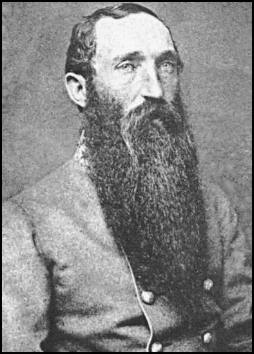
The leading cavalry forces of about 800 were under the command of former congressman Albert Jenkins – a Harvard grad with a beard so long it was reported that he would tuck it into his trousers so as not to interfere with him in battle. The Union defense was under General Darius Couch – who had much to worry about, in that all he had to work with were poorly-trained state militia forces from PA and NY (and some 70-year-old War of 1812 veterans).

The few militia in Mechanicsburg on the 28th rather quickly abandoned the place and headed east toward Harrisburg. Jenkins ordered the people of the town to supply food for his men, or he could allow them to gain it themselves … the people were very generous!

The goal of the cavalry was to reconnoiter the capital city of 14,000 inhabitants to view how “take-able” it was. While demonstrations were made on the 29th upon the direct path to Harrisburg (in modern Camp Hill), Jenkins and a group of about 60 swung to the south to get a view of the city from a hill about three miles distant. The infantry of Robert Rodes’ Division was preparing in Carlisle for the march east, a mission that Rodes said every man under his command was anxious to undertake. But circumstances to the south near Gettysburg were building, and an order came from Lee to Ewell to have his men march in that direction instead.

The Battle of Sporting Hill

Jenkins’ men were spread widely and an orderly retreat was going to be difficult – particularly were there to be a concentrated infantry attack. This skirmishing and fighting on the afternoon of the 30th was known as the Battle of Sporting Hill. Featuring some artillery fighting on each side, the Yankees managed to not have any fatal losses – with only 11 wounded. The Confederates numbered about 15-16 dead and 20-30 wounded. This was the northernmost engagement of the War.

Here is an excerpt from the journal of Lieutenant Hermann Schuricht of the 14th Virginia Cavalry:

June 30th.–Early in the morning I was ordered to report with my company at headquarters, and General Jenkins directed me to proceed at once with my company and one cannon of Jackson’s Battery to Mechanicsburg, to hold this town until ordered otherwise, and to destroy the railroad track as far as possible. I could learn nothing definite concerning the army and General Lee’s plans. General Rhodes, I was told, occupied Carlisle, and General Early, York –with the latter was White’s Cavalry–while General Imboden’s Brigade protected our line of communication with Virginia. Greatly flattered to be entrusted with an expedition, properly belonging to an officer of higher rank, I started my command to Mechanicsburg, and when we came in sight of the town I dispatched a patrol to reconnoitre. A small company of Federal cavalry had just occupied the place, but retreated upon our approach. Without delay I marched into town and posted my pickets. The place appeared to be evacuated by the inhabitants; they all kept indoors. I posted my command on an elevation east of the town, overlooking both the railroad and the turnpike, and ordered my men to demolish the railroad track. We were repeatedly interrupted in this work by the reappearance of Yankees, and had to keep up a lively skirmish all day. We also observed many and demonstrative people in the woods, some distance to our right, and I ordered Lieutenant Jackson to warn them off by some shots. At sunset a courier was sent from headquarters ordering me to leave Mechanicsburg after dark and fall back to Carlisle.

The End of Joe Hooker as Commander of the AOP – 150 Years Ago Today

It was on this date of June 27 in 1863 that General Joe Hooker offered his resignation as the commander of the Army of the Potomac, and it was accepted.

Both armies were moving north in the latter part of June – the Confederates crossing the Potomac at Williamsport and Sheperdstown, while the Federals moved in a parallel fashion much closer to Washington. Just as many Confederates were shocked at the sight of corpses protruding from the shallow graves while crossing the Antietam Battlefield, some Union men experienced the same grim sights while passing over the grounds at Manassas.

General Hooker faced many complications. He needed to reshuffle regiments and brigades as multiple units had their time of enlistment expire. As with the Confederates, the season alternated between scorching heat and incredible downpours, creating equal-opportunity miseries. The exact nature of Lee’s plans and movements remained a mystery, though it was known his troops were surely stretched out over a great distance. Lincoln, employing one of his colorful word pictures, said that “the animal must be very slim somewhere.”

A variety of circumstances may have worked to avert a “2nd Antietam.”  Hooker had a thought process of combining a number of forces in the area of Frederick and moving them west to attack the columns of Lee’s advance somewhere near Antietam in Washington County. A key to this would be the release into his command of the roughly 10,000 disparate troops now gathered in Harpers Ferry. Lincoln’s words in response to this idea certainly were affirmative, saying “it gives you back the chance that I thought McClellan lost last fall.”george meade

But again, as always, personalities, infighting, and lack of trust and confidence intervened. Halleck believed Hooker’s interests in gaining the Harpers Ferry troops were simply to swell his numbers rather than accomplish and objective of attacking Lee. And so Halleck sent orders to the command in Harpers Ferry to pay no attention to Hooker. And it was on this date that Formerly Fighting Joe rode into Harpers Ferry, realized the situation at hand, and by early evening telegraphed his resignation to Halleck. Within 30 minutes, Lincoln said to accept it.

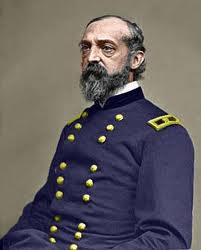
Though certain portions of the army and officers would hope to see the return of George McClellan, it was another George who would be the next man up. George Meade was age 47 when command of the Army of the Potomac fell upon him. He would have but days to prepare for the mother of all battles of the American Civil War … at a crossroads town called Gettysburg.

Happy 90th Birthday to Ed Bearss

If the battlefield tour guide industry had a single rock star, it is Ed Bearss – who turns age 90 today. He is the Lebron James, the Tiger Woods, the Babe Ruth of the business! Incredible memory, graphic description, passionate engagement, and fascinating dialogue all comes rushing out of this living time capsule of humanity.  A World War II marine, he was the chief historian of the National Park Service from 1981 to 1994. He was previously the historian at the Vicksburg Battlefield.

Growing up on a farm in Montana as the son of a WWI veteran, he early embraced a love of military history, naming the farm animals after famous generals, along with his favorite milk cow named “Antietam.”

DSC_0160 (1024x680)Bearss became widely known as one of the main voices in the popular Ken Burns series on the Civil War. He is reported to even now spend about 200 days of the year on the road giving tours of various battlefields.

As a guide at Antietam over the past seven years, I have come across Ed at numerous times and in varied places on the battlefield. He is distinctive!

But there are two other very unique occasions where I have run into him. (Don’t take from this that we are pals, as I don’t think he has any idea who I am!)

As the long-time coach of the Williamsport High School cross country teams, we often go to the Cushwa Basin in Williamsport to run on the C&O Canal. The team will jog the one mile or so from the school to the Conococheague Creek Aqueduct parking area where we go through an extended stretching routine before tearing it up at high speed on the towpath. One day while there with the team (50-60 kids), a tour bus pulls up and out jumps Ed – leading a group of people straight toward us to see the place of the crossing of Confederates on the Gettysburg Campaign. So I call him by name and walk up and shake his hand, exchanging a few pleasantries with him … he full of energy and good cheer. My high school kids were so impressed that their coach would seemingly just randomly know some old guy who hopped off a bus with 40 people following him! How could that be? “Hey coach – that was a little weird what just happened there!” It was a funny moment.DSC_0158

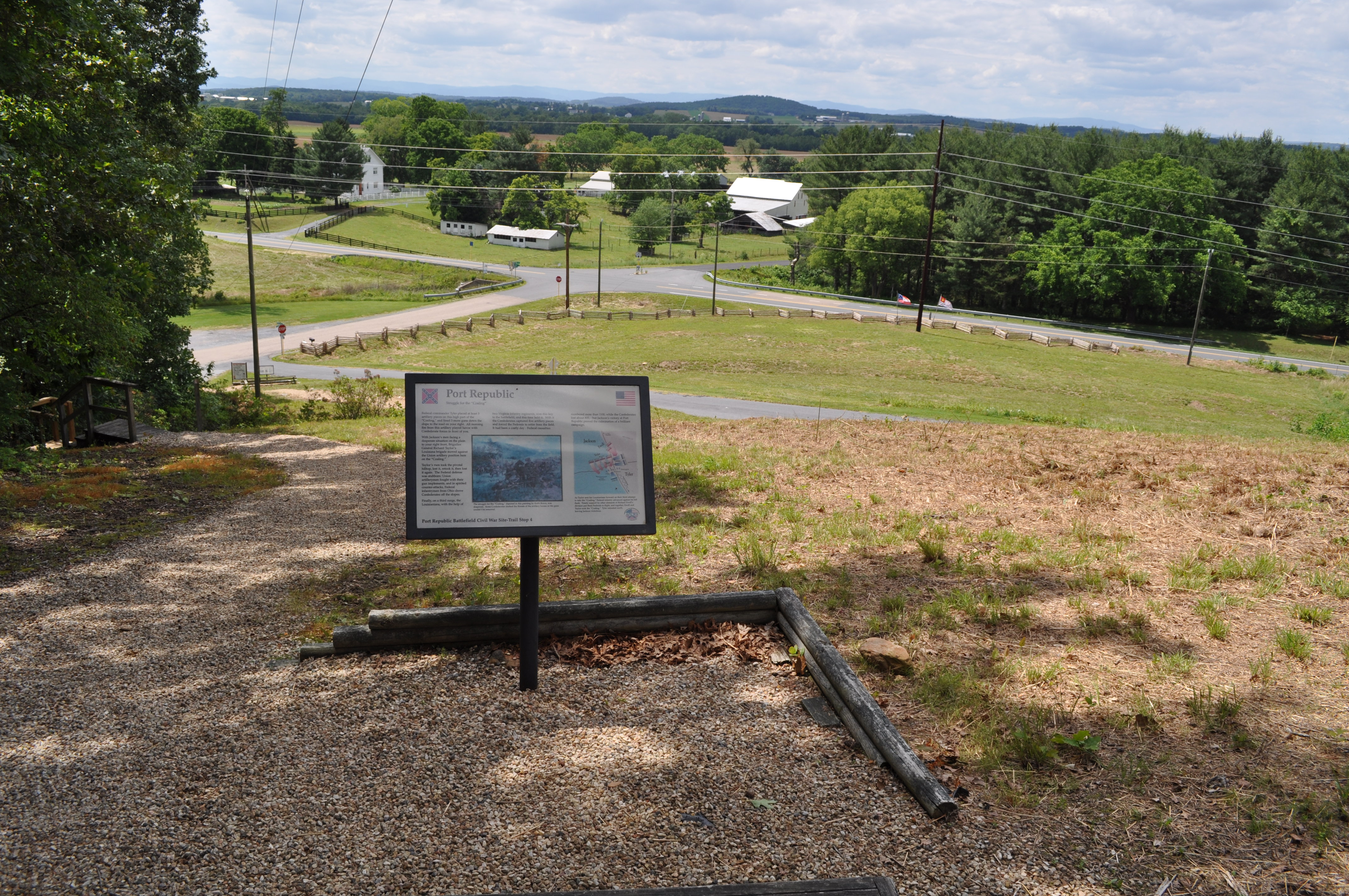
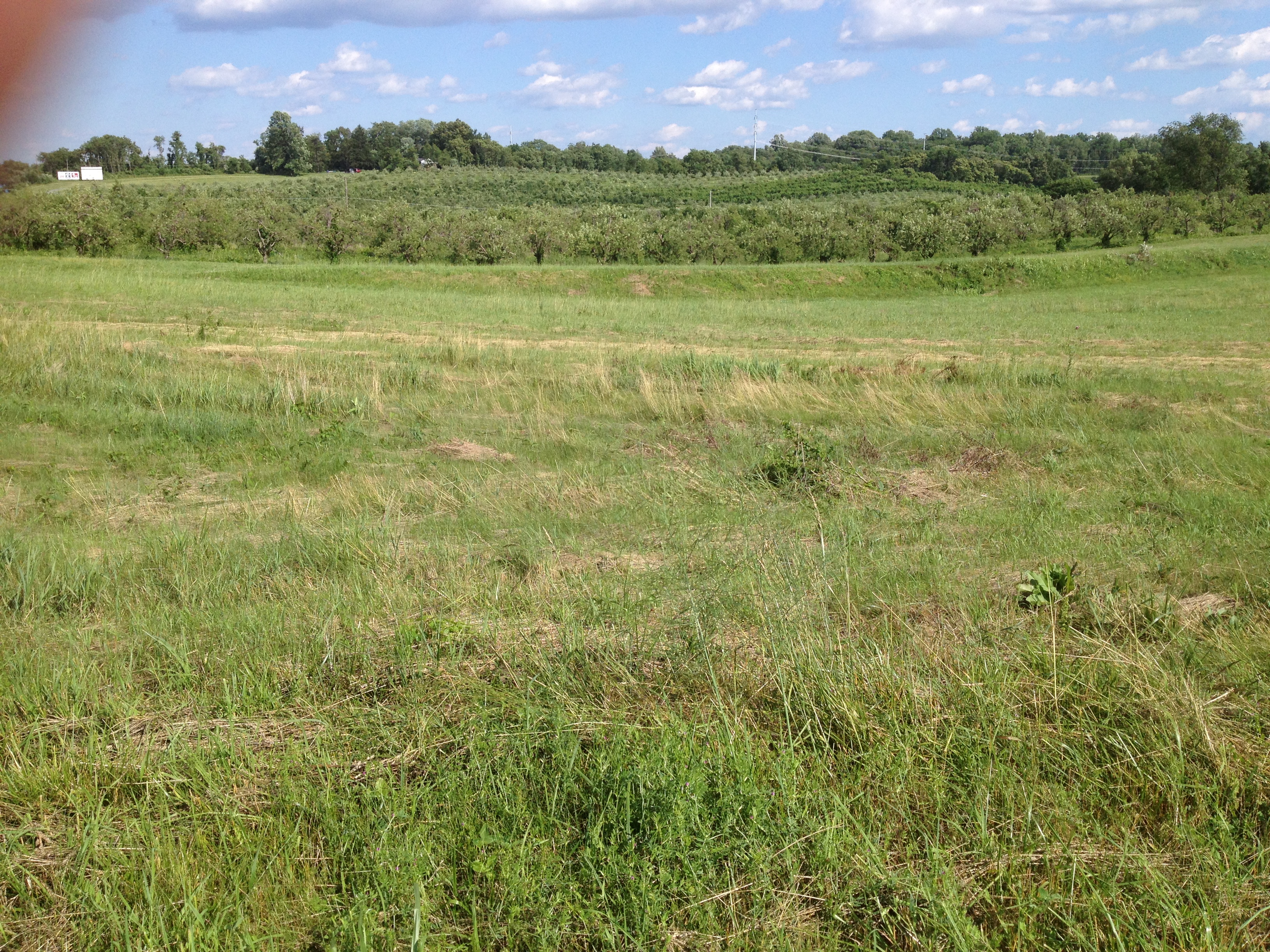
Just a year ago I was visiting the Port Republic Battlefield near Harrisonburg, Virginia. I was at “The Coaling” – which is a high ground position originally held by the Union. It is a short walk up a steep incline to a marker near the top. I was the only person there at this rather remote location. And it happened again – a tour bus pulled into the parking lot of a church just across the street at the base of the hill, and there was Ed Bearss leading the way – swinging his stick and colorfully pointing out the history of the place! (The pictures are of this event.)

DSC_0159

Confederates Invading Maryland – 150 Years Ago

The Gettysburg Advance / WV Statehood  

As I move around today and this weekend here in Washington County, MD, I am sure my thoughts will at times take me back 150 confederate crossing pic - modernyears to this date where, all over this area, floods of Confederate soldiers were crossing the Potomac and heading north to Pennsylvania – ultimately to that grand Battle of Gettysburg. Some North Carolina troops of Ewell’s Corps were the first to cross at Boteler’s Ford below Shepherdstown on June 18th. The river was running higher than usual, making the crossing best accomplished in the buff with rifles and clothing held overhead. There are a lot of CW history sights that I would have liked to see, but this one I could do without!

But I often tell people whom I meet at Antietam that they can easily see this ford on the satellite view of Google Maps – look just downstream from Shepherdstown. The picture shows the shallow nature of the Potomac at this spot with the appearance of horizontal lines across the river – indicative of rock bottom formations and shallow falls. To see it, click HERE.

On this very date of June 22 in 1863, the weather was apparently rather dreadful – a theme that will be much repeated in the coming weeks of looking back at that wet summer. Robert Park of the 12th Alabama wrote of it as “the hardest rains I ever saw, pouring down during the entire night.”  He also wrote of the strange welcome received in the county – the indifference of the men leading him to believe (rightly) that most were Unionist in sympathy, though the women seemed more friendly with waving handkerchiefs, etc.

Private George Harlow of the 23rd Virginia passed through Sharpsburg at this time and wrote this grueling note to his family, “I have been this morning over the old Sharpsburg battle field and have witnessed the most horrible sights that my eyes ever beheld. I saw dead Yankees in any number just lying on the top of the ground with a little dirt throwed over them and the hogs rooting them out of the ground and eating them and others lying on the top of the ground with the flesh picked off and their bones bleaching, and they by the many hundreds! Oh what a horrible sight for human beings to look upon in a civilized Country! When will this horrid war ever end …”

West Virginia Statehood – 150 Years Ago

While thousands of Confederates were strolling through the Shenandoah Valley headed north, West Virginia officially became a state in the Union 150 years ago this past Thursday (20th). The 35th state joined the Union by presidential proclamation.

The process leading to this event had long roots to the days before the onset of the War. The region of the state west of the Shenandoah was markedly different than the eastern portion of Virginia. This was particularly true relative to the much more minimal presence of slavery, hence also a substantially different disposition toward secession.

An excellent article on the backgrounds and details of this may be found HERE

First Visits to Antietam

IMG_0676[1]Two different groups of people at Antietam this past week have reminded me of my earlier visits to the Battlefield before I moved to this area in 1994.

The Boy from Harmony – I grew up in a rural farm country community in northwest New Jersey called “Harmony Township.”   While a 7th grade student at Harmony Elementary School, my history teacher gave an assignment to select a battle of the Civil War and write a report about it. Since I had an older married sister living in Ellicott City, anything to do with Maryland was very, very cool to me … and “Antietam” sounded like a really cool name. So I chose this battle and enjoyed the assignment.

Soon after that, when visiting with my parents at my sister’s home, I talked my father and brother-in-law into driving me from Howard County out to this remote Western Maryland place called Sharpsburg. This was before Interstate 70 was built. It was a long ride up and down hills; the day was damp and dreary; but I was in my total element at Antietam … I loved it! My father thought I was nuts!

Last week I met up with a grandmother who was bringing her 7th grade grandson to Antietam. He had expressed a big interest in Civil War history, and his grandmother (from Los Angeles) was going to fuel that flame. As he walks up to meet me, I notice he is wearing a shirt that says “Harmony Hornets” on it. No, he was not from New Jersey; rather, he attends a Harmony Middle School in Loudon County, Virginia. But it made me think of the boy in me that first came to this place 46 years ago.

The big family of little kids – Today as I was hosting a school group from St. Louis, I was engaged in conversation by a man at Bloody Lane. He had listened to some of my narrative and had a series of questions. I was not able to talk with him very long, but noted that he had his wife and young family with him – four girls, with the oldest being about age 7-8.

This reminded me of my second visit to Antietam when the fourth of my (then) four boys was just a baby (he will be a senior at UMD this year). Our oldest would have been age 8.  We had stayed in a motel the night before in Martinsburg, and the baby was rather sick and had made quite a mess of the hotel crib. We came to Antietam, and I was beginning the “tour” with the family – following the tour route – and before long we were at the Cornfield parking area. In the time it took for me to turn off the car and walk around to the other side and open the door, two more of the boys had gotten sick and thrown up. That was the end of the vacation trip, and we just went home to New Jersey as quickly as possible.

At neither occasion of visiting did I ever imagine a day would come when I would live in this area and have the opportunity to be a part of the educational/interpretive efforts at Antietam. But it has been an enriching experience, and I trust that on various occasions I’ve been able to pique some interest in some children and teens … that they will remember a fun time at Antietam and in subsequent years bring their families … and so on through the generations.

The Second Battle of Winchester – June 13-15 of 1863

I had a chance to make arrangements to be in Vicksburg on the exact dates of sesquicentennial events in a few weeks – with a conference I could have attended just before that time in New Orleans. But I chose not to, as honestly, I’d rather not deal with crowds on battlefields … even as those are times with some of the best programs.

But living close to northern Virginia, I did choose to go on the actual middle day date of the Second Battle of Winchester. No crowds at all! In fact I never met another person at any stop except for one – where two re-enactors and a history person were preparing for an evening program.

There is a tourism visitor’s center on the south end of town, where I was able to pick up a driving tour brochure for the battle – noting also a similar document for the First Battles of Winchester and Kernstown. Some of the stops are remote, and several are in the middle of housing developments or on the edge of town. But it is not difficult to get a sense of what happened and how the original terrain appeared. The best stop is the Star Fort.

Battle Summary

The Army of Northern Virginia, having departed the Rappahannock, had gone west of the mountains and swung north through the Shenandoah Valley toward what would eventuate as the ultimate destination of Gettysburg. Screened by the Blue Ridge, the first significant force of the Union to be encountered was at Winchester – about 8,000-9,000 troops under Robert Milroy. The Confederates had about 12,000-13,000 in the Corps of Richard Ewell. (All of these numbers vary wildly in different accounts and resources, but it is certain that the Confederates had about 50% more on this occasion.)

Milroy entirely overestimated the strength of his position and fortifications, while entirely underestimating the possibility of a large force overwhelming him. He had three forts of various sizes to the north and west of the town. Early fighting on the south side of Winchester on the 13th drove the Union men back to the forts, while the Confederates swung a significant force to the west. Late in the afternoon of the 14th, the Rebels surprised Milroy’s troops at the West Fort with a powerful advance supported by a significant amount of artillery. The Union men retreated to the east to Fort Milroy, while to the northeast at the Star Fort, the Baltimore Light Artillery pounded the Confederates at West Fort with accurate fire.

IMG_0668That evening, Milroy arranged for a retreat to abandon Winchester and head for Harpers Ferry. Anticipating this very movement, another Confederate flanking action to the east (the division of General Edward Johnson) cut off the retreating Federals at Stephenson’s Depot, capturing 4,000 men and considerable amounts of artillery and supplies. Lieutenant Colonel Richard Snowden Andrews commanded an artillery battalion, with the battery of two guns of C.S. Contee holding the center of the line at a bridge. The heavy fighting at that spot resulted in 13 of the 16 artillerists being killed or wounded. Lee called this stand at the bridge “the Thermoplae of my campaign.”

The Second Battle of Winchester was one of the finest hours of the war in terms of the well-timed and executed Confederate logistics and fighting. It was a disaster for Milroy and the Union. Lee’s invasion was off to a great start.

Photos

The Logan House in Old Town Winchester - the headquarters of Milroy - now a giant gift shop

The Logan House in Old Town Winchester – the headquarters of Milroy – now a giant gift shop

West Fort locations - I was there exactly to the hour - 150 years later - of the Confederate attack

West Fort location – I was there exactly to the hour – 150 years later – of the Confederate attack

IMG_0655 IMG_0660

IMG_0669

The Richard Snowden Andrews monument to the NE of Winchester


Marines Training at Antietam

Over all the years since the Battle of Antietam, various branches of the United States Military have used the battlefield for teaching and training in leadership, strategy, logistics, etc.  From time to time, our Antietam Battlefield Guides organization has assisted, and that is a great thrill for all of us who have ever participated.

But more often, Army or Marine groups come on their own with their own instructors. It is not at all a rare experience to see a busload or two of young adults experiencing the unique setting and landscape that is Antietam/Sharpsburg.IMG_0644

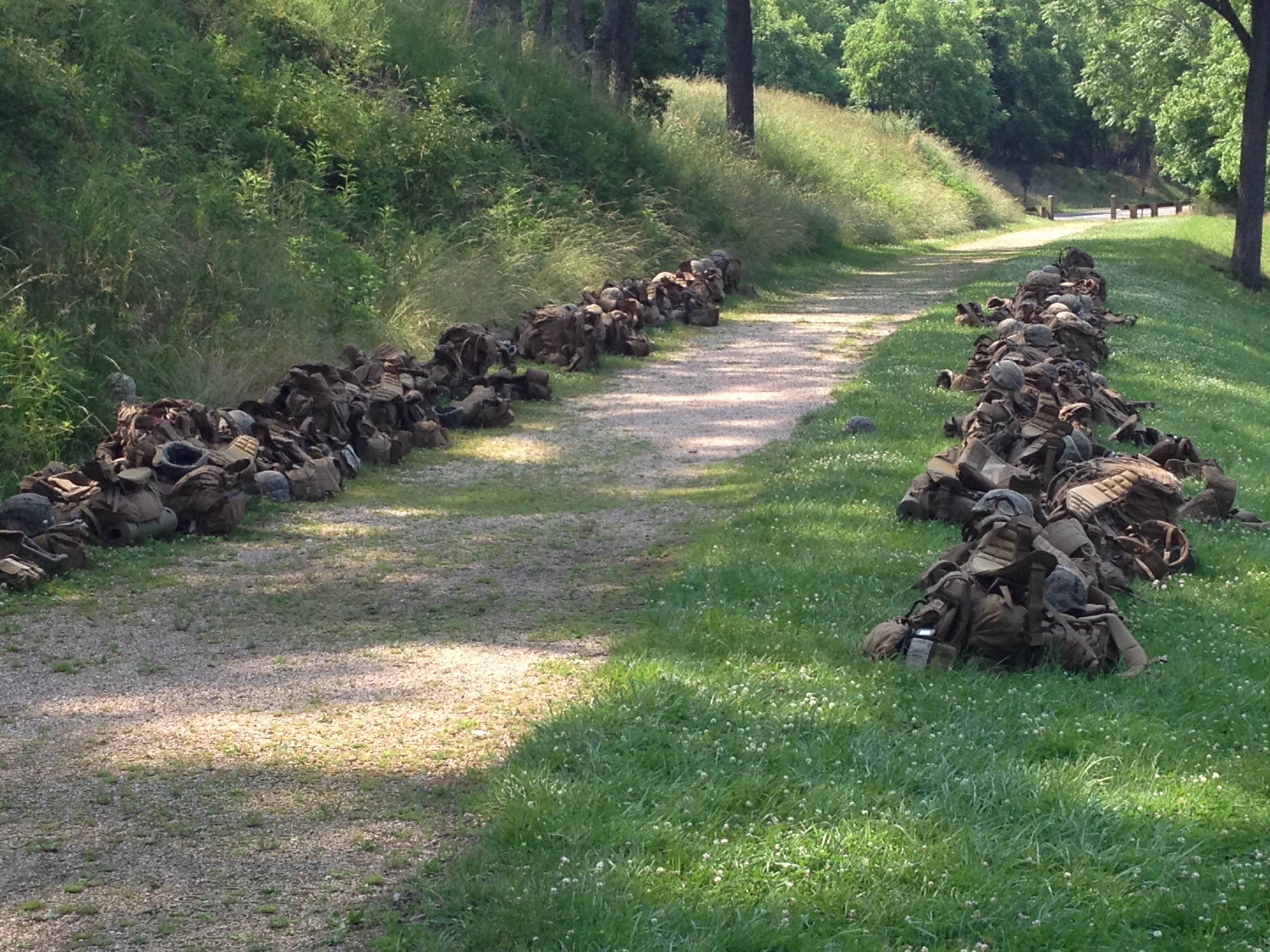
Just recently, as I was driving south on the old Hagerstown Turnpike, I happened upon two columns of marines beginning an exercise – moving in lines to the north on each side of the road. So I drove right down between them.

It was a rather warm and humid day, and they were fully equipped with gear and packs beyond the conditions of the day. So it was going to be a severe training exercise of the body as well as the mind.

I met a couple of the leaders in the visitor’s center who were not on the hike, and I learned from them that they were from Quantico and that the recruits were on a seven-mile hike with instructors teaching at varied locations.IMG_0646

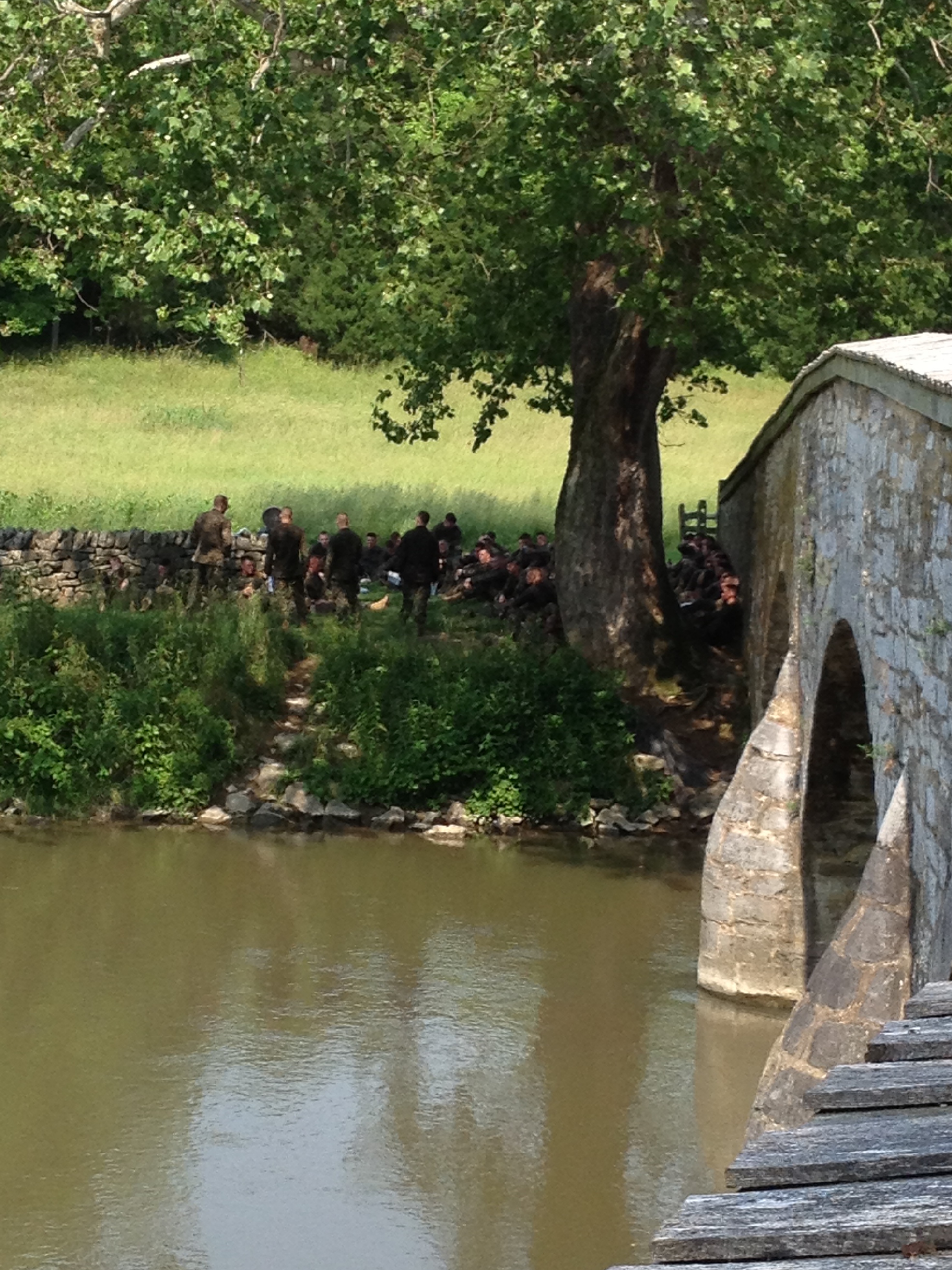
Three hours later, as I was finishing with my guest, there they were at the Burnside Bridge. They had dropped their equipage, crossed the bridge, and were sitting in the shade of the witness tree – the giant sycamore – being instructed about the battle at that location. A number of them were taking off their boots and socks and dealing with some sore feet as the teaching was going on. And they had quite a walk yet remaining to get back to the visitor’s center area.

Seeing this reminded me again of the impressive nature of the way the Confederates in particular could cover so many miles – especially Stonewall Jackson’s men, who covered 57 miles in three days just a week before the battle. This was a march from Frederick to Harpers Ferry. And also, at the south end of the field, we are mindful of the impressive nature of A.P. Hill’s men who covered 17 miles in about seven hours to arrive just in time to save Lee from possible destruction. I suspect also that they were not nearly as well fed as our modern marines from Quantico.

IMG_0645

The “Wily Agitator” versus the Wilier Lincoln

Copperheads, Vallandigham, and the Trump Card of Lincoln

On this date of June 12th in 1863, President Lincoln wrote the first of two letters to New York and Ohio Democrats – letters reprinted in hundreds of newspapers and produced into a 500,000-copy pamphlet – discrediting the cause of Clement Vallandigham and the Copperhead faction in the mind and eye of the public. And the soon-to-come battlefield victories at Gettysburg and Vicksburg sealed the deal.

There is a new movie coming out on June 28 called “Copperhead.”  It is produced by Ron Maxwell – the guy who produced “Gettysburg” and “Gods and Generals.”  There was always a desire to do the third of that Shaara trilogy … “The Last Full Measure,” but it is yet to be realized. Financing such a thing is the problem of course, and a loan/eventual repayment controversy in my home area here of Washington County, MD made for no small controversy over a period of years. I read the following in an online interview with Maxwell where he said of the third film, “We certainly hope to someday do it. ‘Copperhead’ has lot of scale and a lot of scope, but it has no battle scenes. Once you have battle scenes, such as the Wilderness campaign, you are talking about a lot of money. Perhaps, if we get lucky with ‘Copperhead,’ and it is a viable, commercial success at the box office, then the odds of making ‘The Last Full Measure’ are greatly enhanced.”  I hope the “Copperhead” film is a success and that the final of the trilogy can be accomplished as well.

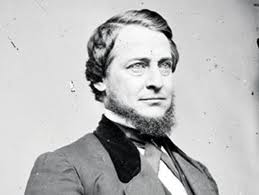
Clement Laird Vallandigham

Clement Laird Vallandigham

The Vallandigham affair is a bit complicated, but broadly understanding it will serve as a good basic foundation for enjoying the upcoming film. Let me attempt to put it into bullet points:

  • Clement Vallandigham was an Ohio member of the US House of Representatives, having been elected in 1858 and 1860. He was the leader of the antiwar Peace Democrats – the Copperheads.
  • Vallandigham gave a speech to the House on February 20, 1861 entitled “The Great American Revolution” in which he described the Republican Party as “belligerent” … stating that the country faced the “choice of peaceable disunion upon the one hand, or Union through adjustment and conciliation upon the other.”
  • Vallandigham particularly espoused the themes of Copperhead thinking in a January 14, 1863 speech to the House, along with a speaking tour soon after, upon the end of his term of office. Hoping to achieve the governorship of Ohio that year, he proclaimed that the Lincoln administration was fighting more for abolition than Union. He stated that he could see more barbarism and sin by a thousand times in the continuance of the war and the enslavement of the white race by debt and taxes than could be seen in black slavery.

    General Burnside

    General Burnside

  • General Ambrose Burnside, upon his departure from the Army of the Potomac, had been appointed Commander of the Department of the Ohio. There, he issued General Order Number 38 in April of 1863, warning that the “habit of declaring sympathies for the enemy” would not be tolerated in the Military District of Ohio. On May 1, Vallandigham gave a major speech than again rehearsed the theme about the war being fought not to save the Union but to free the slaves by sacrificing the liberty of all Americans to “King Lincoln” … encouraging desertions and an end to the war. Burnside also suppressed circulation of the Chicago Times.
  • Vallandigham was arrested on May 5th and tried by a military court on May 6 and 7. Lincoln commuted the sentence from imprisonment to expulsion to the Confederacy, where Vallandigham was banished under a flag of truce in to the Confederate  lines in Tennessee. He escaped the Southern states on a blockade-runner and settled for a time in Canada. The Democrats in Ohio nominated him for Governor, though he would ultimately lose the election.
  • The Lincoln letter of June 12, 1863 was one of several such occasions where he would take his case on a particular issue to the American people. The more wily President would refer to Vallandigham as a “wily agitator.”  Lincoln argued well for the merits of his decision and of the guilt of the whacky Ohioan, using one of his colloquialisms by writing, “Must I shoot a simple-minded soldier boy who deserts, whilst I must not touch the hair of a wily agitator who induces him to desert?”

Vallandigham actually appeared at the 1864 Democratic Convention. He supported McClellan, but was no asset for the party. After the war, the wily agitator would be unsuccessful in several runs for congress.

Vallandigham would die in 1871 in a way that is so bizarre, one feels like when writing about it that you have to say, “I’m not making this up!”  As a lawyer defending a man for a murder charge against another man in a barroom fight, Vallandigham demonstrated with a quickly drawn pistol that the victim had in fact killed himself. Not realizing the pistol was loaded, he accidentally shot himself fatally in the process – though it did get the guy acquitted!

The Battle of Brandy Station – 150 Years Ago Today

The largest cavalry battle of the Civil War occurred in Virginia 150 years today – June 9, 1863 – with the Battle of Brandy Station, engaging roughly 10,000 combatants on each side.

The Confederate cavalry commanded by JEB Stuart consisted of five brigades under such notable leadership as Rooney Lee, Grumble Jones, Thomas Munford, and Wade Hampton. Two recent cavalry reviews had taken place: the first for the ladies, the press, and Stuart’s enjoyment, and the second involving Robert E. Lee on the 8th.

Lee’s plans for the cavalry were to cross the Rappahannock to the north to screen the recent movements of Ewell’s and Longstreet’s infantry, now marching to the west and north – ultimately to travel up the Shenandoah (meaning down the valley to the north).

But before Stuart could get started, Hooker sent Alfred Pleasonton and the Union cavalry on a movement to cross to the south of the Rappahannock, engaging the Confederate cavalry near Brandy Station in a preemptive raid in order to “disperse and destroy.”  The Yankee cavalry would cross at Beverly Ford two miles to the northeast , as well as six miles to the southeast at Kelly’s Ford.

John Buford’s Union Cavalry did indeed achieve quite a surprise, crossing the Beverly Ford at about 4:30 a.m. The Confederates rallied quickly, some of them half-dressed and riding bareback. Nearby horse artillery set back the Northern advance and gave more time for the Rebels to organize.

General David Gregg’s wing of the Union cavalry crossed the Kelly Ford at a later time, joining the battle also at a later moment … but like Buford, catching the Confederates by surprise for the second time. Sweeping in from the east and southeast, the Federal Cavalry displayed their best day of the War so far with charges and counter-charges. Given the great surprise of it all, the Confederates managed to make a reasonable defense out of the situation.

After 10 hours, Pleasonton ordered a general retreat back to the north side of the Rappahannock, feeling he had accomplished his purposes. Actual Confederate losses were not terribly high, all things considered – in the 500s … with Union losses in the 900s (less than 100 killed). The greater loss for Stuart was in the Southern press, which was very hard on him and the entire cavalry for the surprise nature of the attack. This played out as a factor in Stuart’s motivations and decisions for the circuitous ride of the cavalry in the Gettysburg campaign.

For the Union, this was a day of arrival and maturity for the boys on horse. No more was heard the expression, “Who ever saw a dead cavalryman?”

Cav Fight at Brandy Station