150 Years Ago Today – Battle of Cross Keys

On this Sunday, June 8th of 1862, Stonewall Jackson was enjoying the Christian Sabbath, but was nearly captured by Union cavalry in Port Republic, VA – the site of a conflict the next day. And about four miles to the northwest, a significant engagement erupted known as the Battle of Cross Keys.

After Jackson’s victories of 5/23 and 5/25 at Front Royal and Winchester, he withdrew his troops up the Shenandoah Valley (to the south) to remain in advance of converging Union forces. General Fremont’s troops moved toward Jackson from the northwest, while General Shields was advancing with significant numbers from the northeast. Jackson needed to prevent these forces from joining against him.

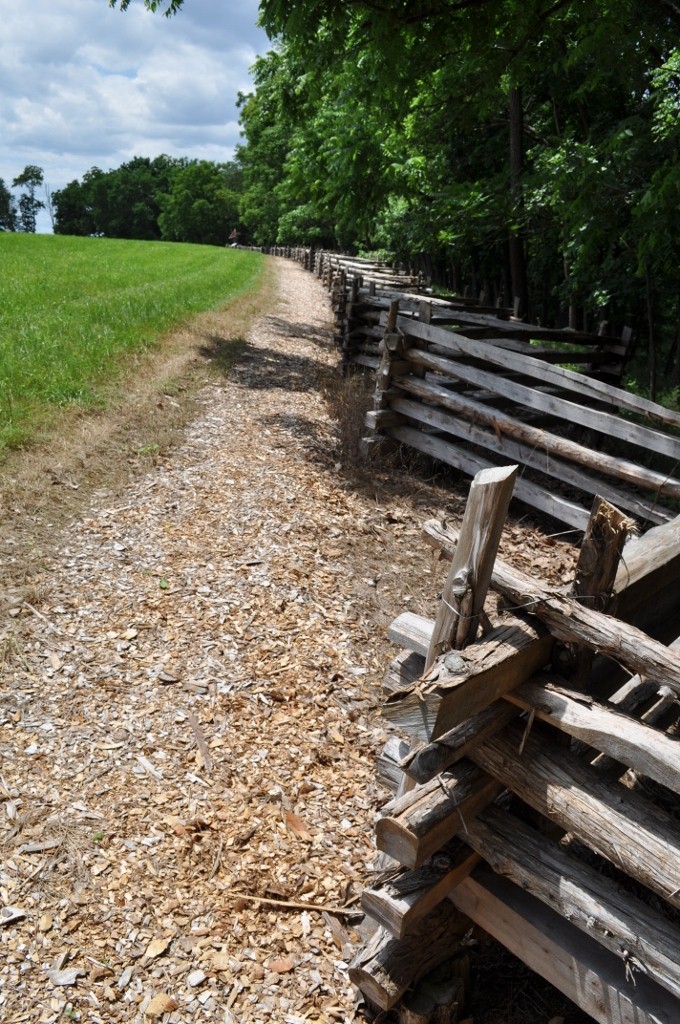
Halting the advance of Fremont from the northwest was the 5,000-man Confederate command of Richard Ewell. His main force was posted behind Mill Creek in an elevated position perfectly designed for such a defensive line. The 15th Alabama was sent ahead to slow the advance, but was easily pushed back. Fremont pounded the Confederate line with 40 artillery pieces for two hours and then sent forward on attack. Leading the way the 8th New York – a largely German regiment under Julius Stahel – who were slaughtered in a cross fire from Isaac Trimble’s Brigade which had taken concealed cover behind a rail fence.

The Union forces found little success at any point along the line and were called back from the attack. The Confederates had held off the command of Fremont from joining Shield’s troops – who would fight Jackson’s command the next day at Port Republic.

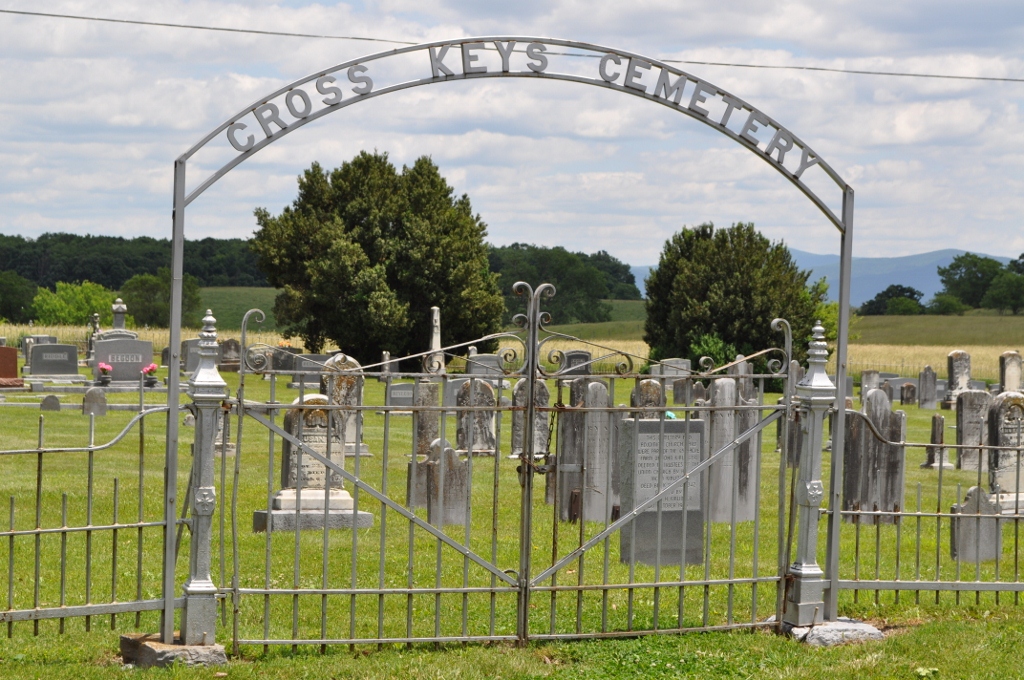
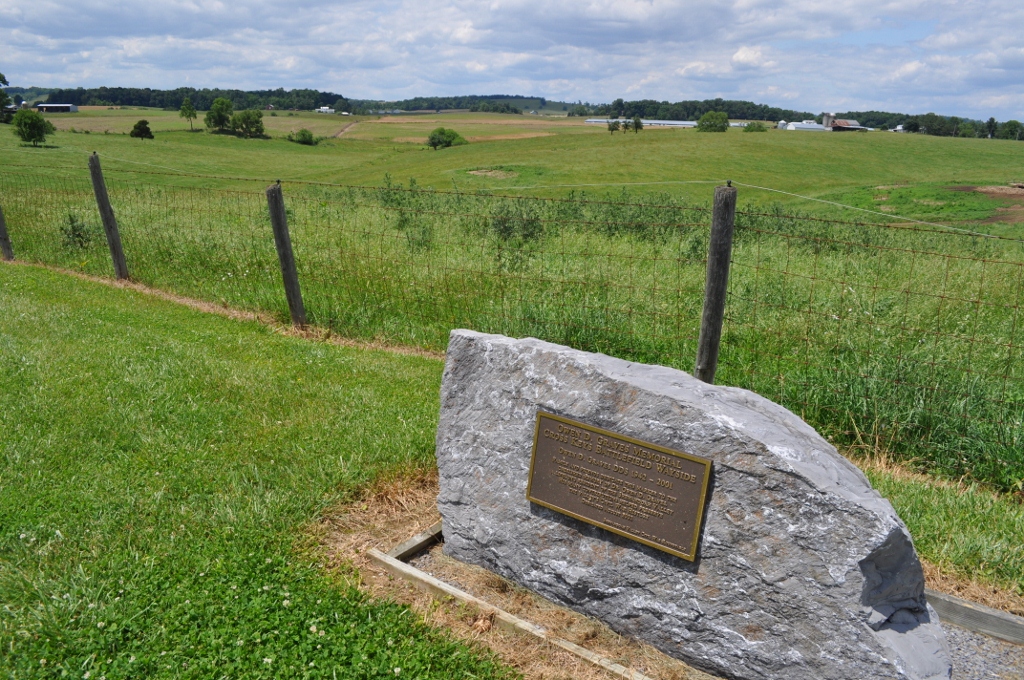
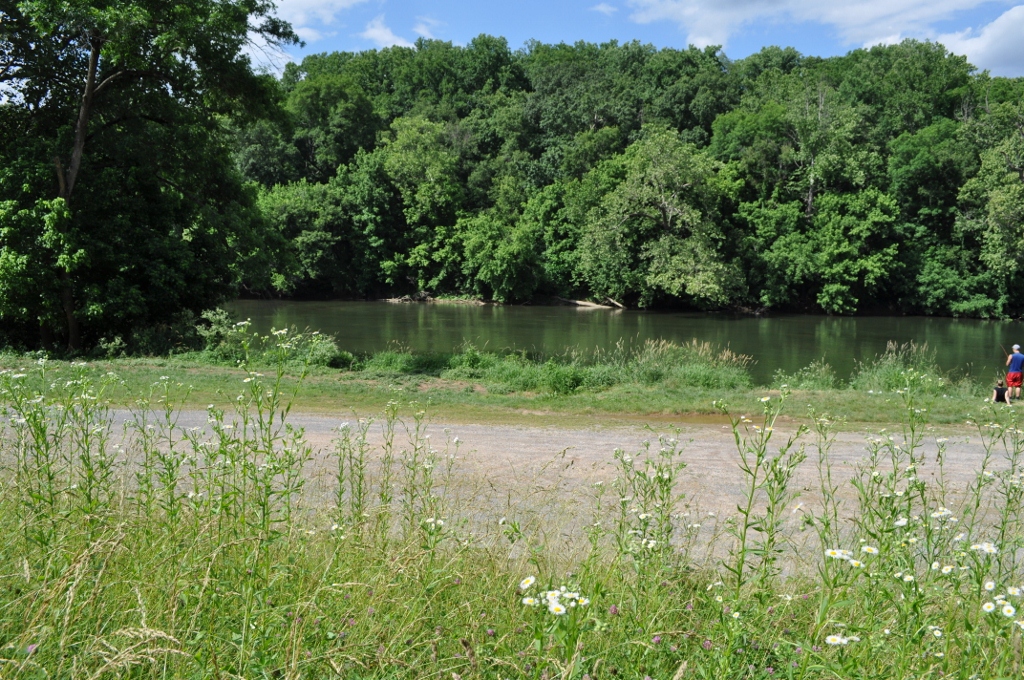
The area surrounding the Cross Keys battlefield is an exceptionally beautiful rolling countryside. Here are series of pictures with captioned remarks – all these taken last weekend.

Union artillery took position all along the plains seen in the background of this picture – taken from the western side of the battlefield – looking toward the northeast … The Massanutten ridge is seen on the horizon.

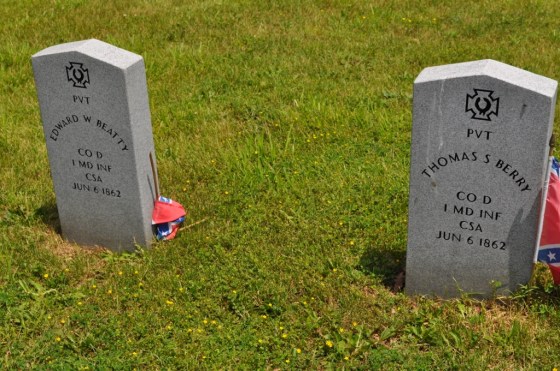
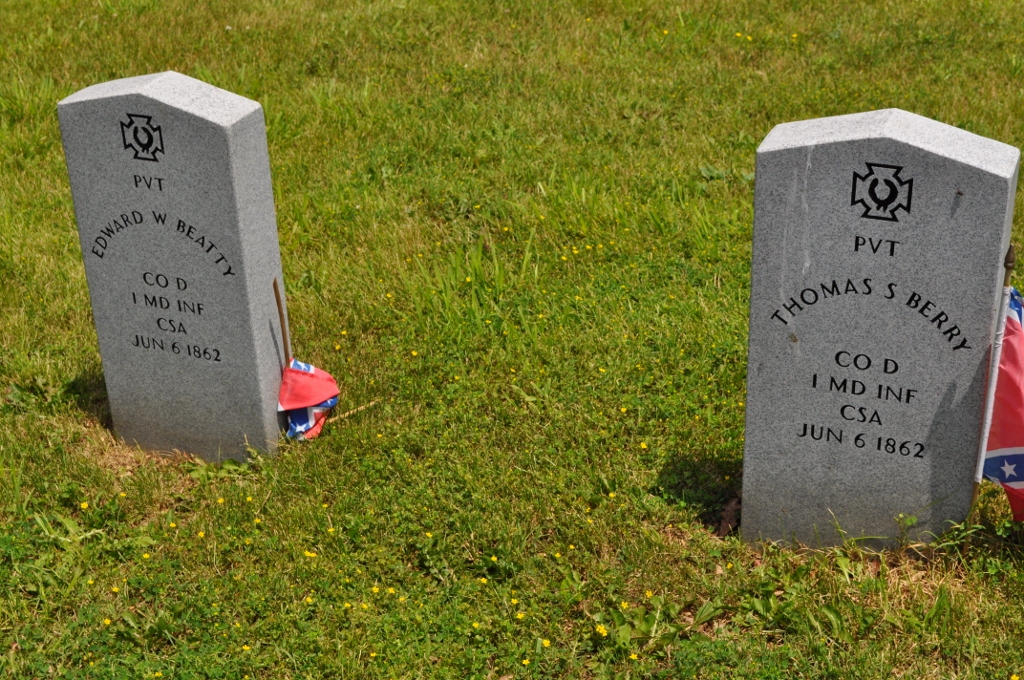
The death dates of these two Confederates from MD indicate that they fell in the rear-guard action on the 6th (see previous blog post) under Turner Ashby – where the 1st MD was considerably engaged. They were also in position on the extreme left of the defensive line at Cross Keys – which would be relatively near this church cemetery.

This angled road rose from the Mill Creek and is the path ascended by the 15th Alabama as they pulled back from their original advanced position to this main Confederate line.

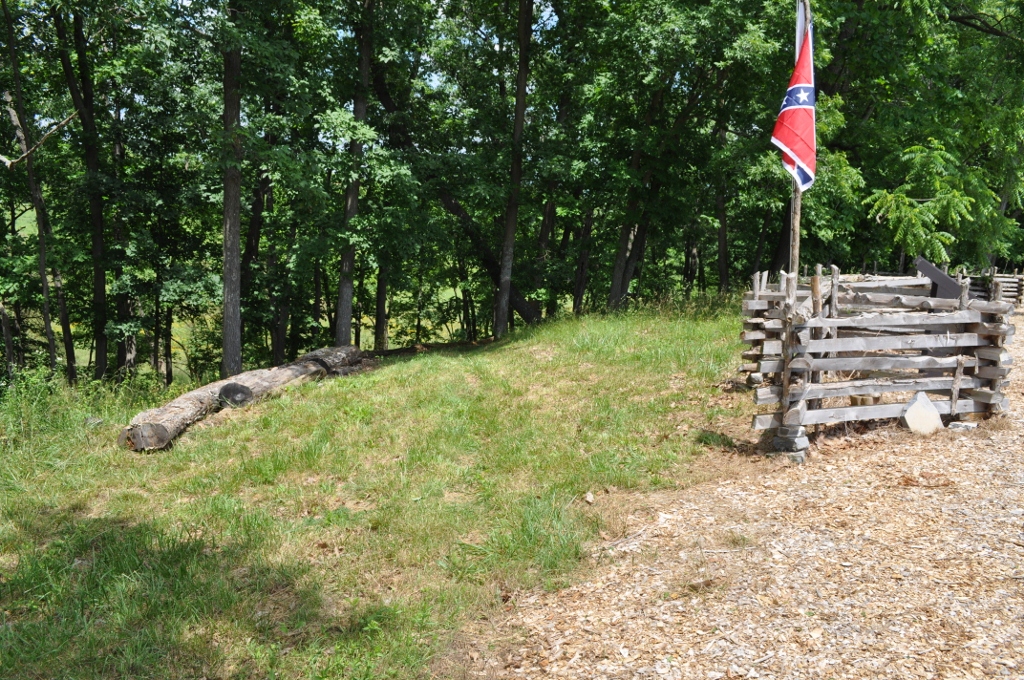
This is the Confederate line above Mill Creek – sadly the trees now prevent a full appreciation of the excellence and strength of this position.

The fields to the left-front would be those through which the 8th NY advanced.

150 Years Ago Today: Death of Turner Ashby

“The Black Knight of the Confederacy”

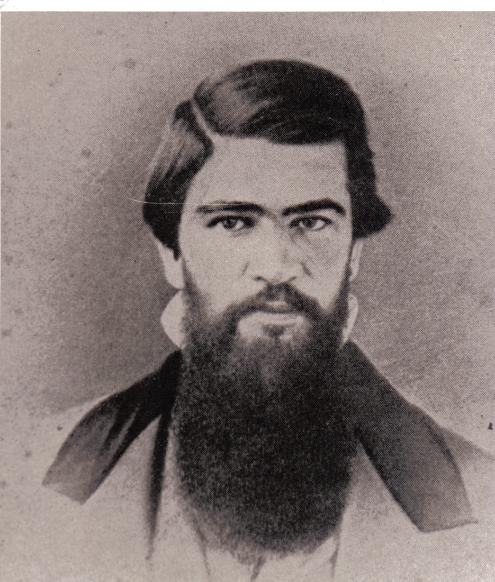
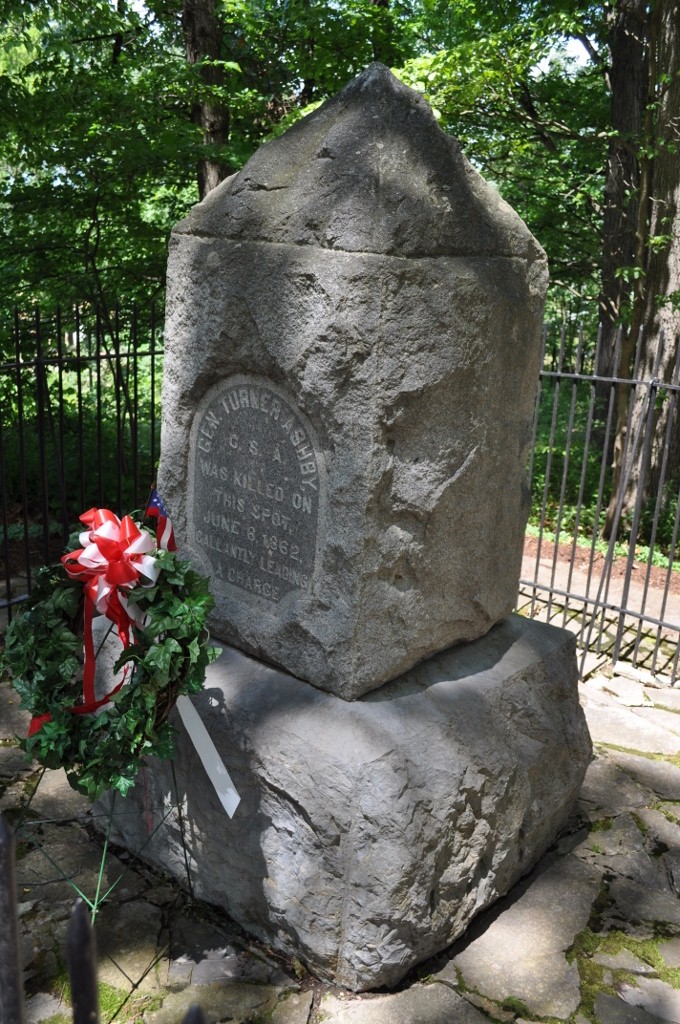
Cavalry commander Colonel Turner Ashby died in battle on this date in 1862 as part of a rear-guard action near Harrisonburg, Virginia. His 7th Virginia Cavalry was holding off the advance of Fremont’s troops coming from the west toward what would be the Battle of Cross Keys two days later. Here is a picture of the monument – located at the very place where he died from a shot through the heart. The monument is in a beautiful grove of trees on the crest of a ridge – that is now pretty much being surrounded by construction of JMU athletic fields on the plains below. (more text after picture)

Ashby was a largely self-taught commander, who possessed some significant leadership skills by nature of personality. However, by not having the formal military background, his troops tended to be, by military standards, oft undisciplined and free-spirited. After the battle of First Winchester, they were known to have been plundering captured supplies rather than taking full advantage of an opportunity to cut off the retreat of Union forces under Nathaniel Banks. But the larger issue involved the failure in April of cavalry under Jedediah Hotchkiss to burn three bridges over the South Fork of the Shenandoah River. The Red Bridge was successfully destroyed (see picture below), but between Federal resistance and the effects of too much “apple-jack” the Columbia and White House bridges remained. Frustrated by this, Stonewall Jackson transferred the command of the Valley Cavalry to two infantry commanders. This change so infuriated Turner Ashby that he resigned on the spot in a contentious meeting with Jackson in Elkton (see picture below). Jackson was forced to give in to Ashby, not wanting to lose this valuable asset to the army.

The site of the Red Bridge over the South Fork of the Shenandoah

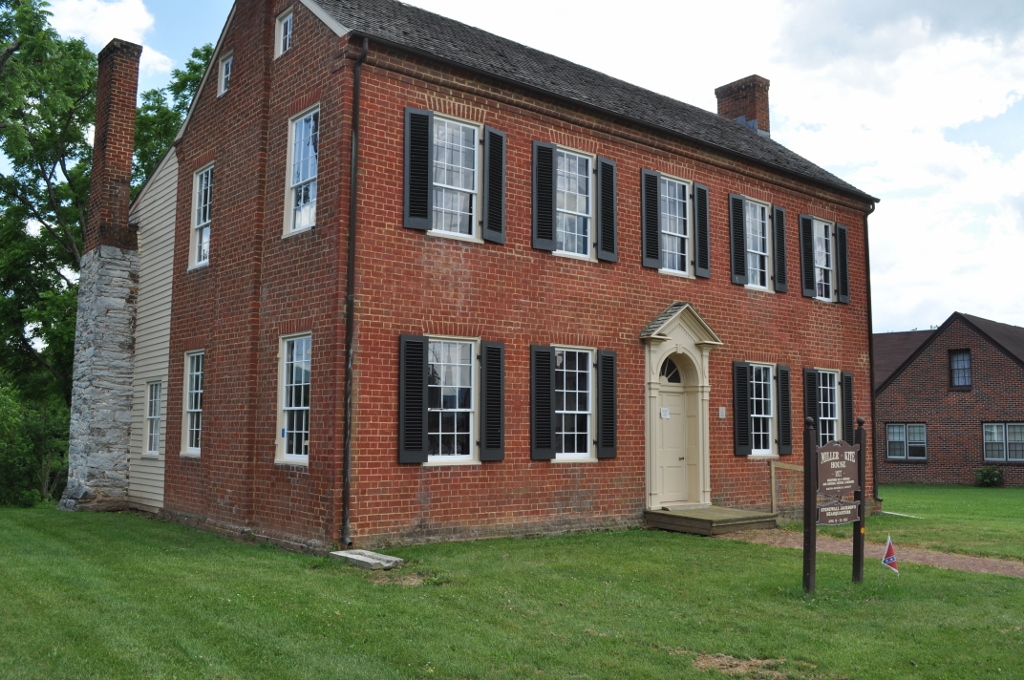
The home in Elkton, VA where Stonewall Jackson had his headquarters for two weeks.

Doubleday in Chambersburg – 151 Years Ago Today

151 years ago saw the early days of the Civil War lapping upon our doorsteps here in Washington County, Maryland. Again, this is material I would have wished to post a year ago … still playing catch-up. And of course this is also the product of my Doubleday research …

On June 1st of 1861, the Sumter garrison was ordered to join General Robert Patterson’s column at Chambersburg, Pennsylvania. Patterson was a 69-year-old veteran of the War of 1812 as well as the Mexican War, and an influential personage in Pennsylvania politics. The owner of numerous cotton mills, Patterson rejoined the Army with the outbreak of the Civil War (though he may have been wiser to stay in business). The New Jersey Central Railroad carried Doubleday’s troops through Easton and Harrisburg, and on to Chambersburg by the 4th, where he reported to Colonel George H. Thomas. This arrangement was very agreeable to Doubleday, as he knew Thomas well from his earlier years in the 3rd U.S. Artillery. The unofficial word was that Doubleday’s troops were to be used as a “forlorn hope” (a first wave storming party wherein a high percentage of soldiers were likely to be casualties), and to get the volunteers trained to fight.1

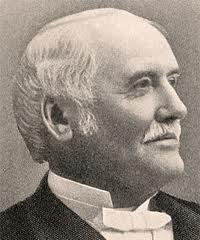
In the months after the bombarding of Sumter, unlike many officers around him, Doubleday rightly perceived the inevitability of a major conflict. His first-hand experience of observing the aroused passions of Charlestonians had made a strong impression. While in Chambersburg, the column camped on the farm of a prominent Pennsylvania attorney, anti-slavery newspaper publisher, and political activist named Alexander

Alexander McClure

McClure. Having invited the veteran General Patterson and his staff to dinner, the entire group enjoyed a pleasant evening of cigars on the porch of his farmhouse.  Naturally, the topic of a pending war was primary in the conversation. McClure recorded that the consensus of these generals and colonels was “agreed that it might be necessary to fight one general battle, but beyond that the war could not possibly be extended.” This sentiment prevailed due to confidence in superior resources in the North. Only two officers voiced concerns opposed to this general line of thinking. One was the Virginia native, George H. Thomas, who warned “how terribly the South was in earnest, and how desperately its people would fight for their homes.” The other dissenting opinion was offered by Abner Doubleday, who spoke of having been “in immediate intercourse with the Southern people.  He declared with great earnestness that if one general battle was fought between the North and the South, it would precipitate the bloodiest war of the century.” Apparently not long after this exchange, Doubleday was called away to duties with his command, and General Patterson remarked that it was a shame that Doubleday was “gone in the head.”2 An additional McClure recounting of this incident records that after Doubleday’s departure, several of the officers ridiculed his opinion of an extended war, with one of them saying that Doubleday was a Spiritualist, and a little “gone in the head.”3 This is an early reference to a viewpoint usually thought to have only been a quirky belief of Doubleday in the latter years of his life. But whatever it says about Doubleday’s personality and theology, or lack of personality and theology, it certainly demonstrates a macro sort of understanding of the global nature of the crisis facing the country. It could also be seen as eerily prophetic!

1.  Doubleday: My Record During the Rebellion, vol. 1, p. 9.

2. Edward L. Ayers, In the Presence of Mine Enemies, (New York, 2003) 186-187.  This account is from the Alexander K. McClure Paper of the Library of Congress, Manuscripts Division, Washington, D.C., Abraham Lincoln Papers, Old Time Notes of Pennsylvania, pp. 491-493.

3.  Rock of Chickamauga: The Life of General George H. Thomas by Freeman Cleaves , Norman: University of Oklahoma Press, 1948… quoting from Alexander K. McClure, Lincoln and Men of War Times, p. 341.

ALSO – Here is a good link to learn more about Alexander McClure: http://deila.dickinson.edu/theirownwords/author/McClureA.htm

Never Know Who You’ll Meet on a Battlefield!

I spent the day yesterday in the Shenandoah Valley – particularly with a goal of bouncing around the Cross Keys and Port Republic Battlefields in the Harrisonburg area. It was very informative and I’ll have a series of posts about these fields on the sesquicentennial occasions this coming Friday and Saturday.

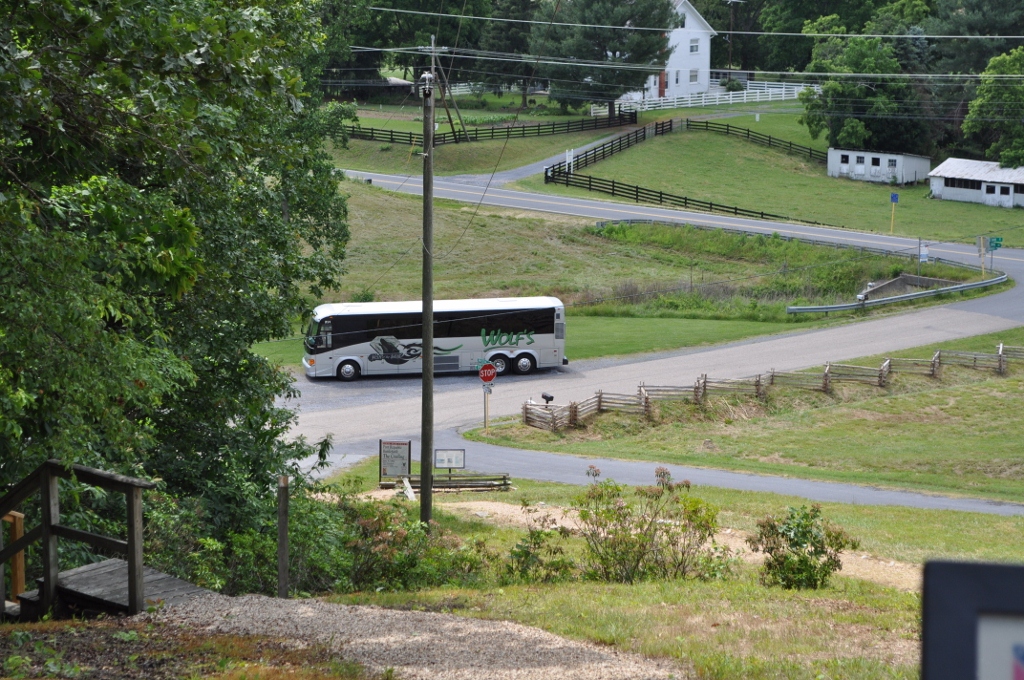
BUT … today … I was at the “Coaling” on the Port Republic field – which is a high ground position originally held by the Union. It is a short walk up a steep incline to a marker near the top. As I was sitting there enjoying the vista, up pulls a tour bus. (Understand – this is essentially in the middle of nowhere!)  By the time I walked down the hill, the bus had emptied out, and there in the middle of the group, gesturing with his walking stick in that inimitable gravely voice was Ed Bearrs!!!   I had to take a picture of it, just to prove to the other guides at Antietam that I was not making up the story…. so here you go:

General Gibbon in the Spring of 1862

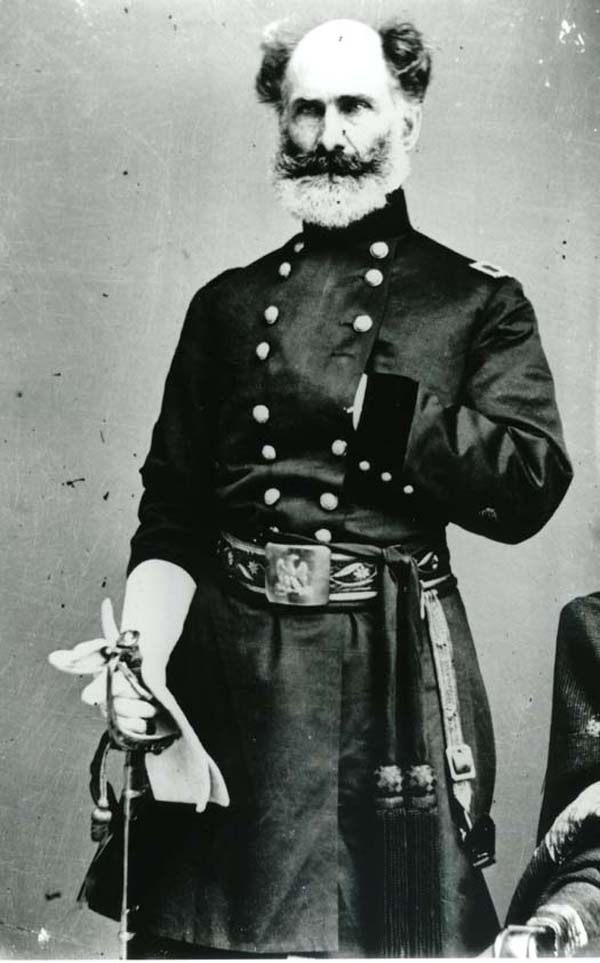
One of the more colorful generals and personalities that fought at the Battle of Antietam was General John Gibbon of North Carolina. As an 1847 graduate of West Point, Gibbon was a career artillery officer in the regular army. When the War came, he remained loyal to the Union and was granted command of a brigade of Western regiments, along with retaining his 4th U.S. Artillery, Light Battery B.

General John Gibbon

In the Spring of 1862, Gibbon, as part of McDowell’s Corps, was retained from joining McClellan on the Peninsula Campaign by duties in the Fredericksburg area. In his book Personal Recollections of the Civil War (1885), Gibbon wrote the following of his experiences in late May through June of 1862…

At times we almost fancied we caught the sound of McClellan’s guns as his army struggled along the Chickahominy towards the rebel capital. Everything was now reported ready for an advance, when, on the 23rd it was suddenly announced that the President, Secretary of War, and several other members of the Cabinet had arrived in camp from Washington and in the morning a circular was sent round inviting the Division and Brigade Commanders to pay their respects to the President at Gen. McDowell’s Headquarters in the Lacy House, a large family mansion on the bank of the river overlooking Fredericksburg.

On entering the large hall well filled with officers and others, Gen. McDowell presented us to Mr. Lincoln in the order of our rank, “Gen. Augur, Mr. Resident, Gen. Patrick, Gen. Gibbon.” We all advanced and shook hands with Mr. Lincoln. The last name seemed to catch his attention and assuming a peculiarly quizzical expression he inquired:–“Is this the man who wrote the ‘Decline and Fall of the Roman Empire?’”

Doubtless I looked somewhat confused at this pointed allusion, for placing his hand kindly on my shoulder, he said, “Never mind, General, if you will write the decline and fall of this rebellion, I will let you off.”

“Why,” I said, “Mr. President, the only book I ever did write—the Artillerist’s Manual—the War Department refused to subscribe to.”  He laughingly replied, “I shall have to tell Stanton to give you another hearing.”

The writing to which Gibbon referred was a booklet of his composition in 1859.  Gibbon taught artillery tactics at West Point, and the manual was a highly detailed composition on gunnery and was used by both sides in the Civil War.

Gibbon goes on in the pages following the quote above to talk about how his division was run all over the countryside of Virginia in an alleged effort to capture Jackson. He wrote that, “…by June 25th we were once more at our starting point – Fredericksburg – not having seen any enemy nor heard a gun fired during that time. … Our month’s operations however, were not entirely thrown away, for though we produced no beneficial results on the enemy, the experience and marching were valuable to our new troops.”

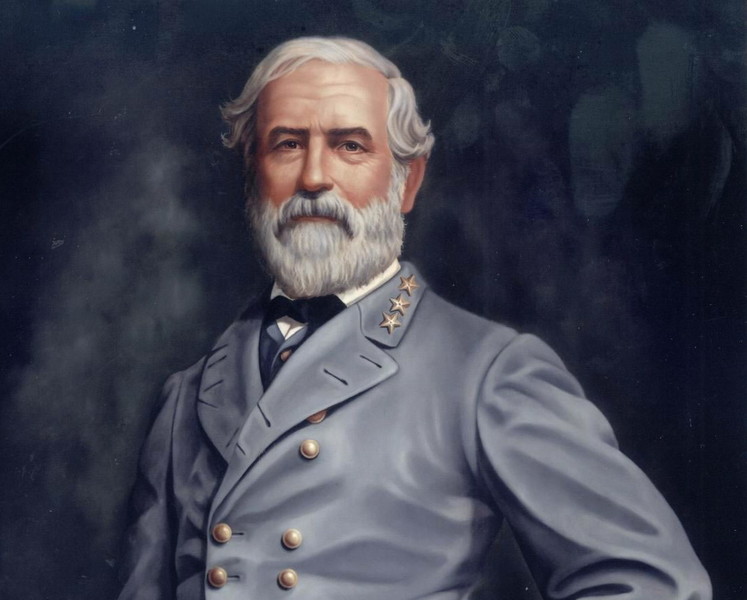
150 Years Ago Today: Robert E. Lee Assumes Command

June 1, 1862

It was around noon on this date that Robert E. Lee took command of the (soon to be named) Army of Northern Virginia. (So I have timed this post to go up on the blog at noon – cute, eh?)

Lee was age 55 at the time, and though known rather well by Jefferson Davis, he was not as widely known and respected by as large a number of other officers as might be expected. This is again one of those occasions where, from a perspective of 150 years later, we have to choose to drop in on the time with a mental blocking of all the “Lee-led” Confederate successes to follow. At this point, the army was sufficiently content with the leadership of the now wounded Joseph Johnston. The expectation at that time was almost surely that this was a temporary arrangement until Johnston could return to them. In these earliest days, Lee had the troops busy with digging in, and he soon became derisively called “the King of Spades.”

Lee’s abilities are now in our age the stuff of legend. He had a great capacity to lead men and work with varied personalities – dealing with both inflated egomaniac types while also moving past the failures and disappointments of others. Lee was able to absorb copious amounts of information from a wide variety of sources and translate that mass of detail into a visionary plan that was most often workable, manageable, and communicable.

A man guided by a deep sense of duty and faith, I as a pastor have to admire and affirm his stated guiding principles: “I think and work with all my power to bring the troops to the right place at the right time; then I have done my duty. As soon as I order them into battle, I leave my army in the hands of God.”  This seems to me to be a very rightly measured sense of human responsibility coupled with an appropriate view of Divine providence.

On June 3rd, Lee gathered divisional commanders for an extended meeting to seek varied views of the question: Should the army withdraw even closer to Richmond, remain at the current location for a Federal attack, or take the offensive against McClellan’s forces?  Various views were offered, though Lee did not tip his hand in any way. Neither did Longstreet verbalize much, preferring to speak of his views privately with Lee the next day. And early on, Lee took a respectful liking to Longstreet, who was clearly going to be one his main guys.

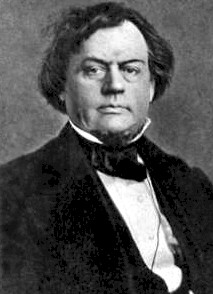
Also at this meeting was my “favorite least favorite” person – Robert Toombs of Georgia. Of course, in the Antietam story, Toombs is in charge of

Robert Toombs

the two regiments of Georgians on the hillside defending the Rohrbach (Burnside) Bridge. A pompous but gifted former congressman and senator, Toombs verbalized the opinion that a withdrawal to a higher position was in order. D.H. Hill, who greatly disliked the self-possessed Toombs, reproached him on the matter and turned the session into a more animated discussion. Toombs rather disliked all West Pointers – particularly Jefferson Davis, whom he believed to be his inferior for the position of Presidency of the Confederate States – wrote after the War that the death stone of the Confederacy should have inscribed upon it “Died of West Point.”  This meeting may well have been a prime exhibit is his museum of memories leading to such an assertion.

In retrospect, this date of 6/1/62 is a critical moment in the War – particularly in the east. Wars, like life itself, are filled with seemingly small moments and decisions – forks in the road that appear small at the time – yet eventuate as watershed events. This ascendancy of Lee is one of those times.

150 Years Ago Today – Battle of Seven Pines (Fair Oaks)

With the Union Army now but eight miles to the east of Richmond, Confederate General Joseph E. Johnston could no longer wait for McClellan to continue to build forces and lay siege to the Capital. With total numbers against him of roughly 105,000 to 65,000, Johnston made plans to attack the left flank of the Union Army – positioned on the south side of the Chickahominy River. Two Union Corps occupied this position – Heintzelman’s 3rd Corps and Keyes’ 4th Corps. The larger and three remaining Union corps were north of the swollen stream.

Joseph E. Johnston

Johnston deployed about 40,000 of his men in the action – a rather complicated and poorly communicated plan of attack. Longstreet was to be the main player. A number of errors of misunderstanding, miscommunication, or misadventure resulted in a less than stellar Rebel attack. Johnston was himself rather severely wounded late in the day, with the command devolving ultimately to Robert E. Lee on June 1st.

The Union has brought up significant reinforcements for the second day, and Confederate attacks were repulsed. Each side claimed victory, though the outcome was indecisive – Union losses were over 6,000 as compared to slightly more than 5,000 for the South. Lee pulled the army back into the defenses of Richmond and began plans for what would be known four weeks later as the Seven Days Battles.

McClellan missed the entire affair, being bedridden by a bout with his chronic malaria. The entire experience of losses beyond pretty much anything seen to that point seemed to shake the Young Napoleon who continued to believe he was outnumbered by perhaps a 2:1 ratio, communicating in mid May, “I regard it as certain that the enemy will meet us with all his force on or near the Chickahominy …  If I am not re-enforced, it is possible that I will be obliged to fight nearly double my numbers, strongly entrenched.”  Beyond that and in the wake of the battle, he wrote: “I am tired of the battlefield, with its mangled corpses and poor wounded. Victory has no charms for me when purchased at such cost.” 

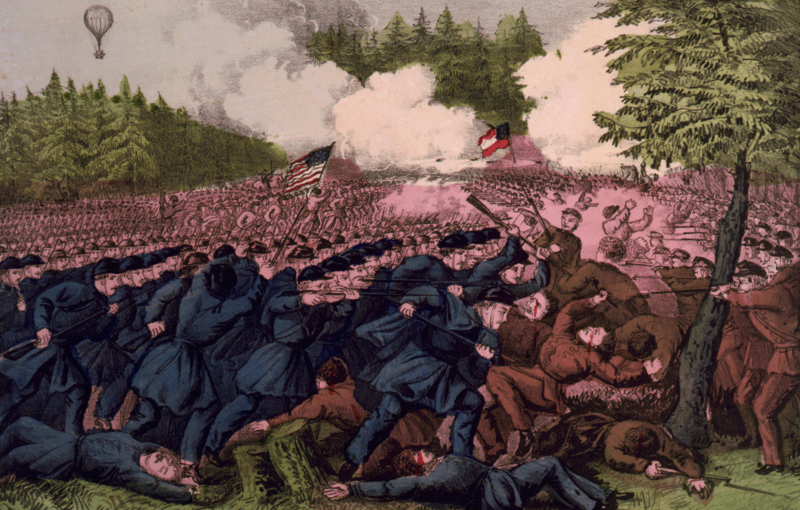
Battle of Seven Pines by Currier & Ives

The month of June 1862 was as wet as it has been here around Antietam in recent weeks. McClellan wrote to Washington of the difficulties in bringing up his heavy guns. Again he moaned of his disadvantaged position: “I regret my great inferiority in numbers but feel I am in no way responsible for it as I have not failed to represent repeatedly the necessity of reinforcements … But if a result of the action is a disaster, the responsibility cannot be thrown on my shoulders; it must rest where it belongs.”

To this, Lincoln eloquently responded: “… it pains me very much. I give you all I can … while you continue, ungenerously I think, to assume that I could give you more if I would.  I have omitted and shall omit no opportunity to send you reinforcements whenever I possibly can.”

Balloon ascension of Professor Thaddeus Lowe at the Battle of Seven Pines

150 Years Ago This Month – Doubleday (part B)

Stuck in Fredericksburg – May 1862

<This material is from my research and writing on the life and Civil War adventures of Abner Doubleday.>
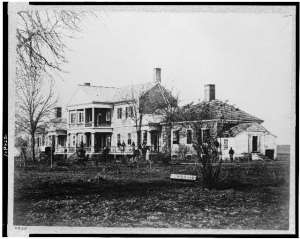
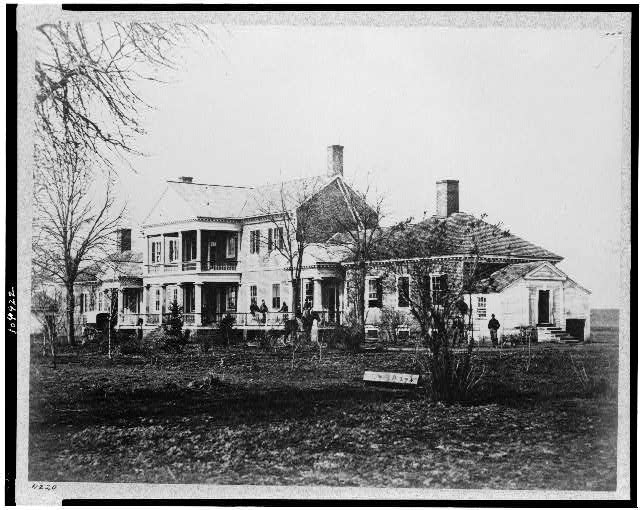
Lacey House in Fredericksburg

In the final week of May, 1862, Doubleday and the 76th N.Y. made the steamer passage down the Potomac to Aquia Creek, and camped there before embarking on the final 18-mile march to Fredericksburg. President Lincoln and Secretary Stanton had made an impromptu visit to meet with McDowell, arriving at Aquia Creek about the same time. The President and his party traveled to Fredericksburg in a mere boxcar, while Doubleday and his staff followed in a freight train.  McDowell was using the red brick mansion home of a famous Rebel named James Horace Lacy for his headquarters. The sight of President Lincoln gathered with a sizeable group of Generals made quite an impression upon both George F. Noyes (of Doubleday’s staff) and A.P. Smith, the historian of the 76th New York.  Noyes wrote: “It was to me very interesting to see these leaders, some of whom were already famous . . . Every face was full of hopeful anticipation; the President dispensed every where his dry hits of good logical common sense, wrapped up in the humorous coating of anecdote or illustration, and not a suspicion of the impending disappointment intruded itself; nor had I then a conception how much of envy and professional jealousy found lodgment beneath some of these uniforms. Artists, authors, and clergy men have perhaps been considered most liable to this weakness of jealousy, but, in this regard, professional soldiers may, as a class, be deemed their rivals …” <A>   Smith’s account is strikingly similar, noting that “confidence beamed on every countenance,” while also remarking upon Lincoln’s wit by reporting this council of leaders to oft be “enlivened by one of his dry jokes, or one of those never-failing ‘that reminds me of a story,’ with which he was wont to preface a happy illustration.” Most remarkable is the similar conclusion drawn by both writers regarding the unified appearance of this impressive array of powerful leaders, though learning before long of the seething jealousies hidden beneath this imposing exterior. Smith said, “Judging from the external appearance of that council, an inexperienced observer would have seen nothing tending to induce the belief that those very men . . . were inwardly rankling with jealousies, which, in three short months, would permit one portion of the army to be cut in pieces, while the other portion was within supporting distance, disengaged [speaking of Second Bull Run].” <B>
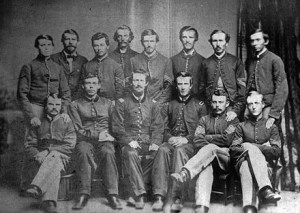
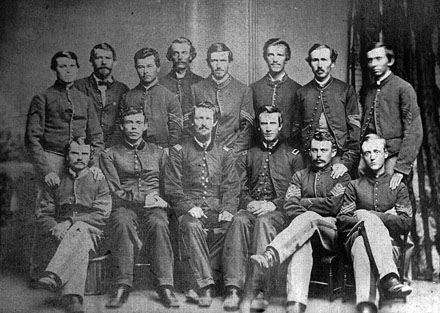
Various men of the 76th NY

Doubleday reported for his orders in the midst of this gathering of McDowell’s officers and the President. Lincoln had recently reconsidered on the issue of McDowell’s Corps being withheld from McClellan, and McDowell now possessed plans to join McClellan on the peninsula. Doubleday was informed that his regiment, not yet being fully composed, would stay behind, and that he would be in command of Fredericksburg and the surrounding country.  He would specifically be replacing General Marsena Patrick as the Military Governor of the town. Doubleday wrote of McDowell’s word to him regarding the manner of accomplishing this: “He informed me that his policy was to placate the Rebels as much as possible and keep them in good humor.”  <C>

Placating Rebels was not a skill for which Doubleday had any disposition, natural or otherwise. He was in trouble before long. His baggage was late in arriving, and since Patrick was not moving out of his residence for another day or two, Doubleday occupied the house belonging to a prominent Rebel who was in the Confederate Army at Richmond. “This, it seems, [Doubleday wrote in his journal] was contrary to the placating policy of the commanding general, and when he heard of the occupation, a day or two afterwards, he sent me a preemptory order to vacate the premises immediately.” <D> 
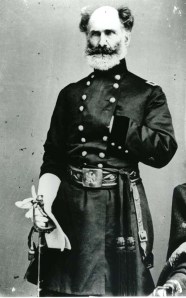
Doubleday was astonished at the policies in effect in Fredericksburg. Local residents demanded guards for everything “from a hencoop, cherry tree, or water closet up to a dwelling house, and they threatened in case these requests were not acceded to, to report me to General McDowell and have me relieved.” Additionally, Doubleday recorded in his journals that a Rebel major by the last name of Slaughter was empowered to govern as a mayor, and that he was in the habit of arresting Union men on the slightest pretext of violating some city ordinance and having their hands bound behind their backs while being sent away to Libby Prison in Richmond. It was Doubleday’s claim that McDowell was not sympathetic to the pleas of family members of those being thus detained, and that this policy was therefore tantamount to sanctioning the persecution of loyalists and natural allies. Doubleday was also shocked “at the violent tone assumed by the people of Fredericksburg …  as they had been allowed unbounded license of speech and they used it very freely.”  The citizens of the town also had the expectation of their Military Governor that he would prevent any escape of fugitive slaves and disallow such from crossing into the lines of the Federal Army. Doubleday wrote: “In this they were disappointed, and they complained bitterly to General McDowell … It soon became evident that I could not be relied upon to carry out any measures which, in my opinion, amounted to persecuting the loyalists, and I was glad to be relieved.” <E>  The task of Military Governor was transferred to General John Reynolds, who immediately discontinued all passes of Negroes who desired to cross the river.  Doubleday wrote that the net effect of this was “to greatly increase the wealth of the citizens of Fredericksburg in this kind of property,” as the town was full of fugitive slaves whose masters were in the Rebel Army. <F>

Not at all surprised by this “disaster” of having Abner Doubleday as Military Governor of Fredericksburg was the outgoing officer in that position, Marsena Patrick. Patrick was a conservative Democrat of deep Presbyterian religious convictions. A severe disciplinarian of his own troops, he became Provost Marshall General of the Army of the Potomac—an organization replete with troubled people. Patrick had deep sympathies for the peril of civilians caught in crossfire of war. He was far from a favorite of the Radical Republicans, who distrusted him as overly sympathetic to Southerners. In fact, after the War, he was removed from his position for displaying too much sympathy for ex-Confederates. <G>  Writing in his journal on May 23rd of 1862, he said: “Doubleday has arrived and made a fool of himself before he had been here an hour.  There is a feeling of sadness in the whole community, and I feel sad myself, at the thought that these helpless families are to be left to the tender mercies of an Abolitionist.” <H>

This disaffection for Abner Doubleday was not apparently shared by the troops of the 76th New York from Cortland County. In a collection of their letters, they make frequent warm references to their commanding general and native of their home state. A number of the letters mention the inclusion of such items as pictures of Doubleday, or a transcription of his words to them on a particular occasion.  <J>

Before McDowell could join McClellan for the planned attack upon Richmond, Stonewall Jackson became active once again in the Shenandoah against General Banks. Jackson’s activity was intended to cause the Administration in Washington to divert McDowell from reinforcing McClellan, and it accomplished exactly that. A substantial portion of McDowell’s forces (20,000 under Generals Ord and Shields), and eventually McDowell himself, went to chase Jackson around the Shenandoah. McCall’s Division of McDowell’s command did move on June 8th to join McClellan. The total effect of these various actions confined Doubleday’s Brigade to continued guard duty, affording Doubleday no opportunity for drilling his troops in preparation for active campaigning. He was again in charge of Fredericksburg, although he appointed Major Charles Livingstone of the 76th New York as the Military Governor of the city. About this time, two new units were added to Doubleday’s command: the 56th Pennsylvania Volunteers and the 95th New York Volunteers. These new regiments were assigned to duty in guarding the railroad and bridges to Aquia Creek, while the 76th New York continued guard duty in Fredericksburg. Again, Doubleday complained bitterly about the expectations of the citizenry and the resultant abuse of his men, writing that: “as our sentinels were grossly insulted on many occasions while on post by the Rebels and were not allowed to reply or leave their post, a very bitter feeling arose among the troops.”  <K> 

The historian of the 76th New York described the mood of the local populace toward the Union occupation:  Fredericksburg was one hotbed of secession. The women, as they passed the “boys in blue,” drew their dresses closer about them, and not infrequently left the sidewalk, lest perchance they might be contaminated by a touch of the garments of their enemies. Did a flag wave from headquarters, fort, guardhouse, or sutler’s tent; the “chivalry” would cross the street to avoid the shadow of the banner of the invaders, and in all manner of ways, which could not and were not intended on the part of the secessionists to be mistaken by the Union men, did the inhabitants of this city show their disrespect and utter abhorrence of everything that favored the United States. This feeling was confined to no particular class, (if we except the colored race), but was shared by the merchant, mechanic, professional man; and reached the climax in the female population, who were frequently more forcible than elegant in their expressions regarding the hated “Yankees.”   <L>

NOTES

A.  Noyes: The Bivouac and the Battlefield, pp. 23-24.

B.  Smith: History of the 76th NY, p. 67.

C.  Doubleday Journal: My Record During the Rebellion, pp. 55-56

D.  Doubleday, p. 56.

E.  Supplement, p. 679.

F.  Supplement, p. 680 / Doubleday Journal, pp. 57-58.

G.  Patrick, Marsina, Inside Lincoln’s Army, p. 12.

H.    ibid, p. 82

J.    Letters collection from the 76th NY:  http://www.bpmlegal.com/76NY/index.html

K.  Supplement, p. 680.

L.  Smith, pp. 72-73.

Memorial Day at Antietam

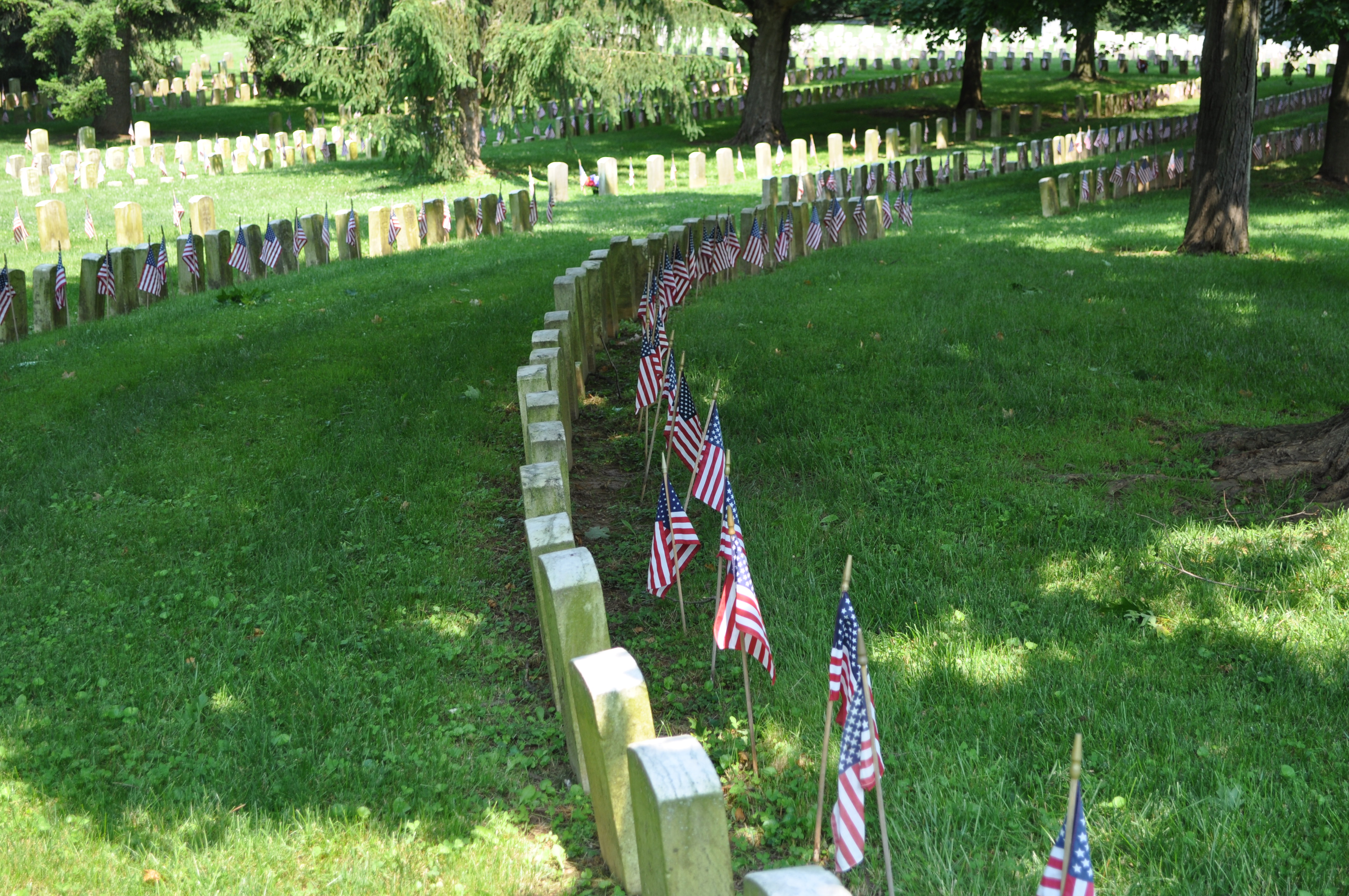
This morning, I went to the cemetery at Antietam to follow the Ranger walk and talk presentation by Mike Gamble (who is also a part of the Antietam Battlefield Guides). Memorial Day has been celebrated annually in Sharpsburg now for the past 145 consecutive years. Here are some pictures of today’s informative event (the final picture being of our local young man – Patrick Roy – killed in the explosion of the USS Cole in 2000 ……….

150 Years Ago This Month – Doubleday (part A)

Stuck in Washington

<This is the first of two parts – back to back – about the experiences of Abner Doubleday 150 years ago this month of May. This material is from research I have done for an eventual book on the life and Civil War experiences of Doubleday>

The first movements for the Peninsula Campaign had began in the middle of March, and McClellan himself departed Washington on April 1st.  An administration examination of the numbers of troops left behind for the protection of Washington revealed an apparent lack of attention to this detail in McClellan’s planning. Seeing a mere 20,000 or less truly available for this duty, Lincoln ordered McDowell’s First Corps (including Doubleday’s command) of about 30,000 to remain behind. McClellan would protest that such orders depleted his force and ability to secure victory in the face of his imagined larger enemy. The rancor between McClellan and Washington would only increase in volume and intensity throughout the campaign months of the spring and summer.

Walter Phelps

The feeling of the Northern population and the army at this time was again very positive that the War would soon be over. A May 12th letter of Colonel Walter Phelps (of the 22nd New York – who would serve eventually under Doubleday) illustrates this positive mood. “I am expecting every moment to hear that Richmond is taken.  There is so much good news now-a-days, that I am prepared to hear anything good.  . . .  I imagine that this rebellion is almost disposed of.  With McClellan pushing them to the wall in Virginia and Halleck capable of taking care of the west, I am convinced that a few more months must see the end of the difficulty.”  <1>

Doubleday was ordered on May 18th to join McDowell’s forces in Fredericksburg, along with the two regiments in his command: the 76th and 102nd New York. The 102nd was delayed in departure and soon detached from Doubleday’s command. The movement commenced on the 22nd. While passing through the streets of Washington, an interesting event occurred related to the issue of two fugitive slaves from Maryland who had found refuge within the company of the 76th New York Regiment. When the unit moved, these former slaves went along to carry baggage or perform whatever duty assigned to them. While marching through the streets of Washington, they were spotted by their former owner, who enlisted the help of a police officer in seeking to apprehend his property. The policeman was knocked unconscious by the blow from the butt of a soldier’s gun.

The scene was recounted by the historian of the 76th NY:  A strenuous effort was made on the part of the semi-secession officers of Washington, to arrest those who took part in this defense; but to the credit of the officers of the Seventy-sixth, and of their gallant, true-hearted commander, General Abner Doubleday, be it said, no arrests were made, and the would-be slave-catching officers of Washington returned to their duties with a clearer appreciation of Northern character than when they first met the Seventy-sixth.  This daring act of heroism went the round of the papers, and found its way into the London press.  <2>

<Check back tomorrow for a part B discussion of some of Doubleday’s adventures while stuck in Fredericksburg>

  1. The History of the Seventy-Sixth Regiment New York Volunteers: What It Endured and Accomplished, A.P. Smith, pp. 58-59.
  2. The Walter Phelps Jr. Papers, 1861-1877.  US Army Military Heritage Institute in Carlisle, PA.