Hooker Replaces Burnside as Commander of the Army of the Potomac – 150 Years Ago Today

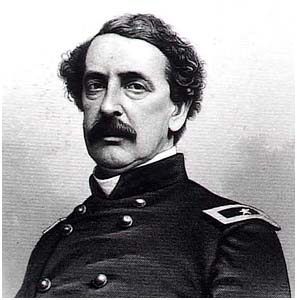
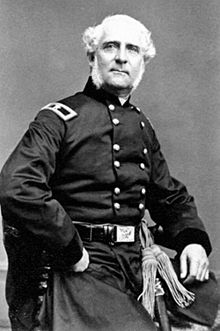
It was on this date of January 23, 1863 that Lincoln made the decision to replace Ambrose Burnside as the Commanding General of the Army of the Potomac. The disastrous Mud March was the final straw – the blame for which Burnside placed upon the insubordination of officers. He sought to have a number of them dismissed or relieved, but found instead that Lincoln had replaced him with Joseph Hooker.

ihookej001p1“Fighting Joe” had performed aggressively well in engagements on the Peninsula and at Antietam, though he was not without certain defects – such as a reputation for hard drinking and bombastic speech. Among his indiscreet comments was one to a reporter where he said that the government in Washington was “imbecile” and that “nothing would go right until we had a dictator, and the sooner the better.”

Hooker was called to appear at the White House where he was given a thoughtfully composed letter by President Lincoln, containing both positives and negatives. Lincoln praised his considerable skills displayed in battle command, while also decrying some of his undermining insubordination of Burnside. Frontally addressing Hooker’s ill-conceived opinions, Lincoln wrote that his “recently saying that both the Army and the Government needed a Dictator … Of course, it was not for this, but in spite of it, that I have given you the command. Only those generals who gain successes can set up dictators … What I now ask of you is military success, and I will risk the dictatorship.”  Lincoln was brilliant!

For one summary reaction of the removal of Burnside, I’ll quote here again the words of William Swinton – the NY Times correspondent who said:

General Burnside’s career as head of the Army of the Potomac was as unfortunate as it was brief; and there is much in its circumstances and in his character to inspire a lenient judgment. His elevation to the command was unsought by him; for, with a good sense that was creditable to him, he knew and proclaimed his unfitness for the trust. It was right to try him, because it was impossible to tell whether his own gauge of his fitness was correct, or whether he wronged himself by a self-distrust that he might soon surmount. When, however, the trial had proved the absolute justness of his measure of his own incapacity (and there can be no doubt that this was fully proved by the events of the battle of Fredericksburg), they must be held accountable for the consequences who retained him in a position which his own judgment, now fortified by the general verdict of the army, pronounced him unequal to fill. His retention after this, if there be any fidelity in the portrayal I have presented of the condition of the army, imperiled not only its efficiency but its existence. Desertions were going on at the rate of about two hundred a day … It was not possible to continue a condition of affairs that neutralized the best forces of the army, and the President wisely relieved General Burnside from a position deeply humiliating to any man of honor. He lapsed from the greatness thrust upon him without forfeiting the respect of the country for his zeal and patriotism; but he left behind him no illusions respecting his capacity for the command of an army.

Mud March Story 3 – from NY Times Correspondent William Swinton

This third account of the Mud March comes from the pen of William Swinton in 1866, from his book “Campaigns of the Army of the Potomac.”  He was a NY Times reporter who aggressively pursued stories on the front lines – aggressively to the extent that on a couple of occasions he was in danger of being shot by some of the leading generals of whom he wrote! Apparently in one event, Grant was concerned enough that Burnside was going to execute Swinton, that he had the reporter expelled from the army for his own safety!

Picking up his Mud March story on the 20th, he wrote, “Preparations for crossing were pushed on during the 20th, positions for artillery were selected, the guns were brought up, the pontoons were within reach a short distance back from the river, and it was determined to make the passage on the following morning. But during the night a terrible storm came on, and then each man felt that the move was ended. It was a wild *Walpurgis night, such as Goethe paints in the Faust. Yet there was brave work done during its hours, for the guns were hauled painfully up the heights and placed in their positions, and the pontoons were drawn down nearer to the river. But it was already seen to be a hopeless task; for the clayey roads and fields, under the influence of the rain, had become bad beyond all former experience, and by daylight, when the boats should all have been on the banks ready to slide down into the water, but fifteen had been gotten up — not enough for one bridge, and five were wanted. Moreover, the night operations had not escaped the notice of the wary enemy, and by morning Lee had massed his army to meet the menaced crossing.”

*For those who are no more literary than I, here is what a Walpurgis night is:  It is a northern European festival on or before May 1st – at the one-half point of the year from All Hallows’ Eve – celebrated with dancing and bonfires. It was a scene in Goethe’s Faust. Recalling the Mud March stories in other accounts of bonfires on this evening, along with the searing rains, one can see why this illustrative term would be well-used of the occasion. Swinton continued:

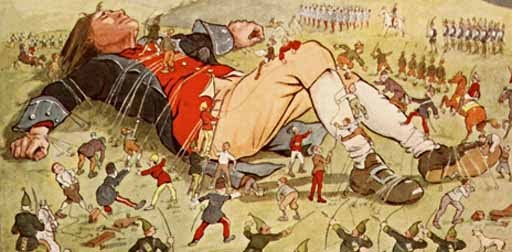
In this state of facts, when all the conditions on which it was expected to make a successful passage had been baulked <meaning = pulled back>, it would have been judicious in General Burnside to have promptly abandoned an operation that was now hopeless. But it was a characteristic of that general’s mind (a characteristic that might be good or bad according to the direction it took), never to turn back when he had once put his *hand to the plough; and it had already more than once been seen that the more hopeless the enterprise the greater his pertinacity. The night’s rain had made deplorable havoc with the roads; but herculean efforts were made to bring pontoons enough into position to build a bridge or two withal. Double and triple teams of horses and mules were harnessed to each boat; but it was in vain. Long stout ropes were then attached to the teams and a hundred and fifty men put to the task on each. The effort was but little more successful. Floundering through the mire for a few feet, the gang of *Lilliputians with their huge-ribbed Gulliver, were forced to give over, breathless. Night arrived, but the pontoons could not be got up, and the enemy’s pickets, discovering what was going on, jocularly shouted out their intention to “come over tomorrow and help build the bridges.”gulliver_travels_tied_by_lilliputians

Again this paragraph above contains some literary analogies. The phrase of *“putting the hand to the plough” is a Scriptural reference to the words of Christ – where he says that any who put their hand to the plough (meaning having made a choice to follow him), but look back, are not worthy of being his disciples. The only way to plough a straight furrow was to look ahead and toward an object in the distance. A second literary reference is of course to the popular Gulliver’s Travels (Jonathan Swift, 1726), and to the tiny nation of little people called the Lilliputians. Again, the illustrative picture is so excellent.

Swinton continued:

Morning dawned upon another day of rain and storm. The ground had gone from bad to worse, and now showed such a spectacle as might be presented by the elemental wrecks of another Deluge. An indescribable chaos of pontoons, vehicles, and artillery encumbered all the roads — supply wagons upset by the roadside, guns stalled in the mud, ammunition trains mired by the way, and hundreds of horses and mules buried in the liquid muck. The army, in fact, was embargoed: it was no longer a question of how to go forward — it was a question of how to get back. The three days’ rations brought on the persons of the men were exhausted, and the supply-trains could not be moved up. To aid the return all the available force was put to work to corduroy the rotten roads. Next morning the army floundered and staggered back to the old camps, and so ended a movement that will always live in the recollection of the army as the “Mud March,” and which remains a striking exemplification of the enormous difficulties incident to winter campaigning in Virginia.

Having read these and other accounts of the Mud March over this past week, I think I’d rather be in any battle on solid ground on a warm day, than to have had to endure this experience.

Mud March Story #2 – From the History of the 76th NY

As a second account of the experiences of the Mud March, today I turn again to the writing of the historian of the 76th NY – A.P. Smith.  I have noticed on more than one occasion that he borrows heavily from the writing of yesterday’s author – George Noyes, who published much earlier in 1863. In fact, there are several nearly identical sentences when talking about the men marching out of camp in good spirits, as well as the nature of the rain cutting the soldiers’ faces.

Picking up with the “horrors of the night, the wind blew a perfect gale … The next morning … the rain had not abated. Ordinary mud-holes became little lakes; unpretending ditches were suddenly transformed to large creeks, and the men actually waded the whole distance of their march. Frequently their shoes would become detached from their feet in the mire. Search for them was in vain, and thus the men plodded on, sometimes with one shoe, and again with neither. The supply, artillery, and pontoon trains were with great difficulty moved along at all. Now, a horse, from sheer exhaustion, lay down in his harness, and could be induced to go no farther. Then a mule, immersed in mud, discouraged and exhausted, unheeding those oaths of mule-drivers never equaled in civil life, unmindful alike of ‘ye-ape’s’ and cruel blows, sank down in the mud and furnished its body to corduroy the road.  … It rained on the south side of the Rappahannock as on the north, the facetious rebel was not without good reason for writing the sign and placing it in sight of our troops: ‘Burnside Stuck In The Mud!” …

Banks Ford on the Rappahannock

Banks Ford on the Rappahannock

The sights which everywhere presented themselves were strange mixtures of the painful and ludicrous. Shipwrecked wagons, dead and dying mules and horses, heavy pontoons stuck in the mud, guns slowly moving along, hauled by double the usual teams, imparted a most desolate and woe-begone appearance to the whole affair.”

It sounds like a totally awful experience!

Mud March Story #1 – From the Bivouac and the Battlefield

This writing is from the book of Doubleday staff officer George F. Noyes – getting near the end of his book and his service time. As I had written in a recent post, Doubleday had moved on very recently to a new command in another division, but Noyes remained with the 1st Division of the 1st Corps.

He begins by talking about breaking camp on the 20th of December:  “…we struck tents, and by noon the division was on the march. If I may judge from my own observation and the opinions of brigade commanders, the men were never in better spirits, never more ready to do their whole duty. They marched forward well knowing that another attempt to cross the Rappahannock and to attack the enemy was before them, and everybody was willing to lend his best help to secure, this time, an entire success. But about 4 P.M. it began to rain; not a gentle shower which lays the dust, and is rather refreshing than disagreeable, but a cold, driving storm, which, aided by the gale, penetrated the clothing and cut the faces of the men as they staggered on. The deep-cut Virginia roads became in two hours quagmires, through which artillery and wagon-trains were with difficulty dragged at the rate of a mile an hour.

It was after dark when we reached Stoneman’s Switch on the railroad, near which the brigades were bivouacked in the woods, made fires, and sought a watery repose. By the light of lanterns we pitched a couple of tents on a bleak and exposed plateau for division headquarters, where at every step we sank deeply into the mire. For at least half an hour our patient cook sought to work out a rather difficult problem, viz., how to make a fire of green wood in a mud puddle out in a driving rain. Fire and water were here brought into fierce opposition, but fire finally got the best of it, and we were soon standing in the mud around a table in the general’s tent, supping on coffee, canned meats, and hard bread. The large office-tent had been put up as a common bedchamber for the staff; our cots were brought in, and, when put up, looked like islands of refuge surrounded by water. My servant had located mine in one corner; beside it was a lake growing gradually larger; a gentle rivulet meandered through the middle of the tent. The scenery was peculiar, though not picturesque. How to get one’s boots off, and where to leave them, except in a mud-puddle, was the first question. Some of the staff immediately went to work digging trenches and canals for drainage purposes; and having, in the mean time, gotten into my bed as into a bag, lest the wind, now eddying under and through our canvas walls, should tear away my blankets, I looked out from the top, considerably interested in these new experiments in hydraulics. Our cots sank down, of course, into the mud; but, as long as they did not float off, we were safe.

Only one trouble now disturbed us. The storm had evidently determined that our canvas roof should not stand; the ground was too wet to hold the tent-pins securely, and the whole affair was now swaying from side to side like a balloon impatient to be off on its aerial travels. As I was in the windward corner, my sleep was agreeably diversified by being roused several times to grasp the fluttering canvas, and scream for the guard to pin it once more down. At last, about three in the morning, with one wild yell of triumph, the eddying storm tore up our tenement, sent its frail rafters clattering about our ears, and carried it off bodily in its arms, leaving us delightfully exposed, out on a naked hill-side, to the pitiless tempest. At first I resolved to remain in my bag Unfortunately, it opened the wrong way, affording free entrance to the rain and wind, which rushed in so desperately as to compel me to leave. Rising, I groped my way to the general’s tent, which had long since lost shape and symmetry, and was flapping about like a ship’s topsails in a calm. He was sleeping so comfortably that I did not disturb him, but, after putting in a pin or two more to restrain his bedchamber from flying away, I went into the orderlies’ tent, where we passed the rest of the night in trying to keep our feet as much as possible out of the mud.
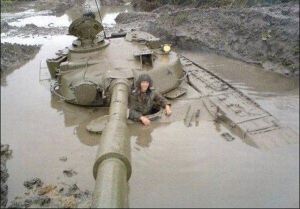
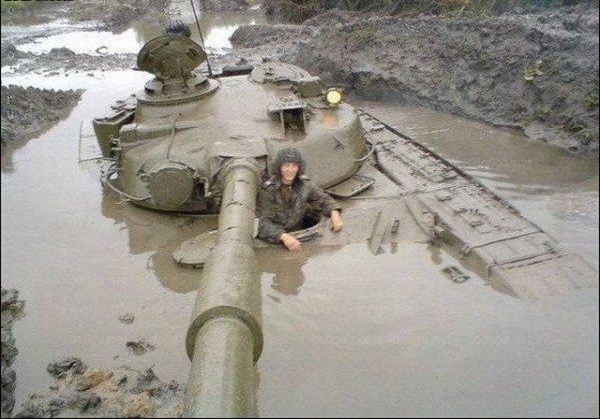
Mud is a timeless military problem!

Mud is a timeless military problem!

On the whole, this was a very proper introduction to our campaign in the mud. Very early next morning, after a cold and hurried breakfast, the troops began to wade on to glory. The rain still deluged the earth, the usual mud-holes became miniature lakes; to get the pontoons, the artillery, and the ammunition wagons along was next to impossible. It was painfully evident that, to succeed in this movement, our men and our horses ought to have been made web-footed. After an aquatic excursion of about five miles, the division reached at 3 P.M. our stopping-place for the night; but the batteries were still plowing up the mud in the rear, and did not get up until the next day. The whole country about us was full of troops; but the main supply trains of the entire army had been left behind at their old parks, our own being in charge of the lieutenant who so handsomely brought off the pickets after the late battle. The men had time to build for themselves rustic dens and huge camp-fires before night shut in, while the general and staff bivouacked on the lower floor of a comfortable roadside house. That night our bedchamber did not blow away.

Thursday, January 22nd. The division remained today quietly in the mud, but I passed most of it in the saddle, having to retrace my steps on the old business. It was a most slow, uncomfortable, and splashy ride, out of which my horse and I came looking more like an equestrian statue done in clay than like living beings. Shipwrecked wagons, dead and dying mules and horses, pontoons stuck in the mud, guns dragged along by doubling up their usual teams, a few regiments on their dismal march, and mud-encased staff officers like myself filled the roads, and imparted a doleful look to the whole picture. It was on this day that some facetious rebels erected, on the opposite side of the river, for the delectation of our pickets, a signboard with the legend, “Burnside stuck in the mud.” …

… Very early next morning we were on our return. The men were anxious to secure their old huts and articles of comfort, and marched through the mud as I never saw men march before. As we once more erected our canvas houses on the well-known ridge, the sun burst forth from the clouds, its first greeting – since we commenced our ill-starred enterprise. And so ended the celebrated campaign in the mud.”

As I’ve written before, I’ve read few people who could so colorfully write a story as well as George Noyes! Come back tomorrow for a similar story from roughly the same location of Mud March experiences.

Mud March Begins – 150 Years Ago Today

On this date of January 20, 1863 – 150 Years ago today – the famous Mud March of General Burnside commenced. Stung by his futile failures in the foolish attacks upon the Confederate lines at Fredericksburg a month earlier, Burnside was eager to strike a decisive blow to Lee, saying in his order that the “great and auspicious moment has arrived to strike a great and mortal blow to the rebellion, and to gain that decisive victory which is due to the country.”

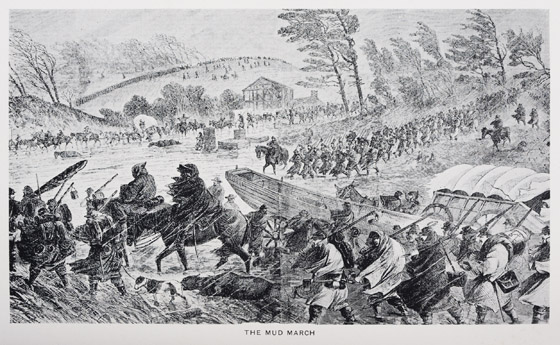
the mud marchBurnside considered where to make his crossing over the Rappahannock River – planning to demonstrate south of Fredericksburg while actually crossing at the United States Ford, which was 10 miles north of the city. In all honesty, it was a respectable plan.

The grand movement began on this date with unseasonably fine weather. However, the rains and wind of an intense storm began that evening and continued for four days. Burnside appeared to simply be one of those fellows for whom, if it weren’t for bad luck, he’d have no luck at all.

Getting the head start on Lee, Burnside continued in the rain on the 21st, altering the plan to quickly throw five pontoon bridges across at a closer point called Banks Ford. The roads quickly became swamps of mud, sucking down horses, wagons, pontoons, cannons, and the very shoes upon the soldiers’ feet.

The element of surprise was lost and Lee responded quickly. EVERY account that I have read of this disaster writes about seeing a large sign posted on the Confederate shore that said, “Burnside Stuck in the Mud.” In an incredulous effort to lift morale, on the 22nd Burnside ordered whiskey rations to the troops – resulting in drunken brawling and even regiments fighting with one another.

At last, the entire effort had to be abandoned and the troops sent back to their recent winter quarters. The men were completely covered with mud so as to be undistinguishable from one another. The morale of the army sunk in the mud, along with Burnside’s career.

Come back the next three days … where I will post three very colorful and detailed stories of the general descriptions written here today. Monday will be the account of George F. Noyes, Tuesday featuring A.P. Smith, and then Wednesday – the best – a new writer for this blog in the account of William Swinton of the NY Times.

Doubleday Departure from the 1st Division of the 1st Corps, AOP

As I have oft written, Abner Doubleday is a Civil War character of particular interest to me. It was about this time of January 150 years ago that Doubleday was reassigned within the 1st Corps of the Army of the Potomac.

Abner Doubleday

Abner Doubleday

Just prior to the Battle of Antietam, Doubleday had moved from brigade command to the divisional command of the 1st Division of the 1st Corps. He and his troops were mostly idle on the left flank of the Army at Fredericksburg.

The 3rd Division of the 1st Corps – Meade’s division of Pennsylvania Reserves – was withdrawn (after Fredericksburg) to Washington to rest and recruit. These troops were seriously depleted from the Peninsula and the Maryland Campaigns.

Doubleday was removed from the 1st Division to construct a new 3rd Division of the Corps, with General Wadsworth moved into his former position. This occasioned some remarks by those writers I often quote: George F. Noyes (of Doubleday’s staff) and A.P. Smith of the 76th New York.

Noyes wrote: During these days, by one of those changes resulting from priority of rank, our division received a new commander, while our former general was transferred to the command of another division in the same corps. Of course the withdrawal of the latter created a profound sensation among officers and men. It was natural that the troops who had followed him through so many scenes of difficulty and danger, who had learned to love, and, what is far more important, to trust in him, and who had become proud of their leader, should experience deep regret at the parting, while those of us who had entered into military life as members of his staff felt like men who are parting with their best friend. As only his aides are attached to the person of a general, most of the staff still remained at division headquarters. With our new general, late military governor of Washington, whom we had long known by reputation, we were soon quite at home; and as such a man usually surrounds himself with gentlemen, we found his personal aides very pleasant companions in camp, and everything soon fell into the usual comfortable routine at our headquarters.

A.P. Smith wrote: While stationed at this point, our Division was pained at losing their brave commander. By priority of rank, General Doubleday was transferred to another division of the same Corps, and General Wadsworth given the command of our Division.

General Wadsworth

General Wadsworth

The men were familiar with the principles of General Wadsworth, and approved them; but their first experiences in battle were under and with General Doubleday, and they parted with him with regret. General Doubleday was one of those true men who went to the war from principle. With comprehensive views of the questions involved, and the causes of the war, and a clear conception of the character of the rebel leaders, and the personal motives which actuated them, he believed what everyone now realizes, that the kid-glove style of treating them would never accomplish anything for the Union. With him, compromise was disloyalty and death to the Government. General Doubleday had fired the first gun from Sumter, and there learned lessons which were never forgotten. Men of different political views, and looking at this war from a different standpoint—men who could walk the streets at night in deep study whether to espouse the cause of the Union or the Confederacy, and the next day, on the receipt of a commission or important command, “Mouth it” for the Union equally with the most ranting politician, looked upon General Doubleday as an impolitic radical, and threw every possible obstacle in his way. But the officers and men who had witnessed his noble daring at Rappahannock, Gainesville, Bull Run, South Mountain, Antietam and Fredericksburg, and were most intimately acquainted with him, knew but to love him.

On taking leave of the Division, the General issued the following brief address:

“In taking leave of this command, I desire to say one word of farewell. Wherever the service may call me, and whatever may be my future lot, I shall never forget the ties which bind me to this Brigade and this Division. I shall never cease to remember the brave men who stood by my side in some of the most stupendous battles the world ever saw. Men who fought against such heavy odds at Gainesville and the first day at Bull Run—who stormed the heights at South Mountain, took eight standards from the enemy at Antietam, and held their ground so bravely at Fredericksburg, have won my admiration and regard. I am happy to have fought by their side, and proud of the honor of having commanded them. I wish them now at parting, individually and collectively, all honor and success.”

It was natural that the men who had followed him through the terrible marches and scenes of difficulty and danger, on the retreat saved by his skill, and by the same skill and courage, led by him to victory, and who had become proud of their leader, should experience deep regret at parting.

The 1st South Carolina Black Regiment

On this date of January 13, 1863, authority was officially granted to white officer Col. Thomas Wentworth Higginson to establish the all-black 1st South Carolina Volunteers.

A first effort toward this organization of former slaves was made in May of 1862 at Hilton Head by General David Hunter. But lacking authority to do, along with abducting recruits in a fashion much too similar to slave life, the effort failed.

A second effort by General Rufus Saxon had better results as a company of 60+ men was formed under the command of Captain C.T. Trowbridge. They fought well along the Florida/Georgia coast, receiving high commendations from officers.

Thomas Wentworth Higginson

Thomas Wentworth Higginson

But bringing the regiment to full strength was Colonel Thomas Wentworth Higginson – an interesting character who was a Massachusetts abolitionist, along with being a scholar and pastor (oh yes, my kind of guy!… though I don’t think we’d have theological agreement). He led them on a late January expedition along the St. Mary’s River near the Georgia/Florida line. There they engaged Confederate forces near Township Landing – winning the battle.  Of the regiment’s performance, Higginson would write, “Braver men never lived. . . It was their demeanor under arms that shamed the nation into recognizing them as men. They had home, household, and freedom to fight for.”

The regiment was later designated the 33rd USCT South Carolina, and they participated throughout the war in a number of engagements and occupations.

This regiment is written about in the recent Emancipation at 150 Anthology, where Dickinson College professor Matthew Pinkser writes about a scene on New Year’s Day 1863:

If there had been a center of gravity that day for emancipation, it might have been at Port Royal, South Carolina, not Washington, D.C. While President Lincoln was inside his White House office trying to steady his hand before signing the final proclamation at around 2 p.m., a remarkable ceremony on the site of Smith’s former cotton plantation was just then drawing to a close – the largest single gathering in the South of people actually being freed. At what they now called Camp Saxton, the Federal army had organized an official ceremony and celebratory feast for several hundred men of the First South Carolina Volunteers and hundreds more of their contraband guests from around the Sea Islands. The black men stood at attention in specially designed uniforms that included standard-issue blue frock coats and bright scarlet pants. The visitors gathered in a beautiful live-oak grove with just a “glimpse of the blue river” visible, according to Colonel Thomas Wentworth Higginson, a writer and former ally of John Brown, who now sat on the speaker’s platform and served as commanding officer of the regiment.

Smith Plantation home of the 33rd at Port Royal

Smith Plantation home of the 33rd at Port Royal

The three-hour ceremony included a few too many speeches and presentations, but it was stirring nonetheless. William H. Brisbane, a former South Carolina planter-turned-abolitionist, read Lincoln’s September proclamation, since the final version was not yet available … The cheers were loud. But the excitement reached a crescendo following the presentation of new regimental colors, which included a beautiful hand-sewn silken U.S. flag containing the phrase, “The Year of Jubilee has come!” Yet before Higginson could formally accept the colors, a lone voice rose from the crowd of freed people, singing “America” (1832), and soon many joined in singing this patriotic hymn: “My country ‘tis of thee, sweet land of liberty” … “I never saw anything so electric,” Higginson exclaimed afterwards. The regimental surgeon reported, “Nothing could have been more unexpected or more inspiring.”

Troops of the 33rd USCT South Carolina Regiment

Troops of the 33rd USCT South Carolina Regiment

150 Years Ago Today – C.S.S. Alabama & U.S.S. Hatteras Naval Battle

For most Civil War enthusiasts, the predominant images are of land battles. If much thought is given to naval conflicts, probably the battle of the ironclads comes first to mind.css alabama

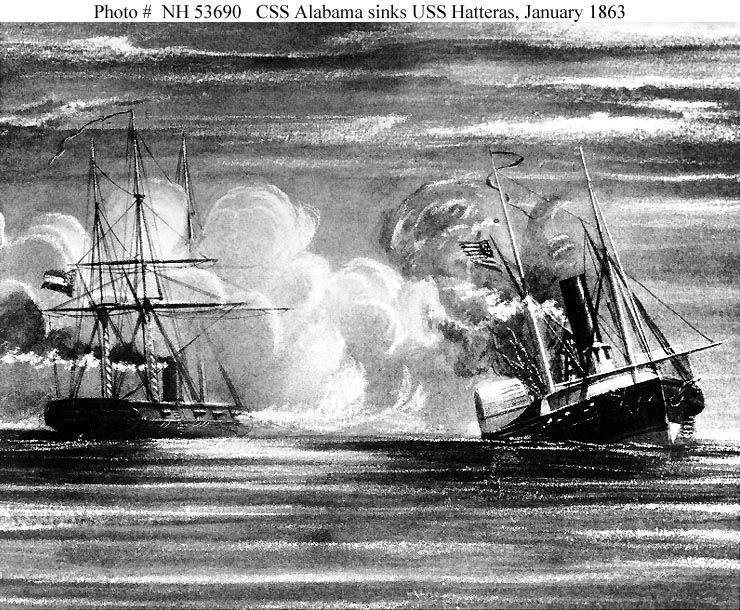
One of the rare ship-to-ship duels of the Civil War occurred off the coast of Galveston, Texas on this date of January 11, 1863. Galveston had at this time been recaptured by the South from Federal control, so the U.S.S. Hatteras was part of a fleet on blockade duty. Coming out to investigate a ship off the coast, the crew was certainly shocked to run into the Confederate raider C.S.S. Alabama. In a short nighttime duel, the superior guns of the Alabama made rather quick work of the Hatteras.

css alabama - captain semmesThe Alabama was a very successful Confederate vessel over its two-year career. It was launched from Liverpool and commissioned in international waters in August of 1862 under the command of Raphael Semmes. Though the boat would never anchor in a Southern port, she captured or burned 65 Union ships, inflicting $6,000,000 in damage, without any loss of life upon merchant crews. However, the Alabama would meet her end on the 19th of June, 1864 off Cherbourg, France, where the U.S.S. Kearsarge would send it to the bottom.

Regarding the fight from 150 years ago today, here are some excerpts from the book Two Years on the Alabama by Arthur Sinclair.

CSS Alabama - Sinclair on the rightVery soon the smoke from the stack of one of the steamers apprised us that she was getting under way, and soon she was bowling along, steering right for us. We had been under sail all the while. At once the fires are stirred, the propeller lowered, and the ship’s head put off shore … it is evident that the whole fleet is preparing to get under way … it was necessary to get the enemy now approaching as far from the rest of the fleet as possible, and also to allow night to set in before engaging him. We succeed in putting about fifteen miles between us and the fleet, then with canvas furled, steam by this time being sufficient, the engines are stopped, and with officers and men at quarters we await the result. It is now dark, the enemy being but indistinctly seen. Many are the conjectures as to his strength and class, and opinions as to whether the rest of the fleet is on its way out. The consensus of opinion is emphatic that what we do must be done quickly, and that the captain ought to lay us alongside her, if she does not prove too heavy.

The enemy has now come up. We have been standing in shore while awaiting her, but now our head is turned off shore again. Then comes the hail, “What ship is that?”  

“This is her Britannic Majesty’s steamer Petrel” is the reply. The two vessels are now nearly motionless, and both of course at quarters. Our men are wild with excitement and expectation. In the darkness it is impossible to make out her class except that she is a side-wheeler. Our crew have lock-strings in hand, keeping the guns trained on her, and awaiting the command to fire. The two vessels are so near that conversation in ordinary tones can be easily heard from one to the other. For a time the Hatteras people seem to be consulting. Finally they hailed again, “If you please, we will send a boat on board of you” to which our executive officer replied, “Certainly, we shall be pleased to receive your boat.”

The boat was soon lowered from the davits and began pulling toward us. All occasion for subterfuge being now at an end, word was immediately passed to the divisions that the signal to fire would be “Alabama.” When the boat was about half-way between the two vessels, Lieut. Kell hailed, “This is the Confederate States steamer Alabama!”  The last word had barely passed his lips when sky and water are lighted up by the flash of our broadside, instantly followed as it seemed by that of the enemy. A running fight was now kept up, the Alabama fighting her starboard, and the Hatteras her port battery, both vessels gathering headway rapidly. Never did a crew handle a battery more deftly than ours. About six broadsides were fired by us. The enemy replied irregularly, and the action only lasted thirteen minutes. It was evident to us from the trifling nature of the wounds to our hull and rigging that the Hatteras was being whipped. A crash amongst her machinery soon settled the business. Then she fired a lee gun, and we heard the quick, sharp hail of surrender, accompanied by the request that our boats be sent to her immediately, as she was sinking. The whole thing had passed so quickly that it seemed to us like a dream. …

…  This is probably one of the quickest naval duels on record. But it was none too quick for our safety; for as we laid our course their lights were to be plainly seen coming up rapidly in our wake. But there was now no danger, for the Alabama was at that time more than a match in speed for any vessel in the admiral’s fleet.

The Alabama made way for Kingston, Jamaica, where 10 days later the Federal crew was deposited.

We found our prisoner officers a rather jolly set; and the time passed very pleasantly, barring the villainous weather. Porter, the Hatteras’ executive officer, seemed to take quite a fancy to me, having known my father intimately. He would keep nearly all my watches with me, pacing the deck and talking of old times. I did everything possible to cheer and reassure him, giving his officers and crew full credit for doing all they could under the circumstances, having to contend against a ship much more powerful …

css alabama sinking the hatteras

Former Slaves Hired by Union Officers

In the spirit of the last post on “Emancipation at 150,” today I would like to share some excerpts from my research over the past several years. It was common in the War, as early Union movements advanced into Virginia and slave territory, for Union officers to hire former slaves for a variety of tasks around camp and in conjunction with the ongoing practical needs of a large war effort.

Excerpt 1 – From the anthology of essays last week at the Lincoln Cottage is this excerpt from “The Great Event of the Nineteenth Century: Emancipation During the Civil War” by Manisha Sinha – a professor of history at the University of Massachusetts, Amherst … writing:

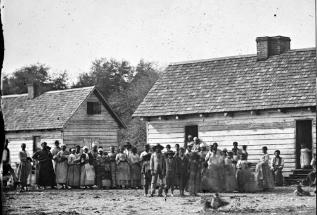
In fact, if slaves fleeing for freedom had not seized the initiative, the process of emancipation would not have unfolded precisely in the manner that it did eventually. In the beginning, the War Department adopted the makeshift policy first employed by General Benjamin Butler of Massachusetts in Fort Monroe, Virginia. Butler declared escaped slave “contraband of war” or enemy property that could be legitimately confiscated. The contraband policy, still recognizing slaves as property in principle, led to the liberation of those slaves who managed to make their way to Union army lines. While a few Union officers had earlier returned escaped slaves to the tender mercies of their Confederate masters, now most of them refused to do so. For many northern soldiers, encounters with contraband slaves were their first introduction to the horrors of Southern slavery. Slaves who had braved enemy fire and their masters’ wrath converted many a Midwestern farm boy to abolitionism. Their scarred backs bearing the telltale marks of whippings bore silent witness to the harrowing stories told by fugitive slaves and abolitionists before the war.

Fugitive slaves in VA 1862

Fugitive slaves in VA 1862

Excerpt 2 – My guy Abner Doubleday was among those officers (being an abolitionist) who would not send escaped slaves back. In a letter to the commander of the 76th NY – written in answer to a question on this very issue – Doubleday’s opinion is quite evident:

HDQRS. MILITARY DEFENSES NORTH OF THE POTOMAC,

Washington, April 6, 1862.

Lient. Col. JOHN D. SHAUL,

Commanding Seventy-sixth Regiment New York Volunteers.

SIR: I am directed by General Doubleday to say in answer to your letter of the 2d instant that all negroes coming into the lines of any of the camps or forts under his command are to be treated as persons and not as chattels.

Under no circumstances has the commander of a fort or camp the power of surrendering persons claimed as fugitive slaves as it cannot be done without determining their character.

The additional article of war recently passed by Congress positively prohibits this.

The question has been asked whether it would not be better to exclude negroes altogether from the lines. The general is of the opinion that they bring much valuable information which cannot be obtained from any other source. They are acquainted with all the roads, paths, fords and other natural features of the country and they make excellent guides. They also know and frequently have exposed the haunts of secession spies and traitors and the existence of rebel organizations. They will not therefore be excluded.

The general also directs me to say that civil process cannot be served directly in the camps or forts of his command without full authority being obtained from the commanding officer for that purpose.

I am, very respectfully, your obedient servant,

E.P. HALSTED, Acting Assistant Adjutant General

Excerpt 3 – Often in this blog I have included clips from the history of the 76th NY, written by A.P. Smith.  The following is a letter from the war front that was published back home in Cortland, NY in February of 1862:

Talking about slavery reminds me that I have a “contraband.” Yesterday a fine looking negro boy about 19 years old came to my tent to hire out. After learning his history I struck a bargain with him. He escaped about five months since from his master who is a captain in the rebel service. He says his “massa” is the owner of over 140 slaves and lives near Bull Run. He is anxious to meet “massa” on even terms on the battlefield, and I have promised him that if He is faithful, I will retain for him the best Enfield rifle, for that special purpose.

I intend to be around when that contest of races takes place; and yet I am not sure I speak correctly when I say contest of races for Alfred is about half white and undoubtedly not a very distant relative of “massa”. But with your permission I will retain the expression “contest of races;” for if the Southerners fight upon the principle lately acted upon it will be a contest of races in which “massa” will take the lead and Alfred will follow close after with his Enfield. Alfred says there are black companies in the South which are compelled to fight for the South; but their sympathies are all with the North as they have heard that this war is to set them free. How the bondman’s heart must throb at that thought!

Emancipation at 150: A Presentation at the Lincoln Cottage

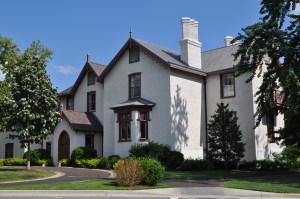
DSC_0214Yesterday I ventured into Washington to visit again at the Lincoln Summer Cottage, known to be the place that, in 1862, President Lincoln worked upon codifying and drafting his thoughts on the issue of emancipation. The cottage is a way cool site that every Civil War enthusiast needs to have on his short list of must-see places. To read about my summer visit there in 2011, click HERE.

In honor and commemoration of the 150th observance of the Emancipation Proclamation this past Tuesday, an anthology of essays entitled “The Emancipation Proclamation at 150,” was co-sponsored by the United States Commission on Civil Rights and President Lincoln’s Cottage. These essays by a dozen different scholars look at the Proclamation from a variety of historical contexts, noting also its evolution of meaning and significance over the 150 years. To download a free .pdf version of the anthology, click HERE.

Four of the twelve authors were invited for a two-hour panel discussion upon the topic. It was this event that I attended, especially interested in hearing Gettysburg College Lincoln scholar (and college classmate from the 1970s!) Allen Guelzo – who proved to be the most entertaining of the speakers. Also presenting were Spencer Crew from George Mason University, Lucas Morel of Washington and Lee University, and Obama Administration Ambassador-at-Large Luis CdeBaca.

Remarks by Allen Guelzo – here is a summary …

Guelzo opened by saying that a nagging question was why Lincoln issued the Emancipation Proclamation at all! Yes, there was pressure upon him by abolitionist folks, Frederick Douglas, Horace Greeley, etc.  But all of this did not really add up to that terribly much. There was little political benefit for Lincoln to proceed. Slavery was a part of all societies up to that point in some form or fashion, and though many Northerners did not like slavery as an institution, working to do something about it was beyond their interests. Guelzo pondered that if Lincoln had not taken the step of the Proclamation, would anyone blame him? So, with every reason not to do it, why did the President do it?

A second postulated question was this: Did it do any good? Guelzo spoke (and wrote in his essay) about the rather DULL and disappointing legalese text of the document – from a man who was a master of soaring and colorful rhetoric. After all, nobody memorizes the Emancipation Proclamation; everyone memorizes the Gettysburg Address. And then, as people read, you see the liberation extended “except” to certain locations … so it is LIMITED (more disappointment and speculation that his heart was not fully in it). Additionally, it is known that his RATIONALE involved military necessity – appearing that this was his mere reason for issuing it.

Yet Lincoln called it the great act of his presidency and of the 19th century! While it may be admitted that Lincoln was not the biggest advocate of black rights, he was a huge proponent of natural rights. Everything about slavery was abhorrent to Lincoln.

The problem for the President was one of jurisdiction. As Guelzo deadpanned, “He was only the President; slavery was an issue of state law … in the same way he could not have changed speed limits in a state (if they had such), he did not have jurisdiction over slave law.” Abraham Lincoln took a risk by stepping out on a narrow branch, walking a crooked path … using his only available authority – a war powers act. He had to be very careful (hence the tedious legal wording), knowing that Chief Justice Roger Taney would be waiting and willing to cut it to pieces.

Guelzo concluded with the final thought that Lincoln did it to fulfill a pledge to God – that if the Confederates where driven back across the Potomac, he would proceed with emancipation. And that is why this event connects so significantly to Antietam. As I often say to guests at the end of our time together – when coming to the point of revealing the battle consequence that on 9/22/1862, the preliminary emancipation was announced – “here now is the biggest idea of the day.”

My recent years of Civil War interest and involvement at Antietam of course have brought me across a great deal of literature about Lincoln. Everyone knows that he was in the first handful of our greatest Presidents and personages in American history. But I am struck over and over about the difficult balancing acts that Lincoln needed to carefully juggle every day – being pulled in disparate directions by the many irreconcilable factions around him.

So check out the anthology of essays – it is full of good stuff.