Civil War Corps Badge System

At this season of the year 150 years ago, a corps badge system was developed for the purpose of recognizing troops in battle and for general esprit-de-corps.

Apparently the original idea for this system traced back to General Philip Kearney, who was killed in the Battle of Chantilly on September 1, 1862 – just two weeks before Antietam. There are varied anecdotes as to how the idea developed of a red cloth badge to distinguish his men – one of these stories alleging that he errantly disciplined some men not actually under his command.corps badges
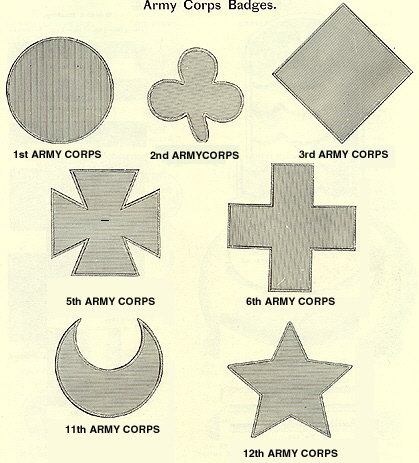
News correspondent William Swinton wrote of this: The germ of the badge designation was the happy thought of General Kearney, who, at Fair Oaks, ordered the soldiers of his division to sew a piece of red flannel to their caps, so that he could recognize them in the tumult of battle. Hooker developed the idea into a system of immense utility, and henceforth the different corps and divisions could always be distinguished by the red, white, or blue trefoil, cross, lozenge, star, etc.

When Hooker took command in January of 1863, he chose Daniel Butterfield as his Chief of Staff. The previous “grand division” structure of the army essentially created armies within an army, so Hooker returned the basic structural scheme to that of corps. Enhancing the spirit of this structure, along with creating utilitarian function in battle, a more specific system of badges was designed and announced in March of 1863. An Army of the Potomac Headquarters circular dated as March 21st wrote:
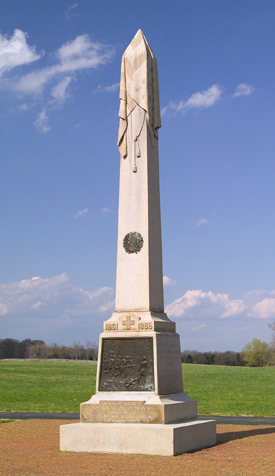
20th NY Monument

20th NY Monument

For the purpose of ready recognition of corps and divisions of the army, and to prevent injustice by reports of straggling and misconduct through mistake as to their organizations, the chief quartermaster will furnish, without delay, the following badges, to be worn by the officers and enlisted men of all the regiments of the various corps mentioned. They will be securely fastened upon the centre of the top of the cap. The inspecting officers will at all inspections see that these badges are worn as designated.

First Corps – a sphere: red for First Division; white for Second; blue for Third.
Second Corps – a trefoil: red for First Division; white for Second; blue for Third.
Third Corps – a lozenge: red for First Division; white for Second; blue for Third.
Fifth Corps – a Maltese cross: red for First Division; white for Second; blue for Third.
Sixth Corps – a cross: red for First Division; white for Second; blue for Third. (Light Division, green.)
Eleventh Corps – a crescent: red for First Division; white for Second; blue for Third.
Twelfth Corps – a star: red for First Division; white for Second; blue for Third.

The men were very proud of these badges, and even though they were not put into use until after the Battle of Antietam, many of the monuments at Antietam have these badges of pride and distinction upon them (see the pictures of the trefoil on the Philadelphia Brigade Monument – 2nd Corps, and the cross on the 20th NY Monument – 6th Corps).

(This is post #200 since the inception of Enfilading Lines in December of 2011)
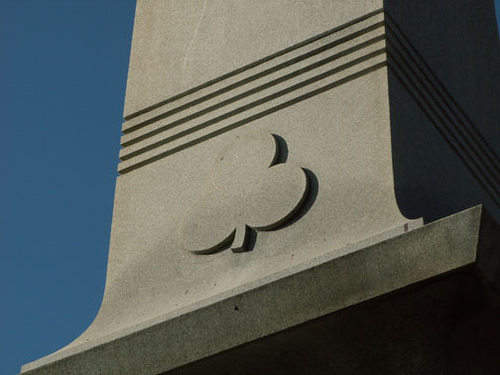
Philadelphia Brigade Monument
Philadelphia Brigade Monument

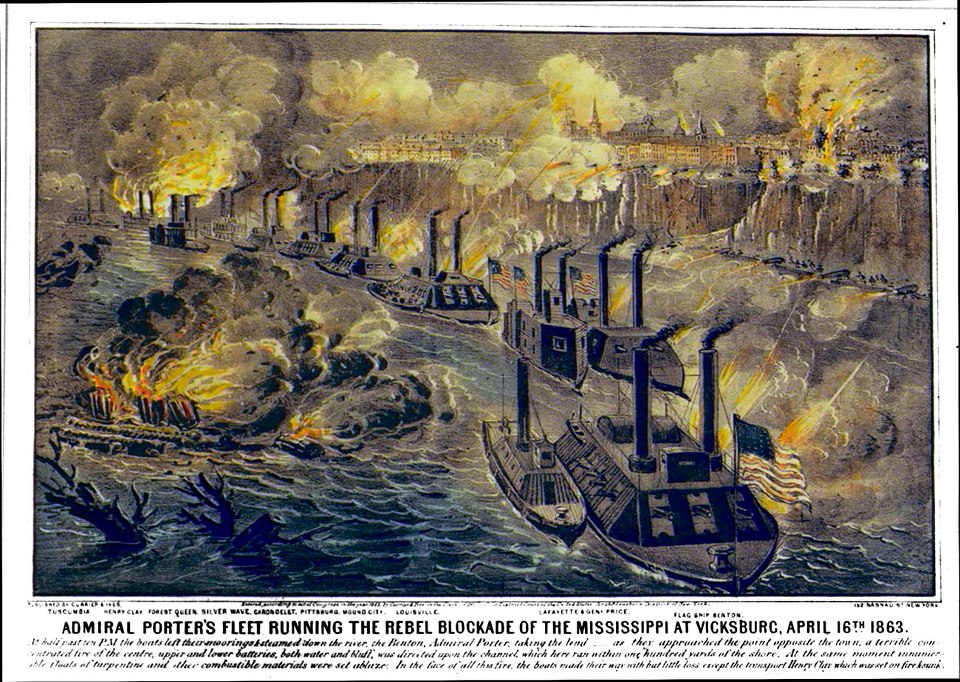
The Running of the Vicksburg Batteries – 150 Years Ago Today

General Ulysses Grant was a man with a lot of problems in the Spring of 1863. His objective was to capture Vicksburg and open the Mississippi … you know, just do it … just get it done! Easy words, especially for political figures far from the fields and waters of action! The 200-foot cliffs against the river made for a tactical impossibility. As well, much of the city was surrounded by swampy grounds of tangled bayous and jungle-like waterways. There was an effort to redirect the Mississippi by digging a canal, which is audacious thinking and as difficult and impossible as it sounds. The only approach on solid ground was from the east and southeast. Grant was headquartered to the northwest at Milliken’s Bend on the west side of the river.

But as if the logistical nightmare he faced was not enough, Grant was equally facing an impossible situation politically and personally within the ranks of army and national leadership. Hallack had written to him to say that, “the eyes and hopes of the whole country are now directed to your army … The opening of the Mississippi River will be to us of more advantage that the capture of forty Richmonds.” Lincoln stood by Grant ultimately, but not without withstanding considerable pressure from Republican congressmen. The old rumors of drunkenness persisted, being fueled by his subordinate – the Illinois political General John McClernand who kept up a correspondence with Lincoln, writing on 3/16 a report that “General Grant I am informed was gloriously drunk and in bed sick all next day.” The editor of the Cincinnati Commercial – Murat Halstead – wrote to Salmon Chase (who passed the letter on to Lincoln) that Grant was “a jackass in the original package.”  Major General Cadwalader Washburne wrote of Grant that he “has no plan for taking Vicksburg and is frittering away time and strength to no purpose. The truth must be told even when it hurts. You cannot make a silk purse out of a sow’s ear.”

David Dixon Porter

David Dixon Porter

Grant was not about to march his army back to Memphis and launch an overland campaign against Vicksburg – an action previously attempted and failed.  So he asked Rear Admiral David Dixon Porter to run gunboats past the batteries at Vicksburg with a view toward eventually spearheading a crossing of troops from the west bank to the east shore – protecting that location for supply vessels to sustain that location for a campaign against Vicksburg. Grant would march down beyond the west bank opposite Vicksburg, building roads as they went, to arrive at the crossing. Porter was skeptical of the entire operation, though eventually embraced it and prepared as best as possible.

The running of the Vicksburg Batteries happened 150 ago this evening of April 16-17. A total of 11 vessels latched loaded coal barges to the port sides, protecting exteriors with logs and wet bales of hay to snuff fuses and absorb shells that hit. At about 11:00, as the boats rounded De Soto Point, they were spotted by Confederate lookouts who spread the alarm. Bales of cotton soaked in turpentine and barrels of tar lining the shore were set on fire by the Confederates to light up the river. Although each vessel was hit repeatedly, Porter’s fleet successfully fought its way past the Southern batteries – losing only one transport. The mission was successful and headed downriver to the rendezvous with Grant on the Louisiana shore south of Vicksburg … where we will pick up the story on April 30.

Porter on the Mississippi

Civil War Sesquicentennial Mid-Point

flag raising at fort sumter 1865-04-14

My guy Abner Doubleday is somewhere in the picture.

This Enfilading Lines blog has been following the 150th anniversary events of many varied items of Civil War history over the past two years. Today (4/12) and this weekend mark the actual mid-point of this remembrance and commemoration. It was 152 years ago today that the War began with the shelling of Fort Sumter (check HERE for my article on that… and click at the bottom of that post to follow others on subsequent days). And it was on April 12, 1865 – 148 years ago today – that a formal ceremony at Appomattox marked the disbanding of the Army of Northern Virginia, effectively ending the war in Virginia. And of course, on the date of April 14 of that year, President Lincoln was assassinated. That same day in Charleston Harbor, a flag-raising ceremony was being held at Fort Sumter (see picture). The Union had actually gained possession of the Fort (essentially in ruins) in February of 1865.

Actually, 150 years ago this past Sunday the Union navy launched a failed attempt at retaking the Charleston Harbor. Rear Admiral Samuel Francis DuPont, the commander of the South Atlantic Blockading Squadron, took a fleet of seven monitors and two ironclads to assault the harbor’s defenses. One of the ironclads – the Keokuk – was sunk nearby as a result of the action, and the Confederates managed to salvage two 11-inch Dahlgren guns from it.

The interesting element of tracking along with the sesquicentennial and studying and writing about those themes that catch my interest (and especially writing on the major events) is that it puts the War into a palatable sense of sequential time. It brings to the study of the War a sort of third dimension of feeling that raises the events off the flat landscape of the printed page. It has been enjoyable also to have some isolated facts in the front of my mind on a certain date when perhaps I am hosting someone at Antietam … and I can say, “Actually, it will be 150 years ago tomorrow that so-and-so, commanding that regiment here at Antietam from that spot over there, will be killed at _______ .”  And they look at me like I’m a walking encyclopedia. Nope, nope … just a guy with a blog who likes to read and write.

150 Years Ago: Lincoln Visits the Army of the Potomac – (part two)

On this date of April 9, 1863, President Lincoln was in the midst of a visit to the Army of the Potomac and General Hooker. This second of two posts will talk about the military/political material side of the visit, while the article yesterday spoke about the pageantry associated with the event.

There were more reviews of troops on this date, including the First Corps. Here is an excerpt from A.P. Smith writing the History of the 76th New York:

April 9th – The First Corps, to which the 76th was attached, was reviewed by President Lincoln. The election of Mr. Lincoln having been made the pretense of the rebellion, and the Northern army having volunteered to refute the fallacy at the point of the bayonet, it is not surprising that of all the men in the country, Abraham Lincoln stood highest among the soldiery. His name was, indeed, the talisman by which they conquered; and whether on the march or around the campfire, his anecdotes and illustrations furnished an inexhaustible remedy for all the ills of soldier life. Even the contrabands, ignorant and stupid (meaning uninformed) as centuries of oppression had made them, catching a gleam of the effulgence of freedom just bursting upon them, in their adorations placed ‘Massa Lincum’ next to Deity. No wonder that the ‘boys in blue’ cheered lustily, and were happy, as they witness the approving smile of the President, on this grand review.”

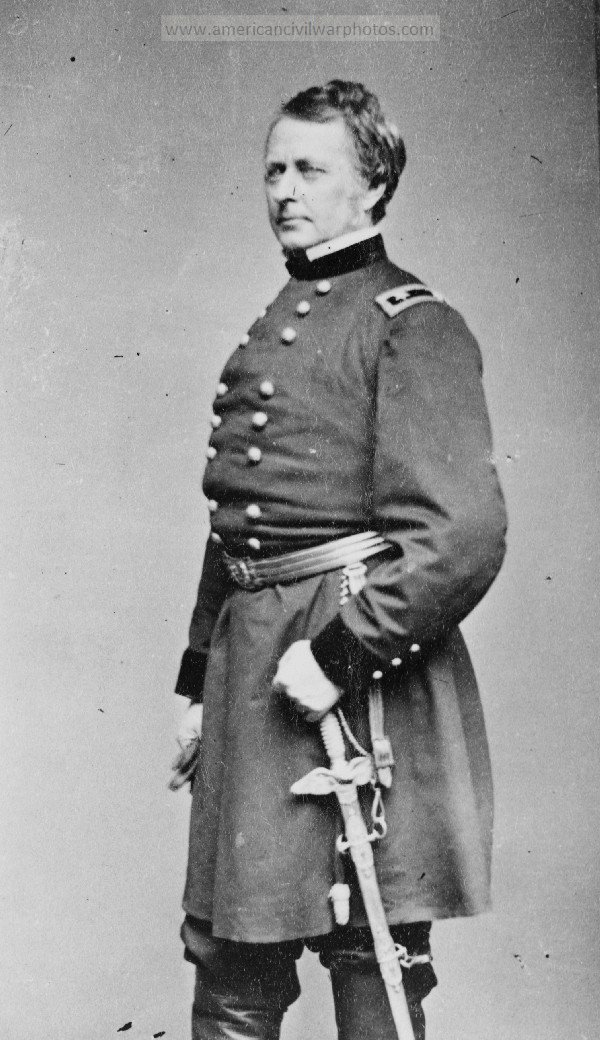
General Hooker

General Hooker

Along with talking strategy and plans for the upcoming campaigning season, President Lincoln made two major points to General Hooker. In a written memorandum he said, “Our prime object is the enemies’ army in front of us, and is not with, or about Richmond.”  Lincoln correctly understood that the war would only end when the Confederate army was defeated. Beyond that, the President parted with some words of advice, “In your next fight, put all your men in.” Lincoln had seen enough of reserves at Antietam and Fredericksburg.

Though Lincoln liked Hooker, who was rightly to be commended for many fine improvements to this splendid army of 130,000 men, he also found him a bit arrogant and over the top in his manner of speech. The general is reported to have often begun sentences with phrases like, “After we have taken Richmond …” or, “When we have defeated General Lee…” as if it were a foregone conclusion and matter of inevitability.  Lincoln, noting this air, said to a friend, “That is the most depressing thing about Hooker. It seems to me that he is overconfident.”  Hooker did, at this time, devise the plan that would essentially be the Chancellorsville offensive – dividing forces to cross the main body upriver, while a sizeable force in front of Fredericksburg would act to hold the Confederates in place.

Of course, no visit to the Army was complete without the President visiting with the troops, especially spending time in the hospitals and with the wounded. Before departing, son Tad was granted his wish to see some Rebels, and he and his father viewed them from a place across the Rappahannock River. Looking back at them, some Confederates recognized the President and respectfully bowed.

150 Years Ago: Lincoln Visits the Army of the Potomac – (part one)

On this date of April 8, 1863, President Lincoln was in the midst of a visit to the Army of the Potomac and General Hooker. This first of two posts will talk about the pageantry side of the visit, while the next post – tomorrow – will talk about the military/political material associated with the event.

There is no shortage of colorful reports in Civil War writings relative to the grandeur of this visit of the President and the pageantry of reviewing the huge Army of the Potomac. Hooker had called it the finest army on the planet, and in that nobody had ever seen anything quite like it, we could forgive his hyperbole – perhaps.

Journalist Noah Brooks wrote that it “was a gala day … with a grand review of the infantry and artillery of four corps of the Army of the Potomac … After the usual Presidential salute and cavalcade through the lines, the troops were set in regiments and brigades. It was a splendid sight to witness these 60,000 men all in martial array with colors flying, drums beating, and bayonets gleaming in the struggling sunlight.”

A sketch from Harper's of Lincoln and Hooker reviewing the troop on this date 150 years ago.

A sketch from Harper’s of Lincoln and Hooker reviewing the troop on this date 150 years ago.

Like this year’s late winter/early spring, 1863 had been a year that was slow to warm, along with an abundance of precipitation. The nicer weather likely also added to the high spirits of many on this occasion.

Thomas Gawley of the 8th Ohio wrote:  “I have never before seen the army in such good physical condition. The men are all fat, healthy, well-uniformed, thoroughly equipped; the horses are prancing, the guns shining; and everything indicates an army in splendid fighting order.”

Frederick Hitchcock (of the 132nd PA – book, War from the Inside) was especially effusive and colorful in text about the event, calling it, “from a military, spectacular point of view, the chief event of our army experience. It included the whole of the great Army of the Potomac, now numbering upward of one hundred and thirty thousand men, probably its greatest numerical strength of the whole war … there were present for the review, it is safe to say, ninety thousand to one hundred thousand men. It was a remarkable event historically, because so far as I can learn it was the only time this great army was ever paraded in line so that it could be seen all together … far exceeding in its impressive grandeur what has passed into history as the ‘great review,’ which preceded the final ‘muster out’ at the close of the war in the city of Washington. At the latter not more than ten thousand men could have been seen at one time …”

Hitchcock continued …

“How can words describe the scene? This is that magnificent old battered Army of the Potomac. Look upon it; you shall never behold its like again. There have been and may yet be many armies greater in numbers, and possibly, in all the paraphernalia of war, more showy. There can never be another Army of the Potomac, with such a history. As I gazed up and down those massive lines of living men, felt that I was one of them, and saw those battle-scarred flags kissed by the loving breeze, my blood tingled to my very finger-tips, my hair seemed almost to raise straight up, and I said a thousand Confederacies can’t whip us.  And here I think I grasped the main purpose of this review. It was not simply to give the President a sight of his ‘strong right arm’ as he fondly called the Army of the Potomac, nor General Hooker, its new commander, an opportunity to see his men and them a chance to see their new chief—though both of these were included—but it was to give the army a square look at its mighty self, see how large and how strong it really was, that every man might thereby get the same enthusiasm and inspiration that I did, and know that it simply could not be beaten. The enemy, it is not strange to say, were intensely interested spectators of this whole scene, for the review was held in full view of the whole of their army. No place could have been chosen that would better have accommodated their enjoyment of the picture, if such it was, than that open plain, exactly in their front. And we could see them swarming over Marye’s Heights and the lines to the south of it, intently gazing upon us. A scene more resplendent with military pageantry and the soul-stirring accessories of war they will never see again. But did it stir their blood?  Yes; but with bitterness only, for they must have seen that the task before them of successfully resisting the onslaughts of this army was impossible. Here was disclosed, undoubtedly, another purpose of this grand review, viz., to let the enemy see with their own eyes how powerful the army was with which they had to contend.”

Many of the writers also commented about how Lincoln looked “haggard, tired, gaunt, bent over, downcast, weary” etc.  These comments are not actually unusual among those writing their initial opinions of the President. More often than not, he was not seen as a striking figure on a horse – as his size went against the notion of what was becoming in equestrian deportment. As well, it must have indeed been tiring to sit there in a saddle for hours watching the thousands parade past… lost in thoughts of all sorts.

JFK Visits Antietam – 50 Years Ago Today

On this date of April 7, 1963 President John F. Kennedy made a visit to tour the Antietam Battlefield. Arriving on a helicopter from Camp David, he was hosted by Acting Superintendent of the Antietam National Battlefield, Robert L. Lagemann. Also on the trip were Jacqueline and the Kennedy children, along with Senator Edward Kennedy and wife.

Kennedy at AntietamThere is a public domain video that you may see by clicking HERE. It is about seven minutes long and is very interesting. It would appear that the weather on this date 50 years ago was every bit as fine as it has been today in 2013.

Among recognizable sites on the battlefield that the President is viewing includes the Poffenberger Farm at the north end of the North Woods (see picture of the barn in the background). Later, Kennedy is seen walking to and from the area of the New York State Monument near the visitor’s center. Especially interesting are views at the Burnside Bridge. At one point an automobile passes by, as the road was at that time still in common local use. Clearly seen as well are some of the four small monuments that originally graced the four corners of the bridge – these having been subsequently removed to the bank on the east side of the Antietam Creek. The witness tree is also evident in the background as the President walks out to the middle of the structure.

Over the years quite a number of Presidents have visited Antietam, beginning with Andrew Johnson and the dedication of the national cemetery. William McKinley – who was at the battle in 1862 – came in 1900 for the dedication of the Maryland State Monument, as did Teddy Roosevelt three years later for the New Jersey monument. The most recent was Jimmy Carter in 1978. An article that talks about each visit may be found HERE – written by current park ranger John Hoptak.

The Richmond Bread Riot – 150 Years Ago This Week

The wear and tear of war was beginning to seriously take its toll upon the South during this third spring of the Civil War. A series of civil disturbances arose in urban areas like Atlanta and Macon, with the most troubling being a riot in Richmond on the date of April 2, 1863.

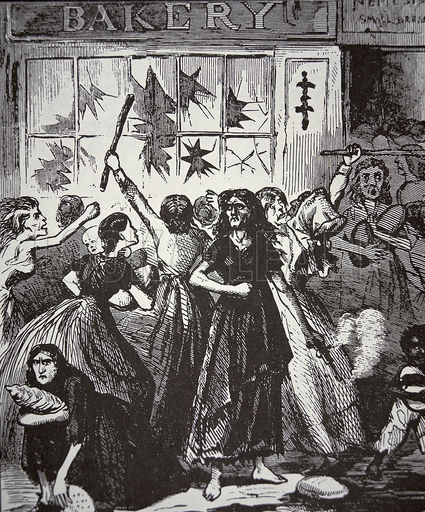
Richmond had a more severe reality than most Southern cities. Along with shortages of everything because of the war effort, including the doubling and tripling of the currency and the city’s population, the conditions reached a boiling point for the women of the Confederate Capital. They demanded food from Governor John Letcher on April 1st, and if he did not deliver, they were prepared to take it by force. One woman said, “As soon as enough of us get together we are going to the bakeries and each of us will take a loaf of bread. That is little enough for the government to give us after it has taken all our men.”The Bread Riot in Richmond

More than a thousand people, mostly women, broke through storefronts and stole bacon, candles, shoes, cloth, hats, and jewelry. Only the threat of being fired upon by the Public Guard (made either by Letcher or Jefferson Davis) at last caused the crowd to disperse. Over 60 people were arrested.

Secretary of War James Seddon did not want this troubling news to make it to the northern press and encourage the Yankee population. He asked the local press to not publish accounts of the event, but the word of it leaked out and the incident was reported on the front page of the New York Times on April 8th.

A Detailed Study of Bloody Lane

A group of the Antietam Battlefield Guides took advantage of our first truly pleasant day in one-half of forever to hike the areas in and around the Sunken Road this afternoon. It was a detailed study of the Confederate defense during this middle portion of the Battle of Sharpsburg, led by one of the most senior long-term guides – Bill Sagle. I’m reminded again of the truth that I penned in the very first post of this Enfilading Lines Blog – the study of the Civil War (and even one part of one battlefield) is truly bottomless. Let me share some primary thoughts from today:

Bill Sagle - Antietam Guides Legend!

Bill Sagle – Antietam Guides Legend!

The visual clarity of the dormant season – I often tell people who come in the off season like winter or early spring or late fall, that they have actually come at a very good time. The park is never more beautiful than when it is green and lush at the height of the growing season, but there is actually more to be seen of the lay of the land during the time of tree and plant dormancy (but don’t be afraid to come at any time of the year!).

The effects of terrain upon battlefield movements and historical interpretation – An especially interesting feature of the Antietam Battlefield is the rolling terrain. Bill Sagle at various points spoke to different rises where certain officers likely moved for a better view of approaching troop movements, or where those same elevations provided an excelling platform for destructive fire. Conversely, numerous ravines were detailed as to the locations for troop movements behind the line of fire – either approaching or leaving the field.

The fluidity of the battle situation – When we view maps of the sunken road action, there are nice straight lines of regiments and brigades. And though we of necessity need to draw it in such a fashion to gain basic understanding, the actual comings and goings of troops in the conflict itself is a good bit messier. It is not as simple as “the Confederates were there waiting, the Union attacked them over and over, and eventually the Confederates retreated back through the Piper Farm.” One breakthrough advance from along the most sunken portion of the lane was that of    Colonel Carnet Posey’s 16th Mississippi (Wilkinson Rifles). Of this advance, Colonel R.T. Bennett of the 14th North Carolina said “they disappeared into the ground.”

A tactical point of interesting consideration – Bill Sagle spoke of the smoothbores of the 14th NC, and how their posture of holding a line and drawing the enemy toward it was a tactical move to gain the most effective capacity of their weapons. This helps explain the nature of the wait of the Confederates along the lane. And in my own understanding of the line, I realize I must move the Alabama troops farther to the west, along with their colorful colonel John B. Gordon.

People to study further – I need to search out the writings of Col. Bennett of the 14th NC whom Bill spoke of as a great writer. As an example, from his battle report he said, “At this juncture the colonel commanding gave orders for bayonets to be fixed, preparatory to an advance of the line. However, two fresh columns of the enemy were seen double-quicking to the relief of the shattered ranks of the foe, and stern necessity bade us be satisfied with simple holding of our ground.”  The Confederate commander Roger Pryor would also be an interesting character for greater study. He almost died at Fort Sumter, but not in the way you might expect. Abner Doubleday recorded a near fatal incident during the negotiation at the fort after the action had ceased. Roger A. Pryor, a former Virginia senator and future officer for the Confederacy, was with the negotiating party and seated at a hospital table in a dark area (this location being about the only place at Sumter safe from the flames). Near his right hand was a tumbler of drink, as well as a dark bottle. While mechanically reaching to pour a drink, he instead accidentally poured the contents of the bottle into a glass and swallowed what turned out to be iodide of potassium. The doctor, Samuel Wylie Crawford (who would give up medicine during the war to eventually become a general, fighting also at Antietam) took him outside to apply a stomach pump. Doubleday later told the doctor that if the leaders of secession wanted to come over from Charleston and commit suicide by poisoning themselves, he could think of no reason “to interfere with such a laudable intention.” Crawford responded with similar humor, reasoning that he was responsible for government property, and could not allow it to be taken away in Pryor’s stomach.

A great line to use with guests – Often when giving a tour and looking out over a distance to describe a particular spot, there will be people or vehicles at the exact location being referenced. Bill would often say something like, “Out there where I placed those two vehicles just for this moment,” or “over by that big tower I had built.”  I’ll use that! One day at Bloody Lane while talking with a bus group, I pointed to a person walking about 50 yards away and said that something happened “about where that man in the red jacket is walking.” It turned out to be someone from their own group … a woman! Oh boy.

DSC_0032

DSC_0036

The Melting Institution of Slavery in March, 1863

There are two items of interest relative to slavery that occurred 150 years ago today on this date of March 26, 1863.

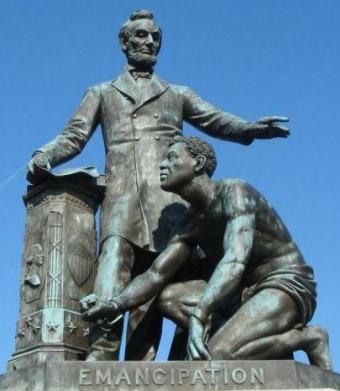
Gradual Emancipation of Slaves in West VirginiaEmancipation_Memorial

The citizens of western Virginia voted in favor of a revised constitution that would adopt the gradual emancipation of slaves. This portion of Virginia was more pro-Union than the rest of the state from the very outset of secession and hostilities. President Lincoln on 12/31/1862 had approved the admission of a state of West Virginia on condition that this emancipation element be contained in a constitution.  Statehood commenced on June 20, 1863.

Lincoln Writes to Tennessee Governor Andrew Johnson

President Lincoln faced many rumors and innuendos of all sorts relative to the depth of his convictions on the issue of slave emancipation. The Proclamation of New Year’s Day needed to be followed with action. The issue was one of restraining European powers from mediation toward an unacceptable resolution for the North. Lincoln needed to continually cast the conflict in terms of a moral cause.

Colored troops were originally raised with a view toward serving in varied garrison duties, thereby freeing white soldiers for the actual conflicts. Lincoln had been slow to originally agree with efforts to raise colored troops – cautiously walking the balance of wondering how it would be accepted by the populace in the North. But heroism on the part of blacks – particularly in Louisiana, Florida, and coastal South Carolina – along with Union commanders praising their noteworthy accomplishments eventually changed his position.

A rumor came to Lincoln that Andrew Johnson – the only Southern senator to not “go south” – was considering the raising of black units. So Lincoln fired off a letter of encouragement and support for this vision. Johnson never actually answered responded. Here is the letter:

My Dear Sir:

I am told you have at least thought of raising a negro military force. In my opinion the country now needs no specific thing so much as some man of your ability, and position, to go to this work. When I speak of your position, I mean that of an eminent citizen of a slave-state, and himself a slave-holder. The colored population is the great available and yet unavailed of, force for restoring the Union. The bare sight of fifty thousand armed, and drilled black soldiers on the banks of the Mississippi, would end the rebellion at once. And who doubts that we can present that sight, if we but take hold in earnest? If you have been thinking of it please do not dismiss the thought.

Yours truly,

A. Lincoln

Death of John Pelham – 150 Years Ago

As I wrote yesterday, Confederate artilleryman John Pelham was mortally wounded in the Battle of Kelly’s Ford and died 150 years ago on this date of March 18, 1863.  It is more than a bit ironic that this young man – known for his rising stardom in artillery, and called the “Gallant Pelham” for his daring style of fighting – would be taken down in a cavalry event. This is a sort of “wrong place at the wrong time scenario.”

John Pelham 1858

John Pelham 1858

John Pelham was born September 7, 1838 in Calhoun County, Alabama as the third of seven children born to a doctor. The Pelham family in America dates back to the 1600s. An ancestor named Peter Pelham was the organist of Bruton Parish Church in Williamsburg. The family had members who fought in the American Revolution.

Pelham entered West Point in 1856 where he was an average student, though very much liked by everyone. Serving with JEB Stuart’s cavalry from 1st Manassas through to his death (about 60 engagements), he did much to advance the technique of using light artillery as a mobile arm of the cavalry. The highlights of his career occurred at Antietam and Fredericksburg.

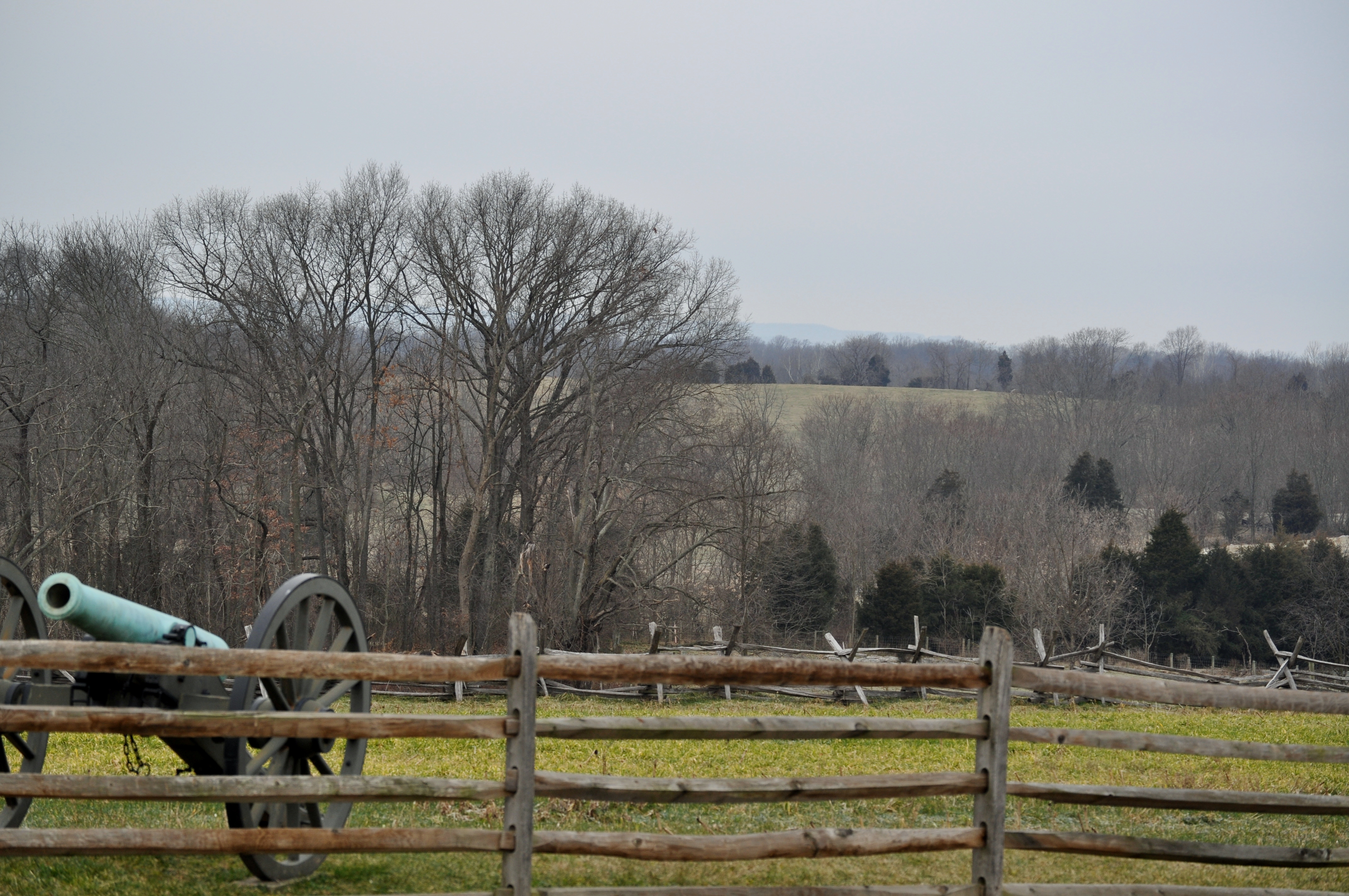
The rounded in the distance is Nicodemus Heights from which Pelham fired toward the location of the camera

The rounded in the distance is Nicodemus Heights from which Pelham fired toward the location of the camera

Positioned on a rise north of Sharpsburg (and west of the Antietam battlefield) called Nicodemus Heights, Pelham’s guns maneuvered to terribly harass the Union advance in the cornfield area with an ENFILADING LINES (my favorite words!) fire into the flanks of the varied attacks. In Jackson’s battle report, he wrote, “It is really extraordinary to find such nerve and genius in a mere boy. With a Pelham on each flank I believe I could whip the world.”  Jackson was also known to have said to Stuart on another occasion, “If you have another Pelham, I wish you would give him to me.”

The Pelham marker at Fredericksburg is at an intersection ... in the corner of a strip mall.

The Pelham marker at Fredericksburg is at an intersection … in the corner of a strip mall.

At Fredericksburg, Pelham took two guns in advance of the Confederate right wing, and with those cannon completely held up the entire left wing advance of the Union army. In a JEB Stuart letter just five weeks before Pelham’s death, Stuart wrote:

I have already made several urgent recommendations for the promotion of Major John Pelham, my chief of artillery, which have not been favorably considered by the War Department. The battle of Fredericksburg, forming a fresh chapter in his career of exploits without parallel, I feel it to be a duty, as well as a pleasure, to earnestly repeat what I have already said on his behalf, and to add that, if meritorious conduct in battle ever earned a promotion, Major John Pelham of Alabama, should be appointed Colonel of Artillery. Not only this, but his function as Chief of Artillery of the Cavalry Division always, in battle, places him where they become those of a Colonel, because of the fact that such artillery is always accumulated on the flanks to enfilade and take the enemy in flank as was done with so much execution at Groveton, Sharpsburg, and Fredericksburg. Pelham’s known ability as an artillery officer has won for him the confidence of generals in command who unhesitatingly entrust to him the artillery thus brought together from various batteries. It has been alleged that he is too young. Though remarkably youthful in appearance there are generals as young with less claim for that distinction, and no veteran in age has ever shown more coolness and better judgment in the sphere of his duty.

Yesterday in Jacksonville, Alabama was held a memorial reenactment weekend in honor of Pelham and his exploits – including a funeral procession. He is buried at that place. Here is a link to an article about that event, and this picture is from that article in the Anniston Star Newspaper.

Pelham reenactment from the Anniston Star newspaper