Letter to Mansfield’s Wife – Update

Not to sound like a mutual admiration society here, but my fellow blogger and new friend John Banks followed up on my earlier post about the letter from a Dr. Flood to the widow of General Joseph Mansfield.

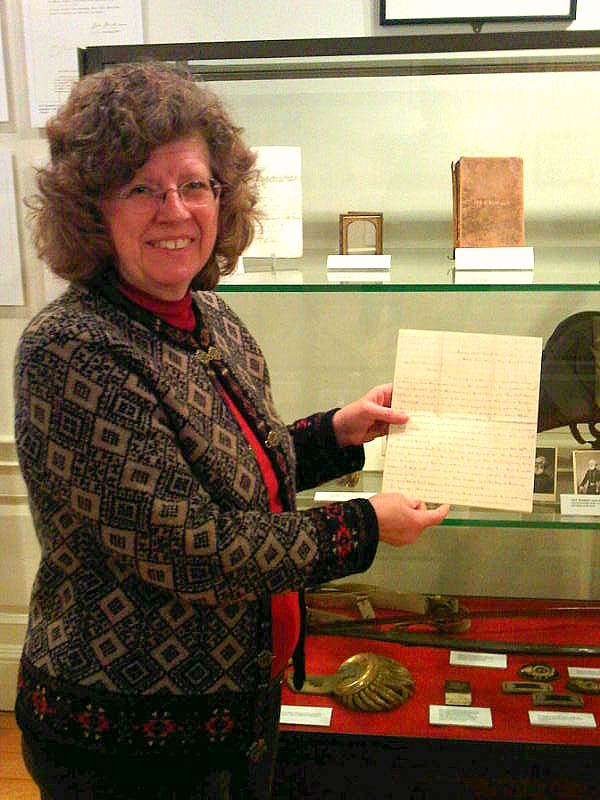
The original letter was purported to be in the Middlesex County Historical Society Museum, which is not far from where John lives in Connecticut. So he tracked it down to the location (housed in the home of the General) and indeed saw the original letter.

He has written his own post about this, with a number of pictures as well … which may be viewed at: http://john-banks.blogspot.com/2012/01/antietam-visit-to-general-mansfields.html

Dr. Flood letter to Mrs. Mansfield (picture by John Banks)

While you are there, be sure to look at his previous post about the “Oliver Case Bible.”  I know I’ll be sure to include this fascinating story in certain tours I do in the future at Antietam.

150 Years Ago Today: Stanton Appointed Secretary of War

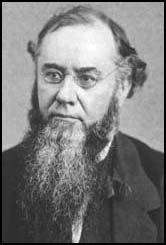
Edwin Stanton and Abraham Lincoln were opposites in many ways. Lincoln was a tall Republican, known for his wit and warmth; Stanton was a short Democrat who was secretive, quiet and often aloof. Yet their mutual passion for the Union made them effective partners in the successful execution of the Northern war effort.

Edwin M. Stanton, 1814-1869

The role of the Secretary of War was a tedious task of negotiating contracts and dealing with myriads of details. Edwin Stanton possessed the administrative ability to largely deal with these complications.

Stanton was not a fan of General McClellan, and the feelings were quite mutual. One of the most startling messages of a commander during the War was McClellan’s telegram to Stanton after the Battle of Gaines Mill (VA) on 6/28/1862, when he wrote:

“I have lost this battle because my force was too small. I have seen too many dead and wounded comrades to feel otherwise than this government has not sustained this army. If you not do so now the game is lost. If I save this army now, I tell you plainly that I owe no thanks to you or any other person in Washington. You have done the best to sacrifice this army.”

Other facts about Stanton:

  • His administrative strengths helped to hold together the Buchanan Administration from total collapse. (Stanton served only in the final months of the Administration as Attorney General.)
  • Stanton persuaded Buchanan to not surrender Fort Sumter.
  • Upon Lincoln’s death, he is reported to have uttered the famous words, “Now he belongs to the ages.”
  • Stanton had a terrible experience as Secretary of War in the Johnson Administration, ultimately being replaced when a vote to impeach the President failed.
  • He was confirmed by the Senate as a President Grant appointment to the Supreme Court in December of 1869, but died four days later.

C.I. Scofield of the 7th Tennessee

Memorializing the Living

We tend to make a big deal over those who died at Antietan, and rightly so. But we sometimes forget about those who went on from that bloodiest single day in American history to accomplish great things in their lives. There were so many who became college presidents, governors, representatives and senators, and even two Presidents: Hayes and McKinley. Washington Roebling – who built the Brooklyn Bridge – served as a junior member of McClellan’s engineering staff.

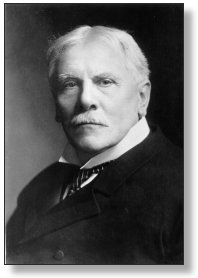
Oliver Wendell Holmes, Jr.

And future Supreme Court Justice Oliver Wendell Holmes, Jr. was left for dead in the area of the West Woods (recovering to live to age 94).

I would venture to say that, in some way, all of our lives have been impacted by some surviving person(s) who was in or around Sharpsburg, Maryland on September 17th, 1862.

This post is a study of the personage at Antietam who likely most impacted my own – albeit years and years later. He was a Confederate named Cyrus Ingersoll Scofield of the 7th Tennessee. At the very end I will detail how I am impacted by this simple soldier.

A Quick History of the 7th Tennessee

7th Tennessee Battle Flag

The 7th Tennessee had a long history that encompassed the entire war, fighting in all of the major battles and campaigns in the eastern theatre. It is not known how many volunteers began with the regiment in the summer of 1861, but there were a mere 47 to surrender at the end. The 7th was most often combined with the 1st and 14th Tennessee in what was known throughout the war as the “Tennessee Brigade” and then later as “Archer’s Brigade” under James J. Archer.

The 7th in the Maryland Campaign of 1862

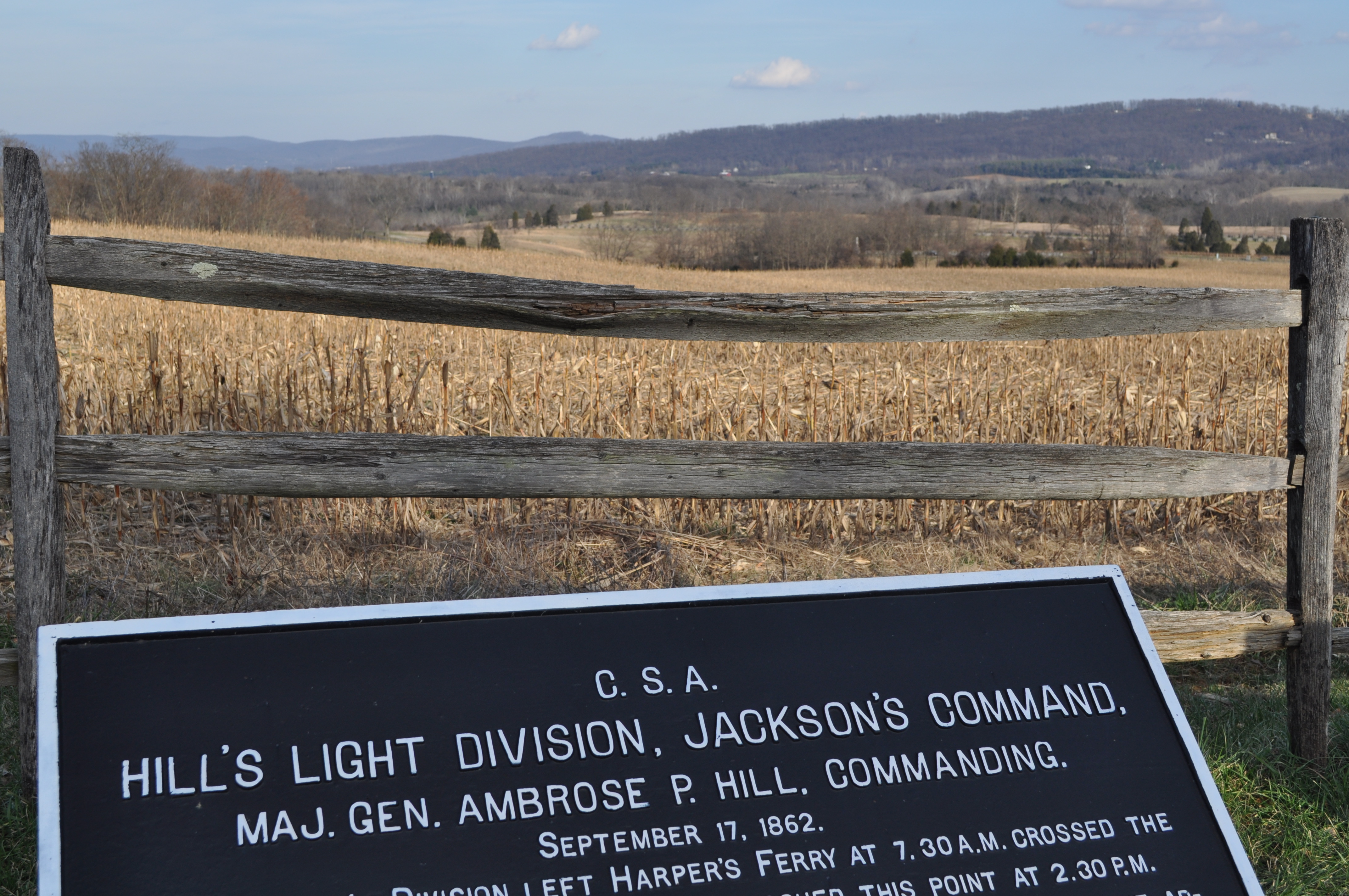
In the summer of 1862, the Brigade became a part of A.P. Hill’s Light Division, and as such was a part of the Battles of 2nd Manassas (2nd Bull Run), Harpers Ferry, Sharpsburg (Antietam) and Shepherdstown (September 19th and 20th). By this time, having endured losses at each battle along the way, and suffering much from disease and straggling, the Brigade was down to about 350. In fact, it is said that at Antietam there were but about 100 effectives, of which 30 were killed or wounded.

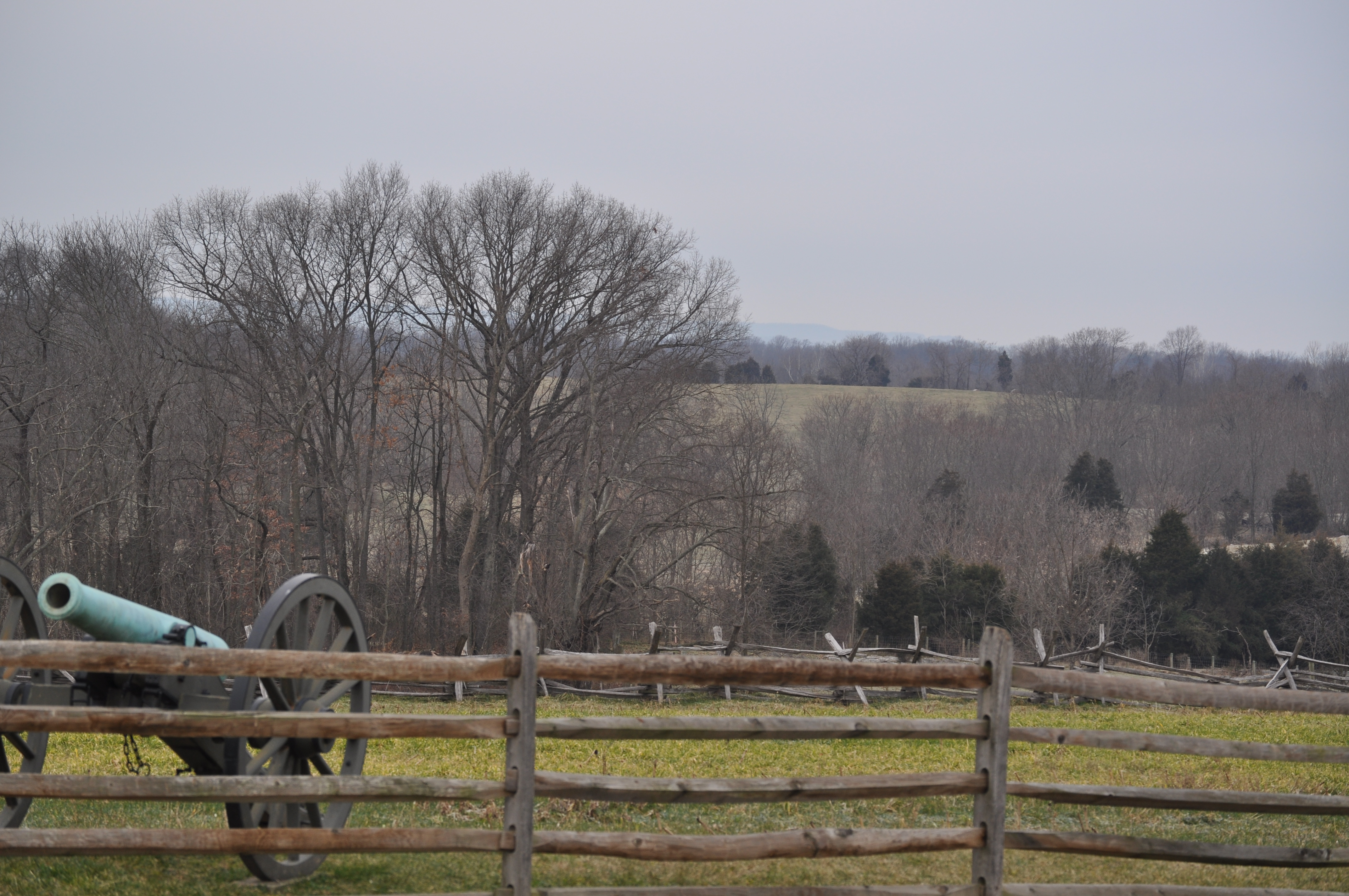
The 7th pushed through this field past the grove of trees in the center of the picture

As a part of A.P. Hill’s Division, the role played by this Brigade was one of saving Lee from destruction by arriving upon the south end of the field late in the afternoon. Archer’s Brigade followed Gregg’s South Carolinians and Branch’s Brigade by solidifying the final line of counter-attack that ended the action of the day. Before Hill’s men arrived, by all appearances, Lee was about out of options and in grave danger of being defeated. Truly, the arrival of Hill’s men at the end of a 17-mile march and river crossing saved the Army of Northern Virginia from utter disaster.

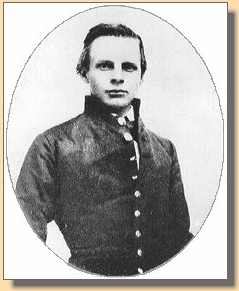
Private C.I. Scofield

Cyrus Ingersoll Scofield

Among those 70 or so from the 7th Tennessee who survived the Battle of Antietam was a 19-year-old Cyrus Ingersoll Scofield … who had joined the regiment in 1861 by claiming to be age 20, when he was in fact but 17 at the time. It is said that he was a good horseman who often carried messages while under fire. It is also reported in several references that he was awarded the Confederate Cross of Honor for bravery at Antietam. I am unable to verify this as his name does not appear on any list. The Cross of Honor could refer either to an official award given by the Congress of the Confederate States, or, it could refer to a later honor given to veterans in the period after 1898. It is more likely from this latter source that he may well have been given such – the knowledge of which comes down from oral transmission.

A Convoluted Life Set Straight

After the war, Scofield worked for a time as a politician and lawyer. His reputation was less than honorable in these pursuits, his life was out of control with drunkenness and thievery, and his wife ultimately divorced him and took their two children.

In 1879, C.I. Scofield experienced an Evangelical conversion at a church in St. Louis. He was radically changed and began at once to grow in the knowledge and communication of his new faith. He was licensed to preach by the St. Louis Association of the Congregational Church, and in 1882 went to Dallas, Texas to bring new energies to a struggling parish of that denomination. The Dallas Church (now an independent congregation called Scofield Memorial Church) grew from a handful of people to over 800 by the time he departed for a new church ministry in Massachusetts in 1895.

Due to his skills as a speaker and teacher, Scofield over these years became a regular part of the growing and popular Bible Conference movement. There he became well-acquainted with such men as D.L. Moody and J. Hudson Taylor – the founder of China Inland Mission. Scofield’s systematic teaching of Scripture developed into a correspondence course, and ultimately found a more final and permanent form in the publication of the Scofield Reference Bible in 1909. Many tens of thousands of these were purchased over the years and were instrumental in popularizing a theological system called Dispensationalism (for more detail on this, see my personal/church blog at www.thewordofrandy.wordpress.com).

C.I. Scofield was instrumental as the founder of the Philadelphia School of the Bible in 1913 (later to be called Philadelphia College of Bible, and now known as Philadelphia Biblical University). Among those most influenced by Scofield was a younger man named Lewis Sperry Chafer – who, through Scofield’s encouragement, was the founder of Dallas Theological Seminary.

My Connections to this Story

There is no way my life would be what it has been without the life-long influences of this man who survived the Battle of Antietam 17 years before getting his own life centered. How?

1.  My entire family system was impacted by the Bible Conference movement and multiple people over generations of teachers with a direct link back to Scofield.

2.  The central elements of my overall view of Scripture are fully informed by the theological system called Dispensationalism … and though Scofield was not the originator of this system of biblical interpretation, he did more to popularize and spread it than anyone else (again, see my other personal blog for the details).

Philadelphia College of Bible about 1970

3.  I attended Philadelphia College of the Bible and Dallas Theological Seminary – having two bachelors, a masters, and a doctorate from these academically robust institutions.

4.  While a grad student in Dallas in the 1980s, my wife was for three years a first grade teacher at the Scofield Christian School – an adjunct ministry of Scofield Memorial Church.


A Letter to General Mansfield’s Widow

Generals Killed at Antietam
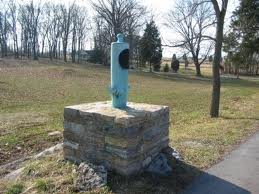
Mansfield Mortuary Cannon Near The East Woods

A total of six generals perished at the Battle of Antietam (or within weeks of the conflict) – three from each side. A mortuary cannon now marks the spot where each incident occurred, and to children on a battlefield tour I often give the fun challenge of discovering them before I talk about them!
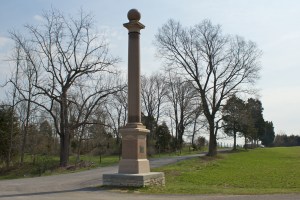
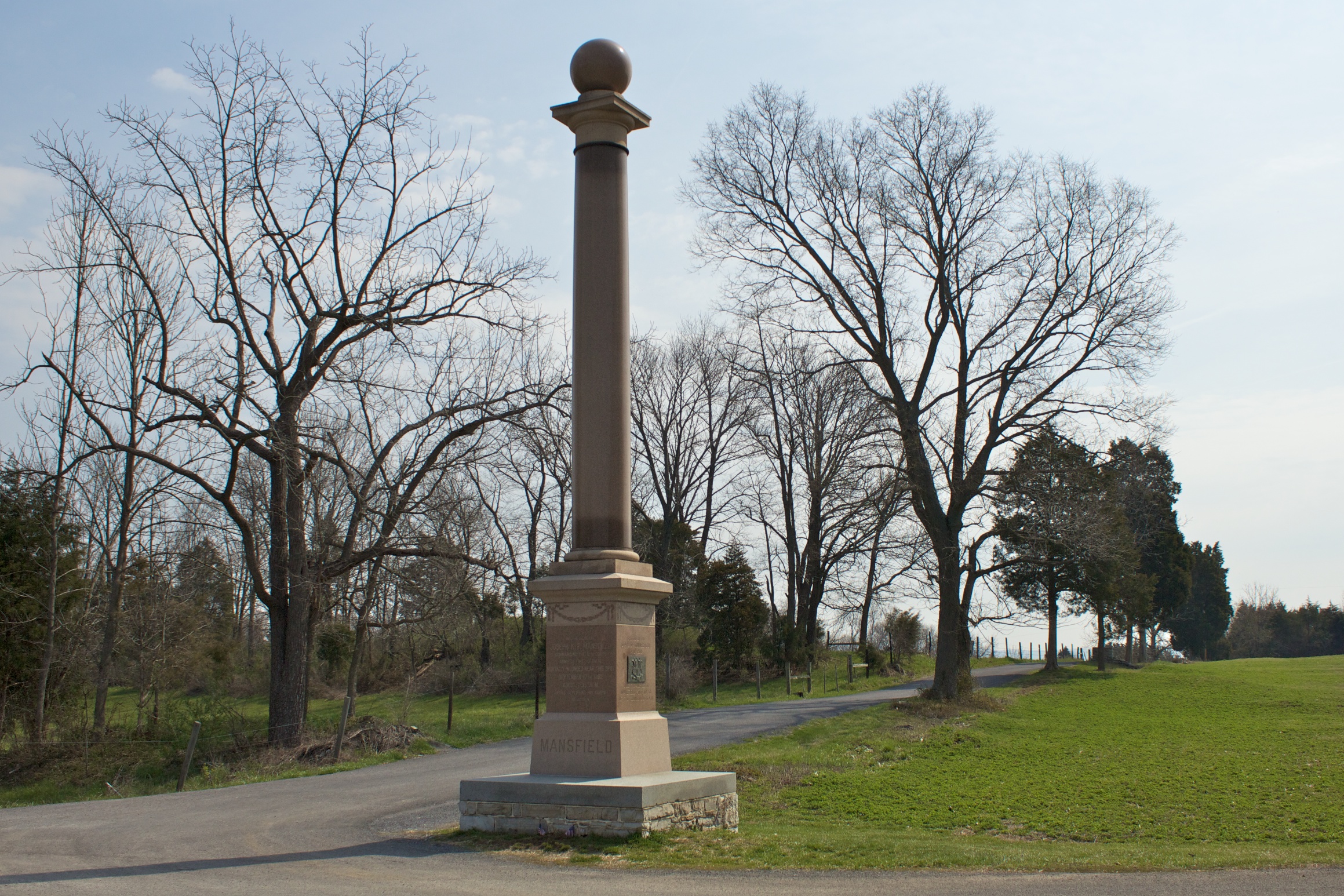
Mansfield Monument at Antietam

But only one of the generals also has a monument erected in his honor, and that is Major General Joseph Mansfield of Connecticut.

General Mansfield’s Military History

Mansfield was 58 years old on September 17th of 1862. He was a career military officer and engineer, having graduated 2nd from West Point in 1822 in a class of 40. He fought in the Mexican War and served prior to the Civil War as the Inspector General of the Army.

At the outbreak of the War in 1861, he commanded the Department of Washington, and was later stationed on the Carolina coast. Apart from firing some shore batteries, he had no war experiences in the past 15 years prior to arriving at Sharpsburg.

Mansfield’s First and Last Day on the Job

Mansfield arrived at Antietam to take over command of the 12th Corps on September 15th.  On the morning of the 17th, Mansfield led portions of his men into the conflict through the East Woods – following upon the earlier attacks by Hooker’s 1st Corps. The 12th Corps men were subjected to a brutal fire from Confederate forces who had pushed in advance of their prior position. Mansfield had ordered his men to stay in column formation rather than in battle front lines – thinking that his many green troops could be better handled in that manner by the officers. Rather, this facilitated a tighter target and surely added to the losses.

In the confusion and fog of battle, Mansfield mistakenly thought his troops were firing upon their Union comrades. And while riding forward to assess this situation, he was wounded by a single shot to the chest, which would prove fatal the next day.

He was taken to a house about one mile to the north of the location of his wounding, attended there by a physician, and passed away the next morning.
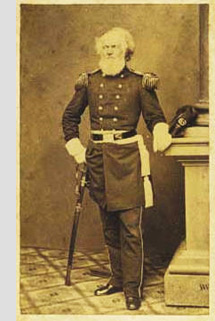
General Joseph Mansfield

Some time ago while combing through filed materials in the basement of the Antietam Visitor’s Center, I came across a very old typescript letter. Though difficult to read, I saw that it was a copy of a letter that had been written by the attending physician upon the occasion of General Mansfield’s death. It was composed over seven months after the battle, having been penned upon the request of the General’s son – asking that the details also be sent to his mother, Mansfield’s widow.

Many of the details of the letter are facts known to history, so I do not presume the letter to be rare or some sort of discovery. Yet I have not seen anywhere that it has ever been made available online.

Here then is the letter itself – transcribed exactly as found with abbreviations and multiple spelling errors. I will finish after the letter with some material on the writer, Dr. Flood.

Camp 107th Regt. N.Y. Vols.       Hope Landing, Va.      April 28-1863

Mrs. Genl. Mansfield,

Madam.-

I received a letter some few days since from Col. S.M. Mansfield asking me the particulars of the death of his father Genl. Mansfield, who fell at the battle of Antietam on the 17th day of Sept. last, and wishing me to communicate the same to you. I cheerfully comply with your son’s request, for if you have for so long a period remained without that detail, it is time that the same was put in your possession. What I know of that melancholy catastrophe, fell under my own observation, as a Surgeon on that sanguinary day on which our Country lost a brave and gallant soldier, and yourself a husband.

The first time I met with Genl. Mansfield, was on the 16th. A member of our Regt. had become overpowered by the heat, and on being summoned by his side I found the Genl. giving him some stimulus, and he requested me to bathe his head with water. I did not meet with him again, until I was summoned to his assistance on the battle field; word having been sent “that Genl. Mansfield was wounded.” 

To give you the detail in full of that sad event, I must necessarily digress and speak of connecting circumstances. Our Regt. the 107th N.Y., was engaged soon after daylight, and was near the “center” a little to the right, and about 1000 rods on the right and front opposite the “Duncard Church”. We had driven the rebels back, out of a piece of wood, and a field that was very stony, and slightly sprinkled with locust trees, to a road that ran parallel with a long piece of wood, where they made a stand. As our Regt. advanced to the edge of the locust field, they succeeded in getting a “cross fire” on us, which was terrible and very destructive.

<< Page 2 begins>>

We were obliged to halt for many of our men were falling, and to proceed were madness. I was in the rear of the Regt. attending to our own wounded, as they were carried back, and was so engaged, when Col. Diven at about Eight & a half o’clock A M, called to me and said that “our Genl. was shot.” I left my position quickly, and went forward, taking with me a man named McGovern, who volunteered to do so and found the Genl. by seeing his horse running & following the course from whence he came.- He was about 100 yards in front of our Regt. and the woods, a most perilous position.- where the bullets and missiles were flying like hail, and where no one upon horse could survive the position. It seemed as if the very depths of Pandemonia, had sent her furies, and such a tornado of deadly missiles screaming through the air, baffles all description – Add to this, the press of Rebel Sharpshooters, and you may conceive somewhat the deadly work that was in progress. I am satisfied that the Genl. was shot by one of these, as the wound was inflicted by a “Minnie ball”.- When I came up, some men were trying to carry him in a blanket, but the jolting motion, made him bleed so fast, they were afraid to move. I found the clothing around his chest saturated with blood, and upon opening them, found he was wounded in the right breast, the ball penetrating about two inches from the nipple, and passing out of the back, near the edge of the shoulder blade.- He inquired if I was Surgeon, & on replying in the affirmative – “then”, said he “for God’s sake, do all you can for me, and stop the bleeding, and get me to some house.” – I placed a compress on each orifice, and bandaged his body, which stopped the hemorage, and conveyed him as fast as possible towards a white house the Regt. had passed when going into battle.- It was about ¾ of a mile distant.- He was carried in a blanket about 1/3 of the way, and the balance in an ambulance – When we arrived at the house, I found it well filled already with wounded, but fortunately I found one room, with a good bed vacant, in which I had him placed.

<<Page 3 begins>> Here the Medical Director of our Division came to my assistance. I removed his clothing, belt, watch and guard which were about his neck, flank, and I think pistols, which were given to an officer present, at his instance, who said that they would be cared for. The Doctor and myself examined the wound, which at this time was not bleeding, and I saw that a small portion of the lung protruded from an orafice, which convinced one, as before stated, a “Minnie ball” had occasioned it. The lung was much torn, and I saw at a glance the wound must prove fatal.

He was very pallad, almost as white as paper as I approached him – his pulse was small and quick. He seemed excited, and was very talkative, relating the position he was in when he was shot, and that he was going to stop our men firing, as they were firing at each other. In this the Genl. was mistaken for I afterwards learned, that our forces occupied one piece of wood – the rebel the opposite, and the position of the Genl. was between the two.— He had his senses, until about 12 o’clock midnight, when he would mutter, and his lips move as if talking, but could not be understood. On our way to the hospital he repeated many times “Oh my God, am I to die thus?” – “Get me a horse”. “Oh my poor family” – “We are driving them thank God.” McGovern had a canteen full of fresh cool water, and I one, filled with Brandy. His thirst was very great, and he would ask for water every minute.- I mixed the two, but he did not like it, but urged it, as he was growing very weak & required stimulus, & I feared he would expire before a house could be reached.

After I had dressed his wound, I left him in charge of the medical director, but called to see him often, and saw him one hour before he expired. – On entering the room, he heard me, and turning his head towards the door recognized me, and asked the officer (the same his effects were given to) “If I was the Doctor that took him off the field – He answered “yes” – The Genl. then turned his head back and closed his eyes. I saw he must soon expire – He lived about 24 hours after he was shot. Had the very best of care and attention.- One of my nurses Geo. W. Beers took charge of him during the night. He died about 8½ o’clock on the morning of the 18th.

<<Page 4 begins>>  From Beers I learn he inquired “if the news had been sent to his family”, and on being told it had probably not been sent, he “asked the reason”- The battle was expected to be renewed the following morning and the difficulty attending it explained. Nothing further of importance transpired worthy of being related.

Thus Madam, I have endeavored to give you a faithful detail of all that transpired in my relations with your lamented husband. I cannot tell you the anguish of heart I experienced in being called to attend one, who only a few hours before I had met with in health, and leading our armies into Victory. The Country has suffered an irreparable loss in his death.- It was the adding of another of those brave noble spirits, to the list of Martyrs who have died for our Country, and a Nation will never forget him, but treasure his memory with the most heroic tenderness.-

                                                I am Very Respectfully

                                                            P.H. Flood, Surgeon 107th Regt.  N.Y.V.

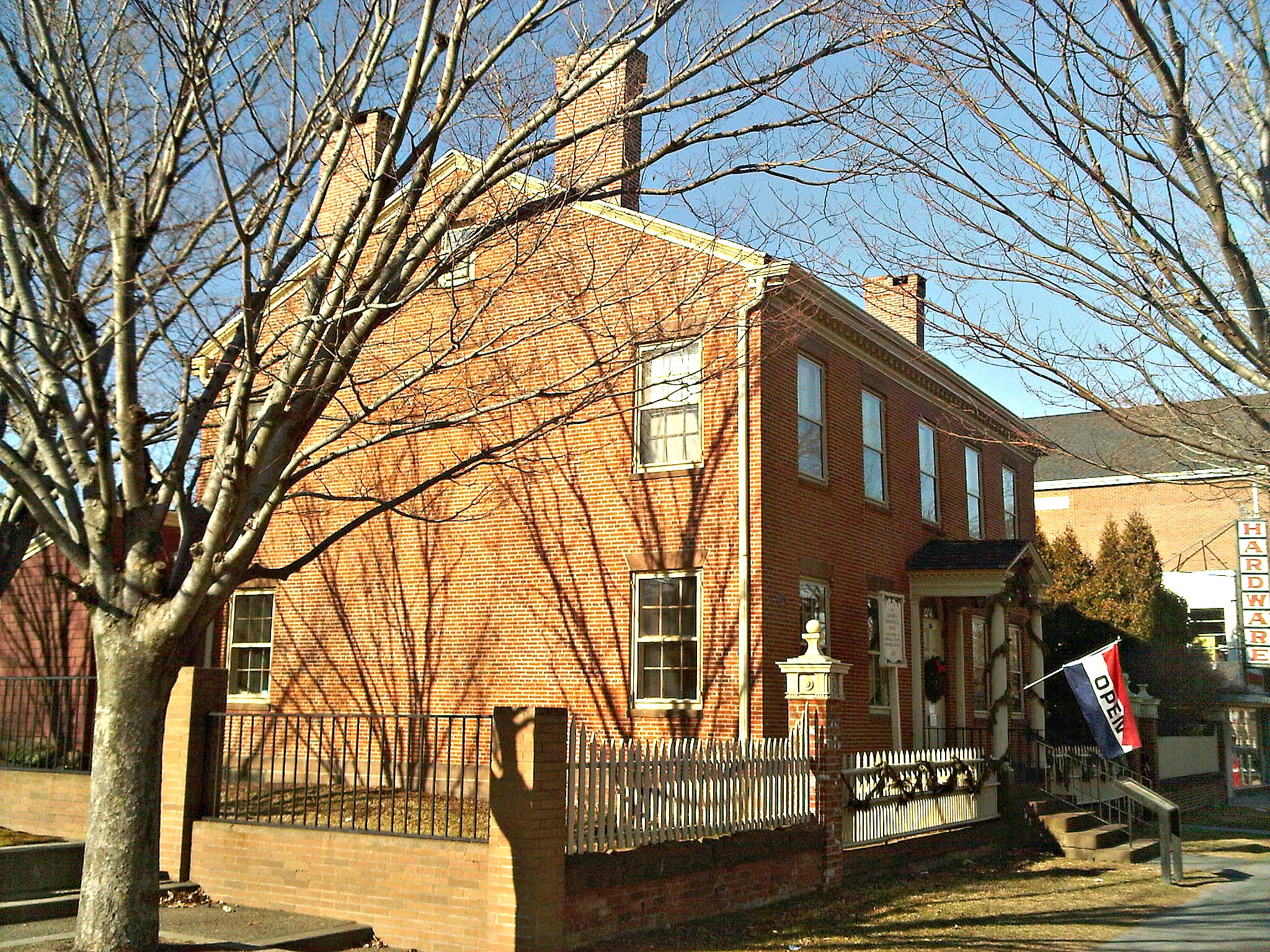
The letter has stamped upon it “Middlesex County Historical Society,” which incidentally is housed in the Joseph Mansfield home in Middletown, CT.
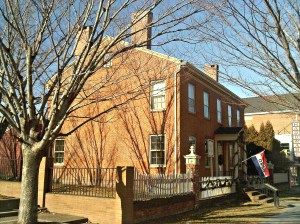
Mansfield Home / Middlesex County Historical Society

I have written to them to see if they possess the original, and after a search by them have heard learned that they indeed do. And fellow blogger John Banks – who lives near there – has visited and photographed a copy of it.
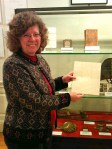
Original Letter

Dr. Patrick H. Flood

In 1862, at age 50, Elmira physician Dr. Patrick Flood went off to war as the surgeon of the 107th New York Infantry. The more than 1,000 men of the 107th were about one month into their time of service at the Battle of Antietam.

Dr. Flood served throughout the war, finishing as the surgeon of the First Division of the 20th Corps.

He returned to Elmira and to civilian medical practice. He was also a two-term mayor of the city, and one of his four sons was a U.S. Republican Congressman.

Other Mansfield Information

General Mansfield is buried in his hometown of Middletown, CT – the final grave site (from 1867) pictured in the photo by fellow Antietam blogger John Banks. (His blog is at: http://john-banks.blogspot.com)  The funeral service on September 23, 1862 was attended by 400 soldiers and included four bands.
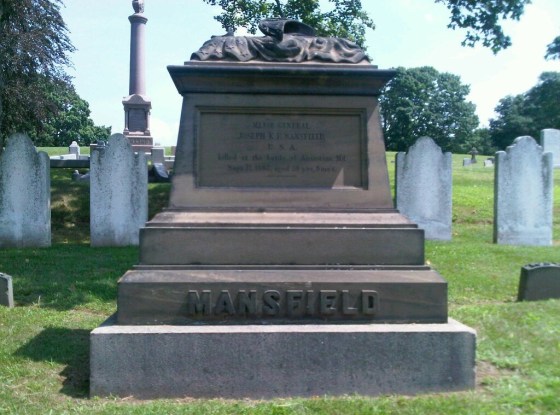
Apparently veterans argued for years after the battle as to the exact location of Mansfield’s wounding, the color of his horse, etc.

Mansfield spent a considerable number of years (essentially 1831-1845) as an army civil engineer working on the construction of Fort Pulaski, Georgia. When he arrived there, for a brief time, he was with a younger engineer serving his first assignment out of West Point – Robert E. Lee.

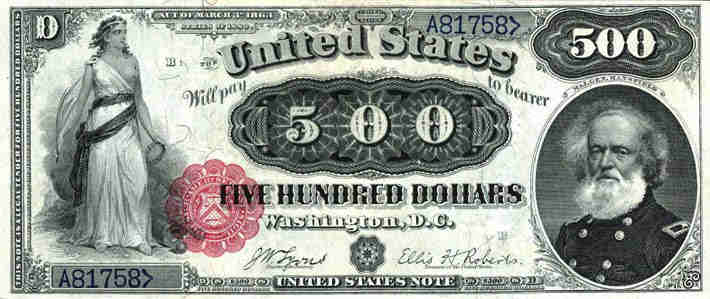
The Mansfield $500 Bill

General Mansfield was pictured on an apparently legal tender 500-dollar bill – from the years 1874-1880!
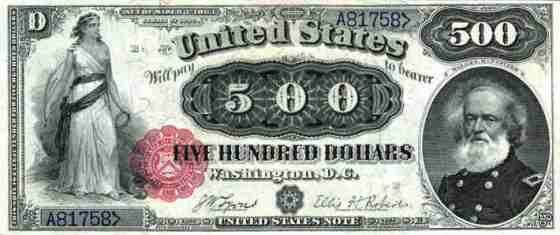

Looking Ahead to Sesquicentennial of 2012

Sesquicentennial Posting Number 1

Without doubt, 2012 is a significant year for Civil War enthusiasts as we commemorate the 150th anniversary of so many significant events.

Something I want to do from this point forward is comment in a series of blog postings on the 150th anniversary date of major events in the War – of course particularly highlighting those pertaining to Antietam and the Maryland Campaign of 1862.

I wish I would have had this blog up and running for the past 18 months or so, because, if I did, I could have commented on the 150th date of these primary events:

10/16/09 – The John Brown raid upon Harpers Ferry – (I was with a tour group at Antietam on that date, and we made note of the event.)

11/6/10 – Abraham Lincoln is elected as the 16th President

12/20/10 – South Carolina secedes from the Union

12/26/10 – Robert Anderson moves his command from Fort Moultrie in Charleston, SC out to Fort Sumter – (I may yet write about this, since it is a part of the Abner Doubleday story.)

2/18/11 – Jefferson Davis is elected as Provisional President of the Confederacy

3/4/11 – Abraham Lincoln Becomes President

4/12/11 – Fort Sumter is attacked – (again, I’m likely to write a good deal about this at some point, since Abner Doubleday sighted the first shot in response on this recognized day as the opening of the Civil War)

6/2011 – There were many events in our area as troops under General Banks moved through the Tri-State region, skirmished at Williamsport / Falling Waters, etc.

7/21/11 – First Battle of Bull Run / Manassas

8/10/11 – Battle of Wilson’s Creek (the Bull Run of the West)

10/21/11 – Battle of Ball’s Bluff (Winchester, VA)

11/1/11 – McClellan replaces Winfield Scott as General-in-Chief of the US Army

11/9/11 – Joint Committee on the Conduct of the War established by the U.S. Senate – (This was begun after the disaster of the Union loss at Ball’s Bluff near Leesburg, Virginia, when corpses of Union soldiers floated down the Potomac River to be found by Washington, D.C. residents.

Senator Wade (not Conan O'Brien!)

Also killed in battle was a U.S. Senator – Edward Baker – a friend close enough to Lincoln that the President had named a son after him. The Committee was chaired throughout the War by Ohio Senator Benjamin Wade – one of the Radical Republicans who, as a group, were very critical of the war effort not being executed aggressively enough.)

So anyhow, it is a small disaster that I didn’t have this blog started until now. Why? Well, that should likely be investigated! I should call together a joint committee of my multiple personalities and too many varied interests to examine it!  Because now, to quote a fellow many folks would regard as a modern Radical Republican, “I’m having more fun than a human being should be allowed to have!”

The Opening Shots at Antietam

One of the features of the Antietam Battlefield that is likely lost to most visitors (who do not use the Antietam Guides or happen to be there at the time of day a park ranger leads a car caravan tour) is the location of Nicodemus Heights.

This hill that rises just off the northwest corner of the battlefield marks the left flank of the Confederate line. It was manned by Pelham’s Horse Artillery of Jeb Stuart’s command.

John Pelham

Nicodemus Heights from in front of the barn

The position was a terrific place for such a disposition, and the artillerists could easily disappear a short distance behind the crest of the hill and onto the slope leading down to the Potomac River. Of course, they occupied this position well in advance of the arrival of the Union Army.

On the 16th, Hooker’s 1st Army Corps began to appear on the Poffenberger Farm beyond the far north end of the battlefield and take position on the next ridge east of Stuart’s men – about 1,000 yard distant. This was done mostly after dark, during an ominous black evening of drizzle interrupted by the occasion firing of pickets.

The actual day of battle started with a bang – the bang of artillery shells fired from Nicodemus Heights. Rufus Dawes of the 6th Wisconsin (and great-grandson of William Dawes – Paul Revere’s riding companion) wrote about the experience:

 “About daylight, General Doubleday came galloping along the line, and he ordered that our brigade be moved at once out of its position. He said we were in open range of the rebel batteries. The men were in a heavy slumber. After much shaking and kicking and hurrying, they were aroused, and stood up in their places in the lines. Too much noise was probably made, which appears to have aroused the enemy. The column hurriedly changed direction, according to orders, and commenced moving away from the perilous slope which faced the hostile batteries.”

The slope in front of the Poffenberger barn

“We had marched ten rods, when shiz-z-z! bang! … burst a shell over our heads; then another; then a percussion shell struck and exploded in the very center of the moving mass of men. It killed two men and wounded eleven. It tore off Captain David K. Noyes’s foot, and cut off both arms of a man in his company. This dreadful scene occurred within a few feet of where I was riding, and before my eyes. The column pushed on without a halt, and in another moment had the shelter of a barn. Thus opened the first firing of the great battle of Antietam, in the early morning of September 17th 1862.”  (pp. 87-88 of “A Full-Blown Yankee of the Iron Brigade: Service with the 6th Wisconsin” by Rufus Dawes.)

Nearby, Captain J. Albert Monroe (of the 1st Rhode Island Light Artillery, and Chief of Artillery of the 1st Division) was having a rather similar experience. He wrote:

“It was the early gray light that appeared just before the sun rises above the horizon, and we could little more than distinguish each other. We had not half finished our meal, but it had grown considerably lighter, and we could see the first rays of the sun lighting up the distant hilltops, when there was a sudden flash, and the air around us appeared to be alive with shot and shell from the enemy’s artillery. The opposite hill seemed suddenly to have become an active volcano, belching forth flame, smoke and scoriae.”

“The first shot apparently passed directly through our little breakfast party, not more than a foot or two above the blanket, and it struck the ground only a few feet from us. Every one dropped whatever he had in his hands, and looked around the group to see whose head was missing. So suddenly did the firing commence and so rapidly did shot follow shot, I felt lost for an instant. I never knew how the others felt, but I at once ordered Hugh Rider, my groom, to give me my mare, who was hitched only about ten feet distant, and by the time he got her to me I had fully recovered from my surprise.  (MOLLUS, Vol. 36, pp. 233-234 … “Battery D, First Rhode Island Light Artillery, at the Battle of Antietam, September 17, 1862”  by J. Albert Monroe, Lieutenant Colonel of the 1st RI Light Artillery – published in 1886.)

So began a day that would forever mark the lives of Dawes, Doubleday, Monroe and tens of thousands of other survivors. It is said that Rufus Dawes visited most of the fields of the Civil War upon which he fought, but that he never wanted to see Antietam again.

This battlefield! What a place! If you are reading this and have never come – put it near the top of your Bucket List to visit!

Nicodemus Heights as seen from the west side of the Cornfield

Interesting Tour Groups and Families From 2011

Interesting Tour Groups and Families From 2011

As I look back over my list of groups and people with whom I’ve met in 2011, there are really some very interesting situations. It is always enjoyable to meet new people and hear their stories and what motivated them to come to Antietam and connect with the Battlefield Guides.

Here are some of those groups and stories from 2011:

Great Groups

–          Northland International University – a really great group of upbeat college students

–          Westminster Academy of St. Louis – a group I connect with annually – who come to my church in the morning and hang out with me at the Battlefield in the afternoon.

–          Hickory Christian Academy – a very impressive group of 9th and 10th grade students – many of whom literally sat on the edge of their seats all the way around the field!

Great Families

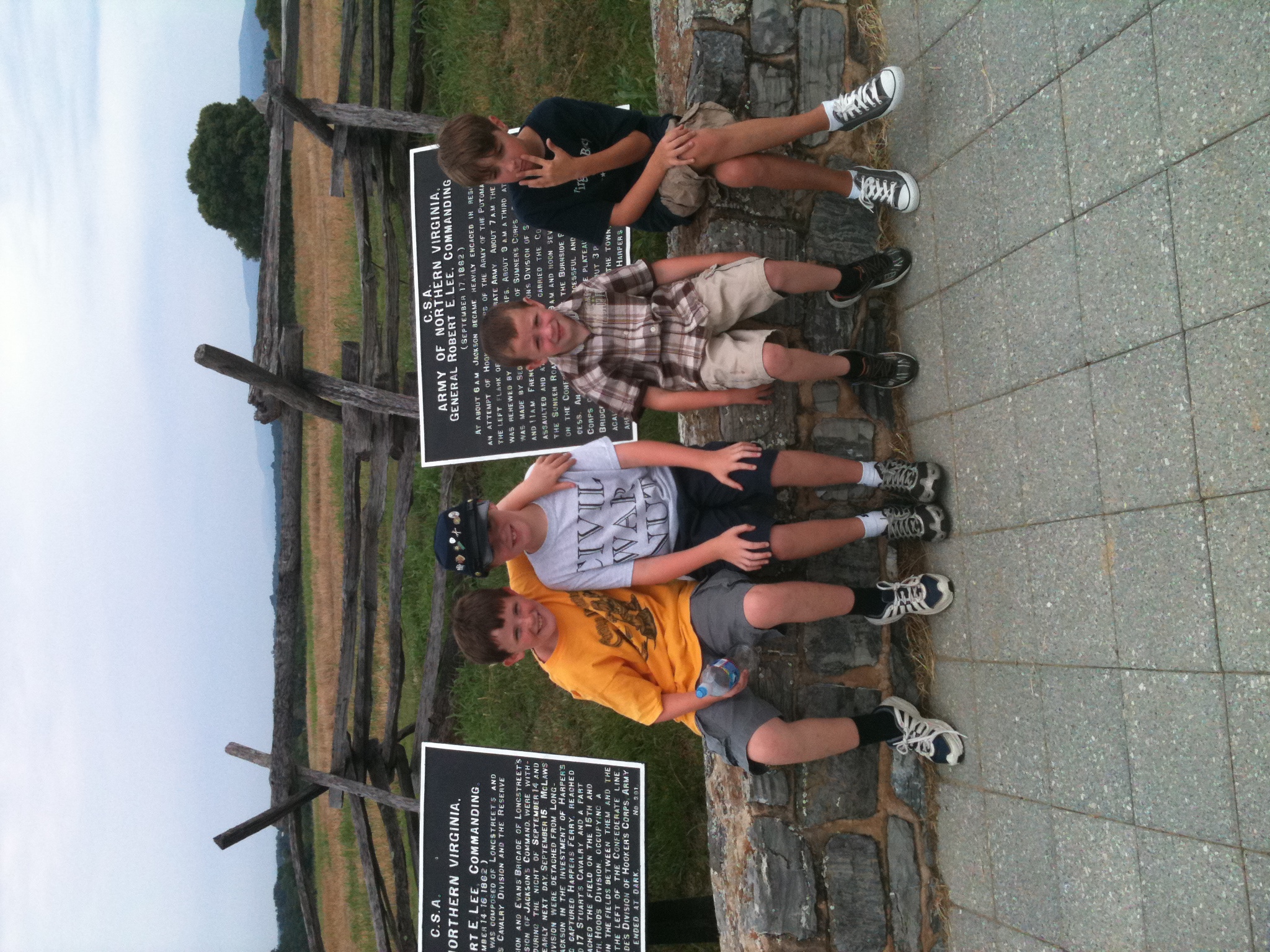
–          A mother from Cumberland, MD brought her son and a group of his friends as a birthday present for the boy – AGE 9!!  The young man knew everything I was going to say before I said it! It was amazing!

The kid in the hat KNOWS Civil War history!!!

–          Home-schooled family of 12 children – This family was so big that they owned a limousine to carry them all! And I drove it!

–          Couple from New York City who had an ancestor killed in action at Antietam. We were able to find the grave of the soldier who fought with the 28th Pennsylvania.

Funniest Moment of 2011

Objects against the sky

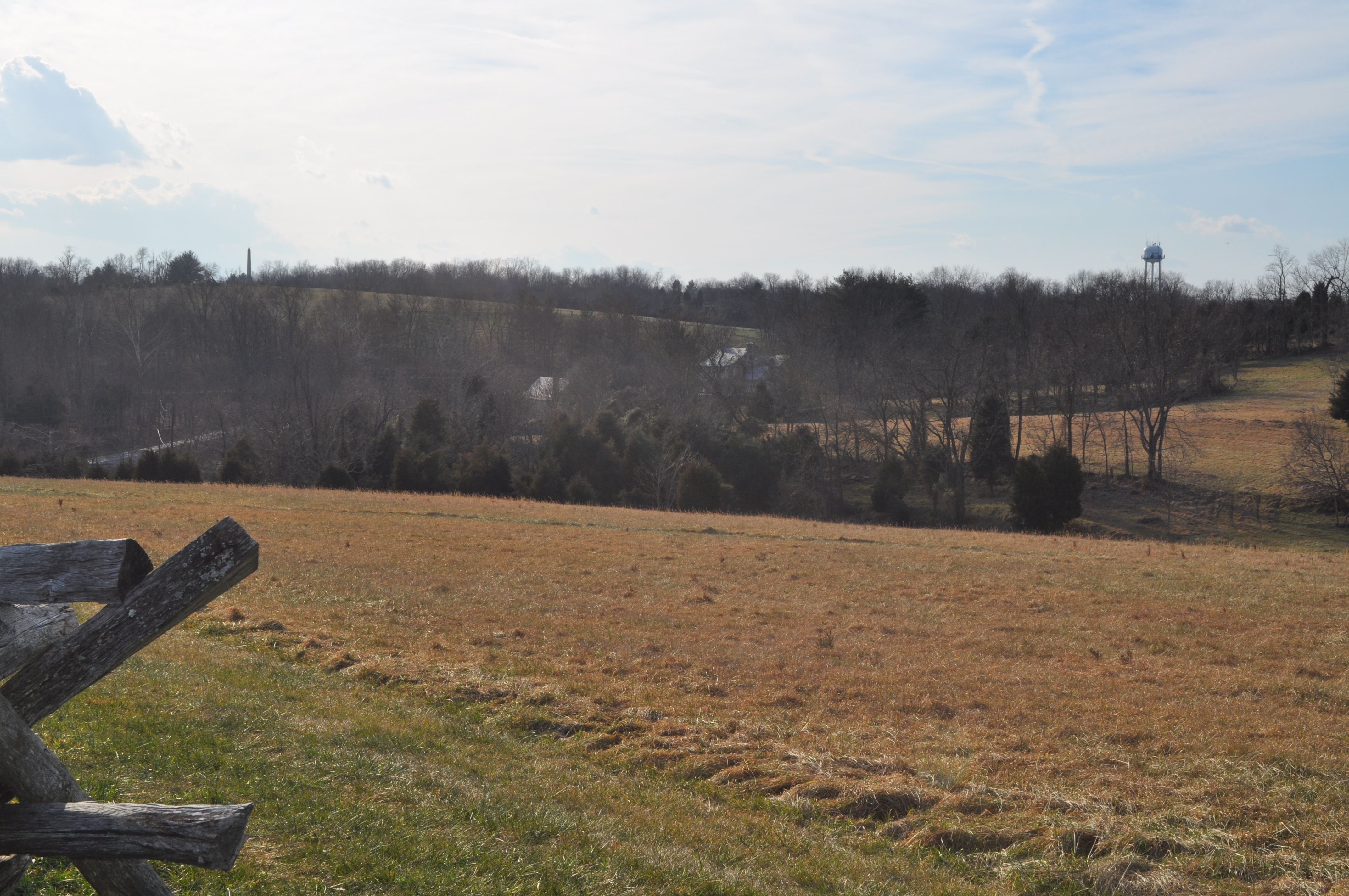
On many tours, as we go south toward the lower part of the field, it is possible to see the 9thNY monument on the next ridge – marking the farthest advance of the Union Army’s final attack. As well, one can see a water tower on the south edge of the town of Sharpsburg. I regularly point out where A.P. Hill’s Confederates halted that effort with their flanking counter-attack, and follow that by stating that “the distance between the two objects represents essentially how close Robert E. Lee came to being wiped out at Antietam.”

And to make for a light-hearted moment, I go on to say, “And if Lee is bagged at Antietam, you know what that means? Likely the war is over. And though there is a town named Gettysburg, there is no Gettysburg Battlefield; and if there is no Gettysburg Battlefield, there’s no Gettysburg Battlefield Tour Guides who (voice raising) get 100 times more tours THAN WE DO HERE… DO YOU THINK I’M BITTER ABOUT THAT?”  And typically everyone laughs, and we go on with the tour.

Well, one day, I had a very nice husband/wife in the car, and the man certainly seemed to know a lot more about the Civil War than most people I meet. And right after my “funny” line, he looks at me and says, “I should probably tell you who I am… I’m one of the tour guides at Gettysburg.”

OH MY!  I was caught! But we had a good laugh and a great time together. He was interested in learning a little more about Antietam and just experiencing how someone else did tours! I’ve done the same at Gettysburg. The guides there are really good, and we really do honor them for all they’ve done for many years at that special place.

The Bottomless Nature of Civil War Research

One never gets to the bottom of what can be known when studying the Civil War! It is truly one of those bottomless experiences of life! Every time you open a door and learn something, you find yourself in another hallway with another six or eight doors to be explored.

I suppose that, unlike the infinity of the universe, there is a logical bottom to the Civil War, though it is too vast to be fully known. An additional conundrum is the frustration of dead ends where a piece of valuable information is simply lost to history.

This “bottomless” nature of the research is not dissimilar to my own field of academic background. With a master’s and doctorate in theology and ministries, the effort to understand Scripture, theology, and Christian history has much the same multifaceted scope.

The Bible is written largely in Hebrew (Old Testament) and Greek (New Testament). But to really understand these languages, one needs an understanding of similar cognate languages in the Semitic and Indo-European linguistic families. Before I began the study of Hebrew, though I had heard of Aramaic and Arabic, I did not even know there were other cognates called Ugaritic and Akkadian!

There exists a true principle of life: The more you know, the more you know that you don’t know!

The smartest guy of all time – Solomon – spoke of the frustration that actually attends extensive learning … “For with much wisdom comes much sorrow; the more knowledge, the more grief.”  ( 1:18)

This new blog …

This is a beginning post for a new blog that is entitled “Enfilading Lines.”  It will be written by Antietam Battlefield Tour Guide Randy Buchman.

I am still playing with how I want to do this. I have some familiarity with blogging in WordPress … and you can check out that blog about my other passion – baseball, specifically the Baltimore Orioles.  The blog is named “O Say” … and can be found at this address – http://www.osayorioles.mlblogs.com

If you somehow stumble across this, leave a note that says “hello.”