Recent Tours – August 2012

I’ve met some really nice people lately at Antietam.

Last week, a very nice and kind older couple from North Carolina came to the Battlefield. It was a very, very hot day and the observation room was not available at the time they arrived. So we chose to spend almost the entire time in the car. This does have the advantage of seeing more sites off the battlefield itself. And a funny moment was when coming back to the Battlefield over the remote upper bridge, I spotted one of my sons putting a canoe into the Antietam. With him was a young lady I’d not really met before, and it was great fun to pull up next to him in a car from North Carolina, roll down the window and say, “Hi there son!”  Priceless!

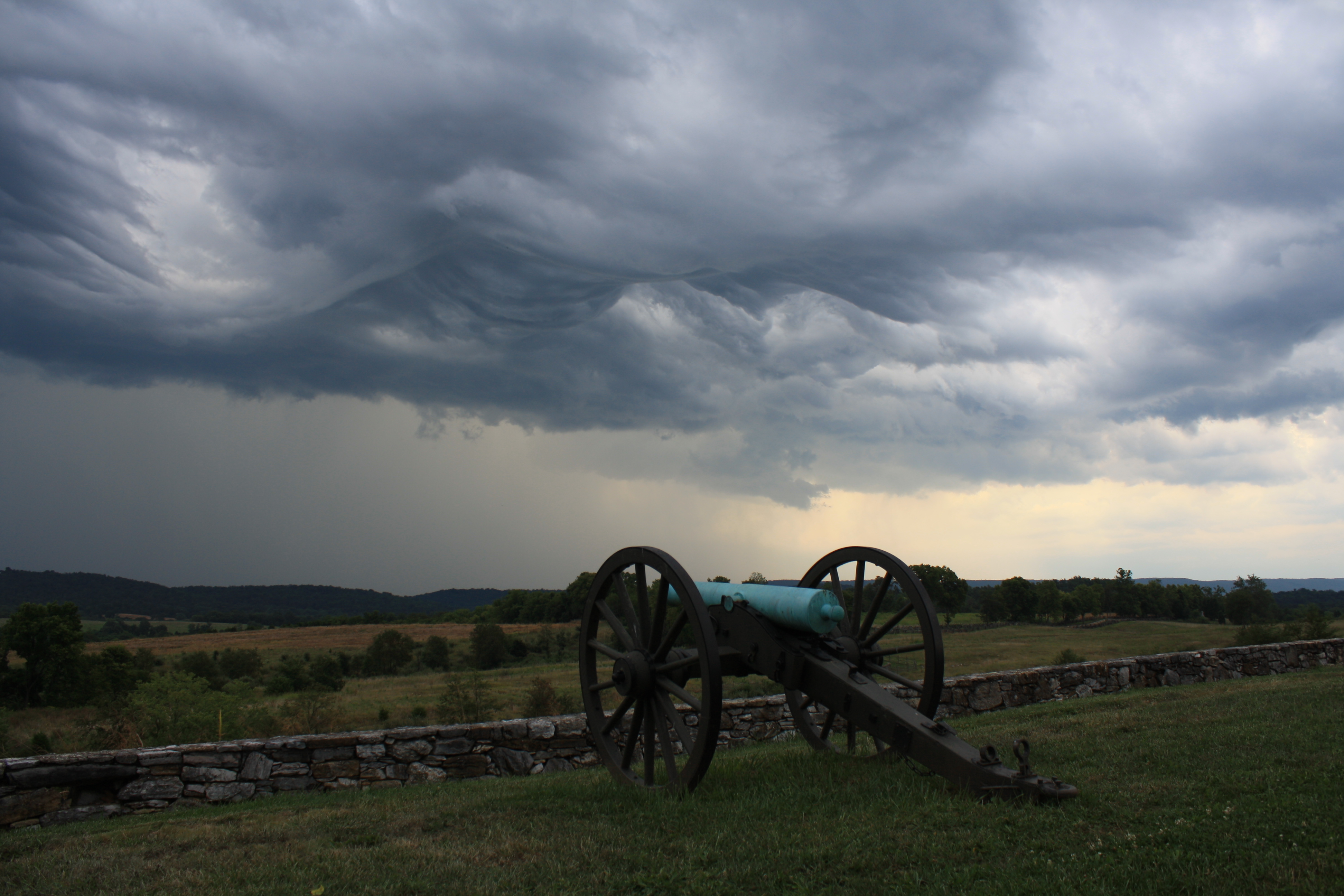
We have had some rather violent storms through the area recently. A couple from New Hampshire was in town the evening before taking a battlefield tour. They drove around a bit and took this very impressive picture of the sky on the south end of the field.

Today I hosted a group of four men from NJ and MD – friends who studied up on the battle by reading “Landscape Turned Red”  in advance. And they are going to come back in the future after reading some more on the battle, and they plan to bike around the field. They have done this in the past at Gettysburg. A group like this is always enjoyable for the Guides, as the questions asked are always really thoughtful and insightful.

150 Years Ago – Battle of Cedar Mountain

August 9th marks the 150th anniversary of the Virginia battle called Cedar Mountain, also known as Slaughter’s Mountain – named after a man who owned a prominent home at this location.

As McClellan languished on the York River, Robert E. Lee released Stonewall Jackson to the critical rail junction at Gordonsville, VA. Union General John Pope – having been granted command of the new Army of Virginia on June 26th – sent General Nathaniel Banks’ corps to capture the same railway prize.

The two forces tangled at Cedar Mountain, seven miles south of Culpeper. The early portion of the battle featured a prolonged artillery duel that even involved Jackson himself firing upon the Federals. As Banks launched an attack at 5:00 p.m. that saw early success, Jackson personally rallied a counterattack driving back the Union. The Confederates were also successful in flanking the Yankee’s retreat. Leading this effort on the Southern left was North Carolina Brigadier General Lawrence O’Bryan Branch – who in September will be one of three Confederate generals who perish at Antietam.

Cedar Mountain marked the switch of the battlefront in the east away from the area of Richmond, ultimately through Virginia to the outskirts of Washington for a second time on the fields of Manassas.

Come back in a day or two and I’ll have a first-hand account from Abner Doubleday on his experiences during these days and leading to 2nd Bull Run.

The Witness Tree at Antietam

For the 150th anniversary of the Battle of Antietam weekend, our Battlefield Guides program is going to be working alongside and in conjunction with the Park Rangers to greet the thousands of visitors and provide interpretation. We are very much looking forward to this, and we have recently been assigned our times and locations.

I will be spending the Monday of the actual date of the Battle – September 17th – stationed at the Burnside Bridge. So I will be there at the exact moment when 150 years ago the Union assault finally captured and crossed the bridge.

There is a large tree on the bank that we at Antietam know as the witness tree. Our local newspaper – The Herald Mail – wrote an article about it that has just appeared in our paper today. It is very good, and I provide here a link you to take a look at it:

http://www.herald-mail.com/news/hm-170yearold-witness-tree-saw-action-at-battle-of-antietam-20120805,0,675497.story

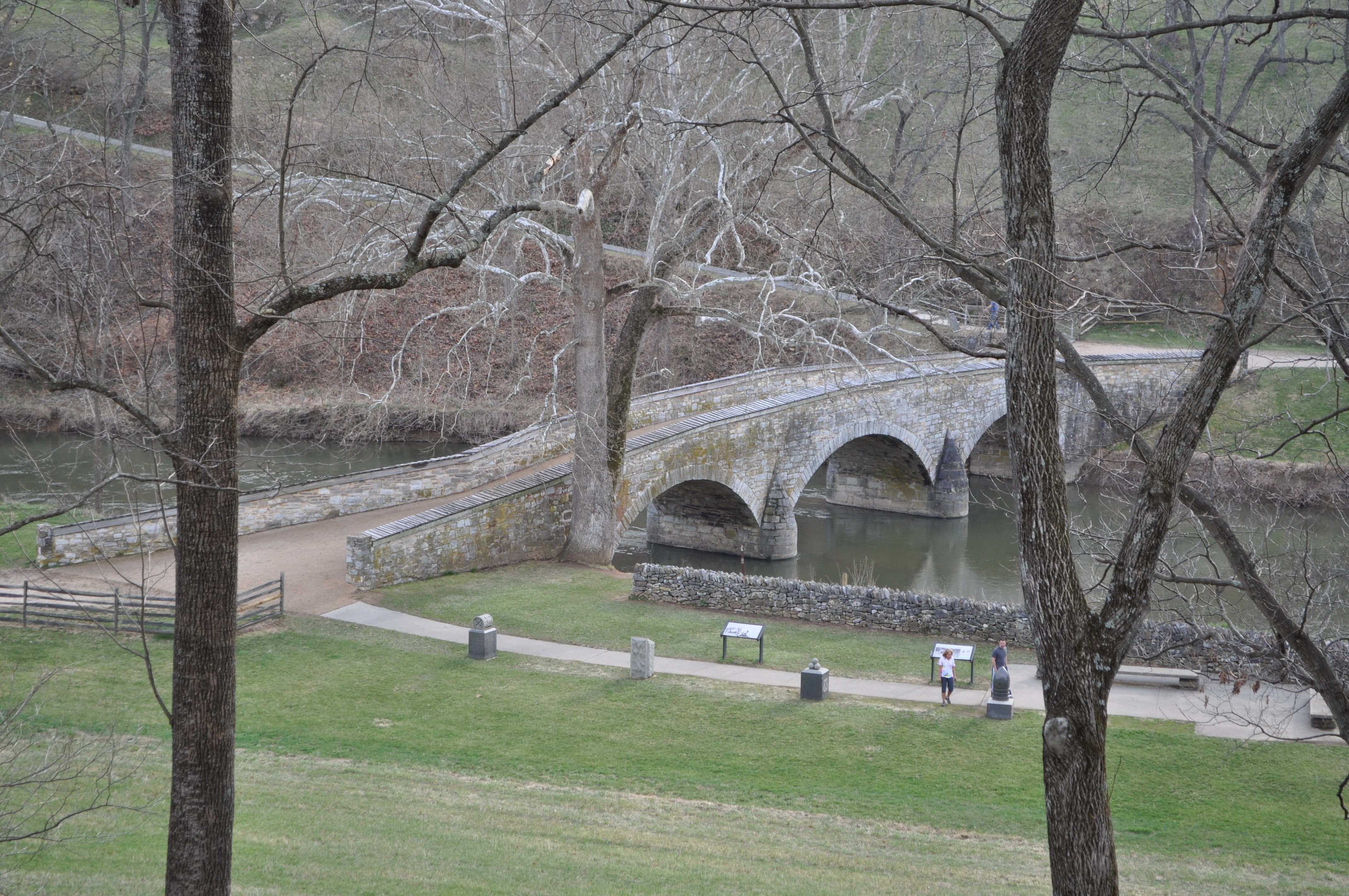
Looking at the bridge from the Union position, the tree is seen at the very edge to the right of the bridge.

Rare Images of Antietam

My friend Steve Recker has announced that his upcoming book Rare Images of Antietam will be out and available before the 150th anniversary of the Battle of Antietam.

The book is 152 pages with seventy featured images and hundreds of supporting images.

Steve is scheduled for a talk at the battlefield at 1pm on Friday, September 14th and a book signing at 1pm on Saturday September 15th.

I have known Steve through church and music connections, and it is he who got me involved in the Antietam Battlefield Guides program that he initiated about 6-7 years ago. Steve previously spent a great deal of time at Gettysburg and developed eventually both the Virtual Gettysburg and Virtual Antietam web pages and photographic resources. As he began the Guides program, he encouraged me to make the attempt to be a part of it. In that it is a very academic and very rigorous process, it appealed much to the geeky research side of my persona!! And this has proven to be a very enriching part of my life – now about 380 tour groups later.

I am so much looking forward to this book because I know it will so significantly enhance my ability to bring the Battlefield alive to visitors. Guests love to see old pictures and realize they are standing at that very location where the photo was taken. Suddenly, the 100-150 years does not seem quite so remote. For example, the picture of the veterans of the 20th NY on the 100th anniversary of the battle ALWAYS elicits a verbal response from visitors.

So thanks Steve for all the collecting, the vision, the work for this to get completed. I’ll buy one! At least!

And Steve: With this cover picture of the Mansfield sign … let me warn you, you are going to get descendants and various others taking sides and commenting about that picture and where it is and ‘who done it’ stuff! This part of the War has never ended!


Civil War Mortars in Phillipsburg, NJ

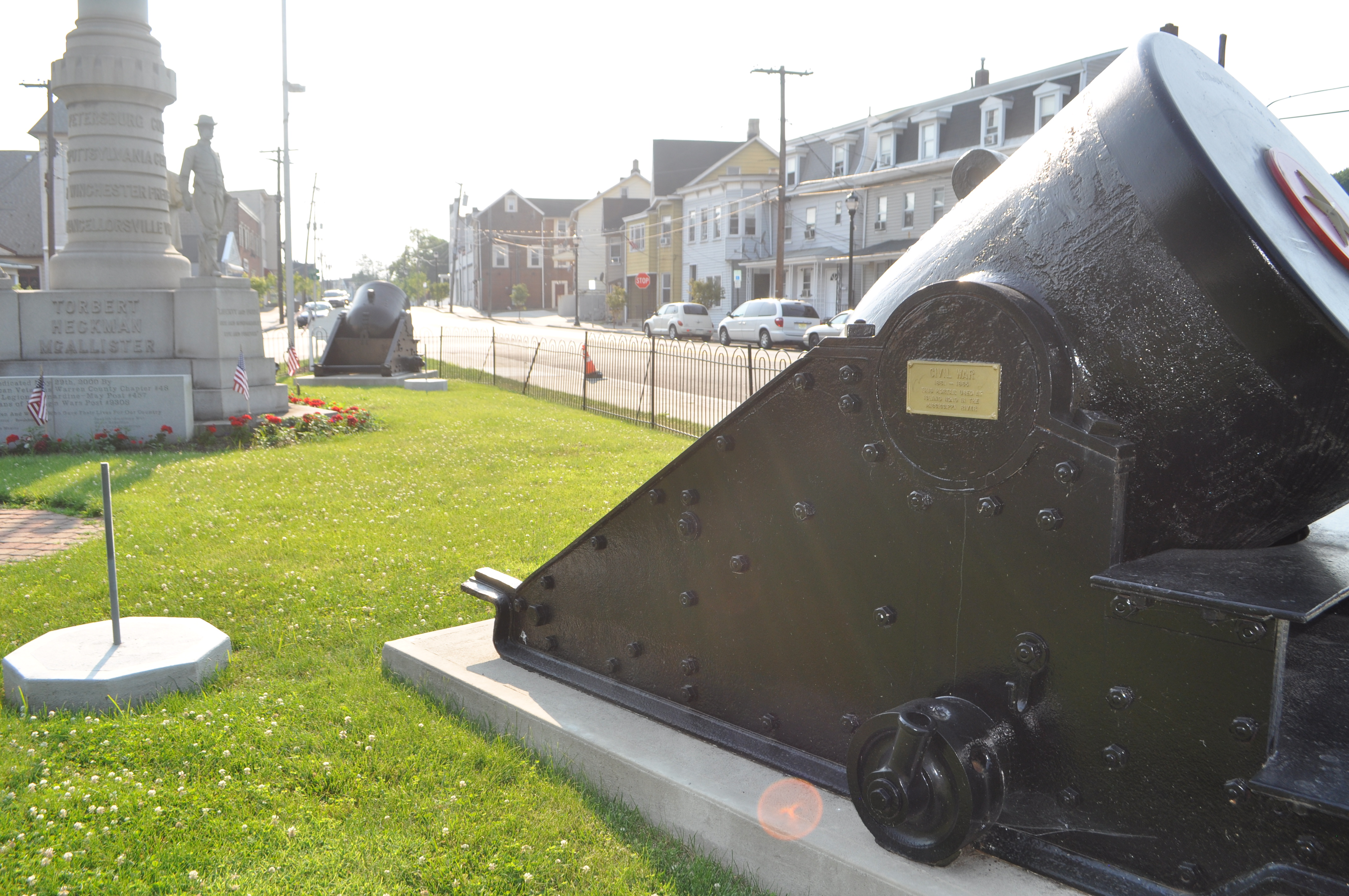
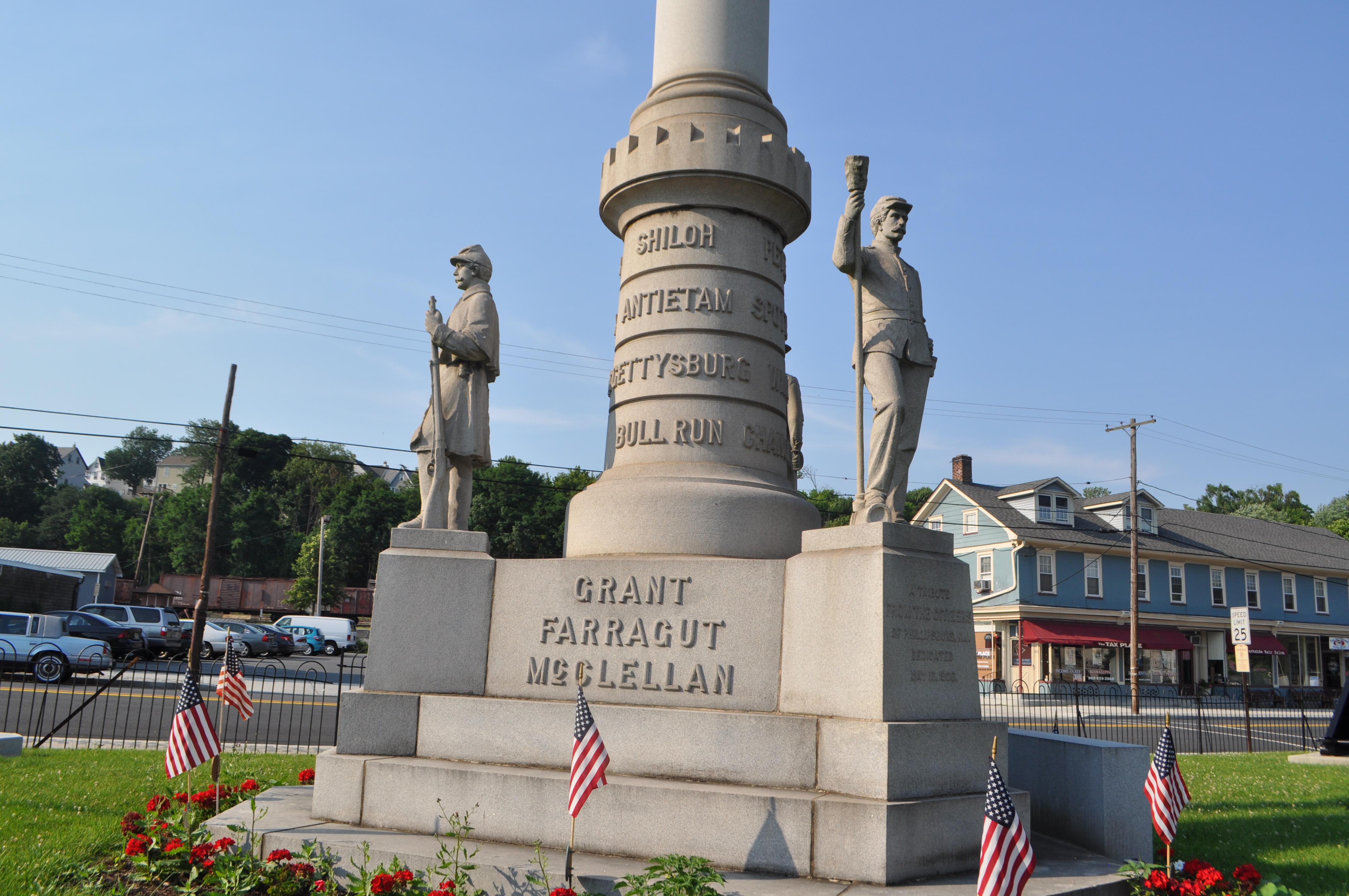
Though I have lived now within a few miles of Antietam for the past 18 years, and though I’ve been especially interested in this battle of the Civil War since my childhood and an assignment in 7th grade in 1967, I am actually from Phillipsburg, New Jersey. Even as a little child, I remember passing a memorial park there (Shappell Park) and being so impressed by several Civil War mortars.

I was recently in the area and took a number of pictures of these incredible weapons. There are three of them in this typical small town America memorial park in remembrance of Civil War veterans – established in 1906.  Two of the mortars are referenced as being used in the attack upon Island No. 10 in the Mississippi, and one as a part of the siege upon Vicksburg.

In this season of sesquicentennial remembrances, we are going to be referencing the name of General John Pope – until his defeat at 2nd Manassas in leadership of the Army of Virginia (Union).  Pope had come east from a successful war record in the west. It was he who in April of 1862 opened the middle Mississippi River to Federal control by the defeat of Confederate fortifications at Island No. 10.

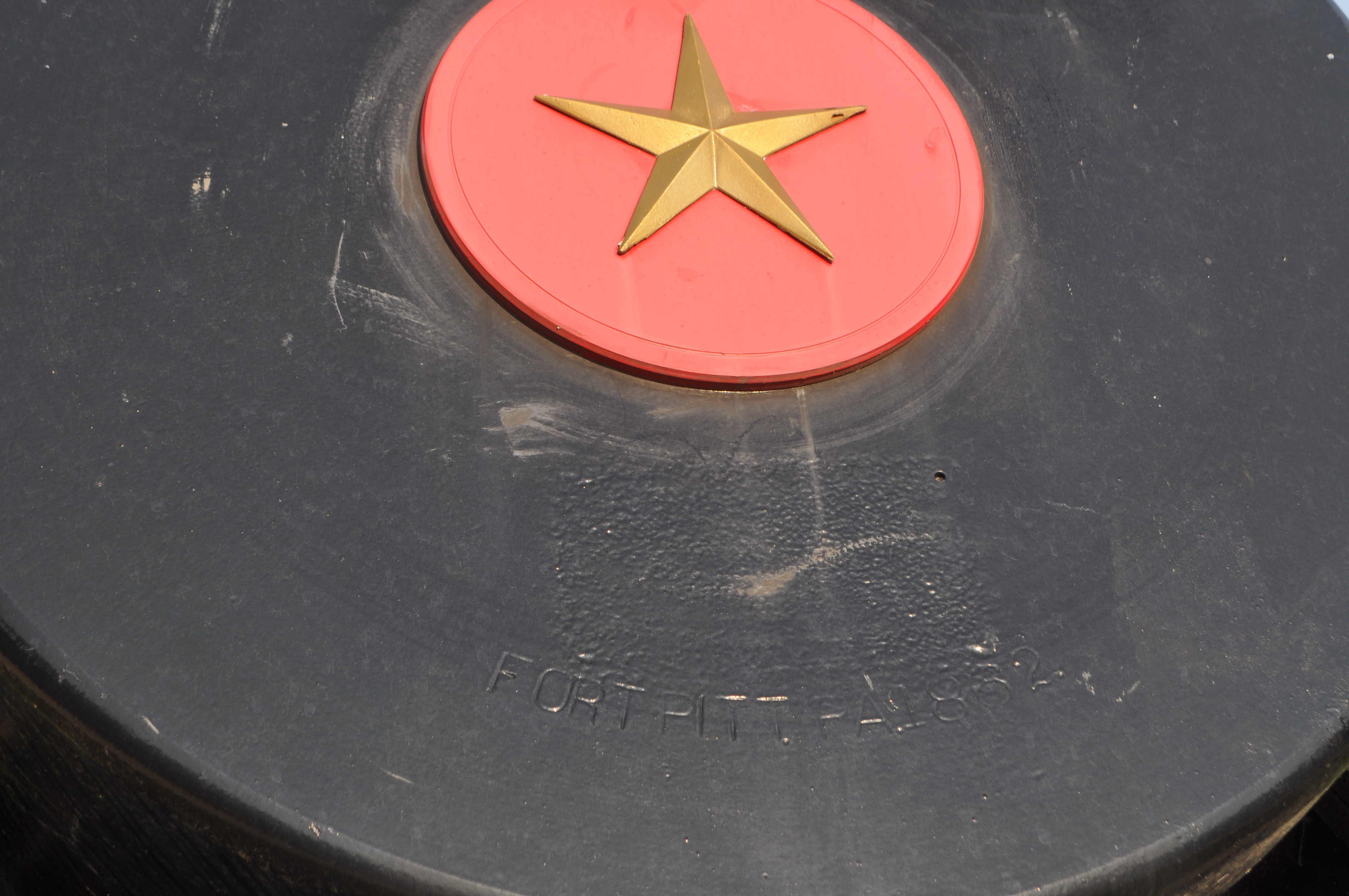
Here is a description of the capacities of these mortars as taken from an excellent blog post at: http://civilwarnavy150.blogspot.com/2012/04/unfavorable-mortar-boats.html  …  The mortars themselves came from Fort Pitt Foundry in Pittsburgh. <See close-up picture below> These 13-inch Seacoast Mortars, Model 1861 – were the Army’s latest and heaviest seacoast mortars. The Army Ordnance Department designed the weapon to arm coastal fortifications. The 13-inch mortar fired 227 pound shells to a maximum range of 4600 yards. Unlike standard guns, the mortars fired the shells in a high, arching trajectory to fall on top of the intended target. The army designed these seacoast mortars to drop shells upon an enemy bombardment fleet attacking coastal fortifications.

The same blog posting speaks of the floatation methods by which these heavy guns were made mobile. However, their inaccurate fire made them less than as deadly and effective as originally hoped.


Recent Groups Visiting Antietam

I thought I’d pause from the historically-oriented post after post of late to write something about several of the most recent groups I’ve met at Antietam. Writing this blog as a support to the Antietam Battlefield Guides organization is a primary purpose for all of these words – now numbering 94 postings since the turn of the year.

The three most recent visitors I’ve encountered are rather representative of the varieties of folks who make the wonderfully wise decision to come to this most pristine treasure of American history.

1.  A Texas Family – I’ve run into quite a few Texas families this year, which is always cool with me. I lived there for five years and loved the experience. This family of mom and dad and two high school students and an elementary child were just great people from Houston. It was clearly an outstanding family; the kids were all interested and engaged in the discussion, and everyone asked good questions.

2.  The Exeter Academy Group – This was a small bus group from New Hampshire, of folks connected through generations of experience with a private school there. There were people of all ages in the group (many alumni), but they all shared the common trait to be found in most folks who come to Antietam – they were intentional life-long learners. Numerous members of the group were prepared with advanced readings and maps and other resources. Several were taking notes. And all were interested throughout and fully engaged in the dialogue. Everyone in the Guides program loves groups like this!

3.  Scouts from Michigan – A really great group of fathers/sons connected with scouting came to Antietam as a part of their several-day biking trip along the C&O Canal. For those who don’t know, this is a roughly 180 mile dirt/stone canal pathway along the Potomac River from Cumberland, MD to Georgetown in the District. The Battlefield is just about four miles off the trail. We toured around the field in a series of vans that they had – stopping at the three major sites. Again – great kids, great families, totally engaged in the information, asking good questions, and simply enjoying the experience.

It is through a collection of days and groups like these that I retain some hope that not everyone out there is blowing off the value of being historically informed and enlightened. And it is a joy to meet people like all of these mentioned above.

Doubleday’s Journal – July 23, 1862 – A Hostage Exchange

< The following is from my research for a book I continue to threaten to someday actually finish! It is from a period of time where Abner Doubleday’s command was still stuck in Fredericksburg, VA. >

Doubleday was clearly outraged that friends of the Union cause who lived in Fredericksburg were allowed by the Federal Army to be persecuted for their loyalty, and even be led away to prison in Richmond. Still early in the Civil War, Northern leaders were not entirely agreed upon as to the fashion of waging war in “enemy” territory that was, until recent events, considered a part of the United States. Hoping for a “limited war,” certain generals sought to not antagonize beyond absolute necessity.

During this season, McClellan was rendering unsolicited written opinions to Lincoln to not include the issue of slavery as a war aim. On the other hand, General Pope represented a more harsh opinion that Union armies should not feel at all hesitant about subsisting upon all resources available in a land in rebellion against the Government. Doubleday, given his strong abolitionist values and emotional indignation that the Rebellion must be expunged, naturally agreed with the harsher view of General Pope. The new leader of the Army of Virginia was rather bombastic and pompous in his aggressive remarks, which, when they found their way to Lee, caused the General of the Army of Northern Virginia to term Pope a “miscreant.”

Desiring to see justice accomplished for the suffering of certain families in Fredericksburg who had relatives taken from them, Doubleday records in his journal on July 23, “At my instigation, a deputation of Union citizens for Fredericksburg went to see General Pope to request that he would hold some of the most violent Rebels in Fredericksburg as hostages for the Union men who had been seized, had their hands tied behind their backs, and sent off on horseback as prisoners to Libby Prison in Richmond.”

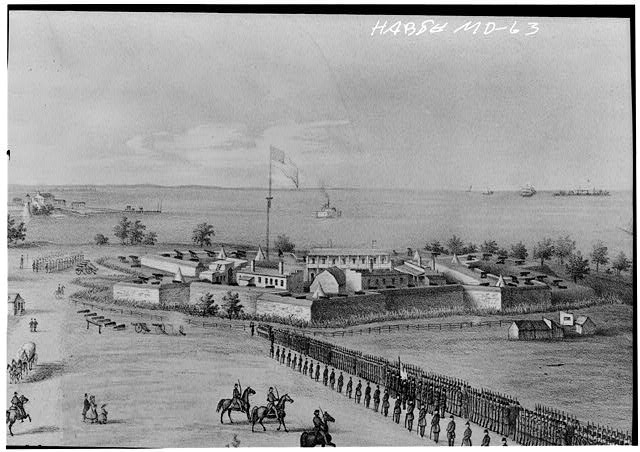
An entry only one day later records the result of this action. “Mayor Slaughter and several other prominent Rebels are taken as hostages and sent to Fort McHenry in Baltimore.  This soon brought about the release of the Morrisons and the Union citizens. Before leaving Libby prison however, through a system of terrorism, several of these men were forced to take the oath of allegiance to the Confederacy.”

Depiction of Fort McHenry as a Civil War Prison Camp

Lincoln Announces Emancipation Intent to His Cabinet

On this date 150 years ago – July 22, 1862 – President Lincoln announces to his Cabinet his decision to issue a proclamation of slave emancipation. He was not seeking their opinion; he was informing them relative to his decision and intent.

The pronouncement would only be directed toward slavery in those states in rebellion against the government – thus Lincoln would walk a fine line relative to not upsetting the institution in the border states whose loyalty must be maintained. He realized it would have no immediate effect by simple pronouncement, though could be implemented as the army would gain territory in the South.

Though his Cabinet members were largely supportive in principle, some were concerned about the timing on the matter… fearing the use of the edict against them in the coming elections by those who would passionately disagree with such measures. Stanton’s words particularly spoke to Lincoln as containing wisdom. In the context of Northern depression over the failed Peninsula Campaign, the President was advised to wait for a victory to announce the measure … “until you can give it to the country supported by military success.”  Stanton feared that otherwise it would have the appearance of “the last measure of an exhausted government … our last shriek, on the retreat.”  Of course, this waiting for a victory would involve several months.

This meeting, this date, this moment – marks a significant change in the President’s direction and determination. It marks the turn of the corner onto the home stretch toward Antietam as well.

Taking Off Kid Gloves / The 2nd Confiscation Act

At this point of the Civil War during this summer season of 1862, now 150 years ago, not only had the temperatures risen, so had the varied passions and postures – militarily and politically – relative to the way the War should be executed. McClellan represented a more limited view of a contest between armies that spared civilian populations and the delicate social issues of the day (slavery in particular). A number of other generals, along with a significantly loud and powerful political force in Washington, advocated more of an all-out war policy that included the institutions of the South and all that contributed toward facilitation of the rebel war effort. Of necessity, Lincoln needed to walk a line of balance between these interests – ever cognizant of the political exigencies around him, yet with a sense of integrity to principles within.

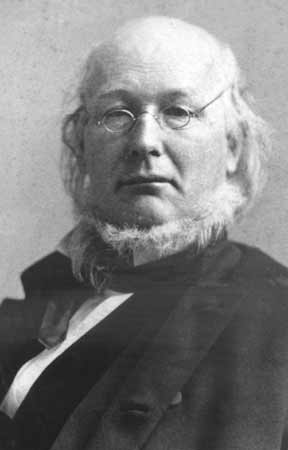
Horace Greeley

Over these months, Lincoln was surely migrating away from the limited views of McClellan to a greater adoption of those espoused by Radical Republican elements, affirmed and set afflame in the larger populace by the newspaper writings of Horace Greeley in the NY Tribune.

Second Confiscation Act – July 17, 1862

On this date 150 years ago today, Lincoln signed the Second Confiscatory Act – allowing among other things the confiscation of property of those supporting the rebellion, including the freeing of slaves from such states who came under Union control. It spoke also of using slaves to fight, and gave significant discretionary power to the president. (I will include three of the most interesting sections at the end of this post.)  The debates that raged around this act are very confusing and very “legal” in nature, but in summary the Act prepared the way for the Emancipation Proclamation and solved the immediate dilemma facing the army concerning the status of slaves within its jurisdiction.

Taking Off the “Kid Gloves”

A phrase that has always stood out to me from my years of Civil War reading of period writers is some version of “the time has come to take off the kids gloves.”  I guess I have heard that phrase on occasion, but it was clearly a very common idiom in the era. In that time, to say that a person was wearing kid gloves was to say that they were being very dainty and genteel, and hence to take them off meant to picture a change of posture toward a more rough and aggressive action. (Apparently there was a type of glove made from young goat skins that was especially soft compared to those of other leathers.)

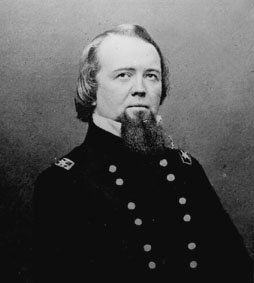
John Pope

In my Abner Doubleday research, I have noted that he employed the “kid gloves” phrase on occasion, as did several other sources connected closely to him – which would mostly involve people with a values system embracing abolition and hard war. These words would have especially been used to talk about General John Pope’s orders to seize enemy property and deposit supporters of the Confederate war effort beyond the reaches of the Union Army – to be treated as spies if caught again. (For these measures, even the noble Robert E. Lee would refer to Pope as a “miscreant!”)

Here is a single example of the kid gloves phrase being written in 1862 as cheerful support for Pope’s directives … written by the New York Times:  “The country is weary of trifling. We have been afraid of wounding rebel feelings, afraid of injuring rebel property, afraid of using, or under any circumstances, of freeing rebel slaves. Some of our Generals have fought the rebels—if fighting it be called—with their kid gloves on.”

I guess this would be like calling someone in our times “a wuss.”

Here are the sections of the Confiscation Act that I believe are of particular interest:

SEC. 9. And be it further enacted, That all slaves of persons who shall hereafter be engaged in rebellion against the government of the United States, or who shall in any way give aid or comfort thereto, escaping from such persons and taking refuge within the lines of the army; and all slaves captured from such persons or deserted by them and coming under the control of the government of the United States; and all slaves of such person found on [or] being within any place occupied by rebel forces and afterwards occupied by the forces of the United States, shall be deemed captives of war, and shall be forever free of their servitude, and not again held as slaves.

SEC. 10. And be it further enacted, That no slave escaping into any State, Territory, or the District of Columbia, from any other State, shall be delivered up, or in any way impeded or hindered of his liberty, except for crime, or some offence against the laws, unless the person claiming said fugitive shall first make oath that the person to whom the labor or service of such fugitive is alleged to be due is his lawful owner, and has not borne arms against the United States in the present rebellion, nor in any way given aid and comfort thereto; and no person engaged in the military or naval service of the United States shall, under any pretence whatever, assume to decide on the validity of the claim of any person to the service or labor of any other person, or surrender up any such person to the claimant, on pain of being dismissed from the service.

SEC. 11. And be it further enacted, That the President of the United States is authorized to employ as many persons of African descent as he may deem necessary and proper for the suppression of this rebellion, and for this purpose he may organize and use them in such manner as he may judge best for the public welfare.

The Slippery Slide Toward Emancipation

Events of 150 years ago this week evidenced the gradually changing views of Abraham Lincoln toward the issue of slavery and emancipation. Clearly this was an all-encompassing thought process for the President during these troubling and difficult times. He was becoming more bold and assertive and definitive in his thinking with each passing day.

July 12, 1862

On this date, the President met with congressmen from the Border States to again encourage their acceptance and establishment of a compensated emancipation of slaves. His argument to these men included his view that this was the best way to bring the War to a speedy close, saying:

I intend no reproach or complaint when I assure you that in my opinion, if you all had voted for the resolution in the gradual emancipation message of last March, the war would now be substantially ended. And the plan therein proposed is yet one of the most potent, and swift means of ending it. Let the states which are in rebellion see, definitely and certainly, that, in no event, will the states you represent ever join their proposed Confederacy, and they can not, much longer maintain the contest.

Lincoln additionally argued with them that the times would surely indicate that slavery was in deep trouble as an ongoing institution. If they desired to keep any measure of the capital investment in such, now was the time to gain the best compensation rather than a total loss. He stated:

The incidents of the war can not be avoided. If the war continue long, as it must, if the object be not sooner attained, the institution in your states will be extinguished by mere friction and abrasion–by the mere incidents of the war. It will be gone, and you will have nothing valuable in lieu of it. Much of its value is gone already. How much better for you, and for your people, to take the step which, at once, shortens the war, and secures substantial compensation for that which is sure to be wholly lost in any other event.

Though the congressmen of the Border States listed politely and responded most respectfully, they turned down the President by a vote of 20-8.

July 13, 1862

President Lincoln was riding in a carriage to the funeral of the infant son of Secretary Stanton, and he was seated with Gideon Welles and Seward. He rather startled his carriage-mates with a discussion of his thinking and intent toward a statement on total emancipation. Speaking of how these thoughts had been heavily occupying him for some time, he spoke of the frustration of expecting the Border States to act on their own, of the way the Confederacy had forced the issue toward such a resolution, and of the War necessity to act – thus setting the example for the military of striking a blow at the very heart of the rebellion.

July 14, 1862

President Lincoln presents to Congress another plan of gradual emancipation. Those states agreeing to emancipation would receive federal bonds as compensation. If a state chose immediate emancipation, it would receive all its federal bonds at once. If the state chose gradual emancipation, it would receive its bonds in installments. This would, of course, not pass.

Here is a copy of this plan: