Emancipation Proclamation Signed and Enacted – 150 Years Ago Today

On this date of January 1, 1863, President Lincoln would give his signature to one of the greatest documents in American history. One would think it to be a great day for the 16th president, and indeed, he was confident and pleased with the action. But most of the day was not honestly that awesome; rather it was tiring, stressful, and burdensome.

News of War efforts brought little optimism. On this day, the federal garrison at Galveston would surrender to a Confederate attack. The William T. Sherman attack on the bluffs at Chickasaw Bayou had too many similarities to the frontal attacks of Burnside at Fredericksburg – still fresh in memory as Washington hospitals brimmed with the wounded from such. The moderate success of Rosecrans at Stones River was yet to be learned.

Lincoln’s day began with a meeting with Burnside, the General having been ordered by the President to not make a movement across the Rappahannock without advising Washington. So Burnside obliged by coming to the White House to confer with Lincoln – who was aware of the possibilities of a movement by the unannounced visit of two Army of the Potomac subordinates. Generals John Newton and John Cochrane had come on the 30th to apprise Lincoln of the troublesome plans and to bring to his attention the lack of confidence in Burnside possessed by the Army. The President was able to see this as a thinly veiled attempt of the McClellan crowd to promote the Little Napoleon’s reinstatement. But nonetheless, it was a problem.

As the two men met, Burnside acknowledged his awareness of the lack of confidence of subordinates, and in typical fashion expressed his openness to seeing another put in his place. But more boldly, Burnside suggested that Lincoln had greater problems on his own hands and in his own house in the persons of Stanton and Halleck – men whom he said had not served the army, the president, or the country well. There was certainly truth to the problems Lincoln had with his Cabinet – having recently weathered several attempts at resignations, and needing also to deftly work through ongoing strife.

On this occasion, Lincoln asked Halleck to go to the field, observe the situation, and render an opinion and directive on the matter. Halleck did not believe this was an appropriate role for him to overrule generals in the field, and offered his resignation as general-in-chief. This Lincoln could not endure at the time and therefore rescinded the order, though he would later say of Halleck that he was little more than a first-rate clerk.

Next on the agenda from 11:00 to 2:00 was a large reception and three hours of hand-shaking. Next to him was his wife still dressed in black in mourning for the death of Willie. Finally, with a sore arm and numb hand fatigued such that holding a writing implement was questionable, Lincoln took to signing the document. He said, “This signature is one that will be closely examined, and if they find my hand trembled, they will say ‘he had some compunctions.’ But any way, it is to be done.” He also commented, “I never, in my life, felt more certain that I was doing right, than I do in signing this paper.”
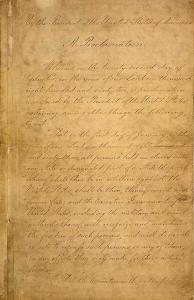
emancipation proclamation

BY THE PRESIDENT OF THE UNITED STATES OF AMERICA:

A Proclamation

Whereas, on the twenty-second day of September, in the year of our Lord one thousand eight hundred and sixty-two, a proclamation was issued by the President of the United States, containing, among other things, the following, to wit:

That on the first day of January, in the year of our Lord one thousand eight hundred and sixty-three, all persons held as slaves within any State or designated part of a State, the people whereof shall then be in rebellion against the United States, shall be then, thenceforward, and forever free; and the Executive Government of the United States, including the military and naval authority thereof, will recognize and maintain the freedom of such persons, and will do no act or acts to repress such persons, or any of them, in any efforts they may make for their actual freedom.

That the Executive will, on the first day of January aforesaid, by proclamation, designate the States and parts of States, if any, in which the people thereof, respectively, shall then be in rebellion against the United States; and the fact that any State, or the people thereof, shall on that day be, in good faith, represented in the Congress of the United States by members chosen thereto at elections wherein a majority of the qualified voters of such State shall have participated, shall, in the absence of strong countervailing testimony, be deemed conclusive evidence that such State, and the people thereof, are not then in rebellion against the United States.

Now, therefore I, Abraham Lincoln, President of the United States, by virtue of the power in me vested as Commander-in-Chief, of the Army and Navy of the United States in time of actual armed rebellion against the authority and government of the United States, and as a fit and necessary war measure for suppressing said rebellion, do, on this first day of January, in the year of our Lord one thousand eight hundred and sixty-three, and in accordance with my purpose so to do publicly proclaimed for the full period of one hundred days, from the day first above mentioned, order and designate as the States and parts of States wherein the people thereof respectively, are this day in rebellion against the United States, the following, to wit:

Arkansas, Texas, Louisiana, (except the Parishes of St. Bernard, Plaquemines, Jefferson, St. John, St. Charles, St. James Ascension, Assumption, Terrebonne, Lafourche, St. Mary, St. Martin, and Orleans, including the City of New Orleans) Mississippi, Alabama, Florida, Georgia, South Carolina, North Carolina, and Virginia, (except the forty-eight counties designated as West Virginia, and also the counties of Berkley, Accomac, Northampton, Elizabeth City, York, Princess Ann, and Norfolk, including the cities of Norfolk and Portsmouth[)], and which excepted parts, are for the present, left precisely as if this proclamation were not issued.

And by virtue of the power, and for the purpose aforesaid, I do order and declare that all persons held as slaves within said designated States, and parts of States, are, and henceforward shall be free; and that the Executive government of the United States, including the military and naval authorities thereof, will recognize and maintain the freedom of said persons.

And I hereby enjoin upon the people so declared to be free to abstain from all violence, unless in necessary self-defence; and I recommend to them that, in all cases when allowed, they labor faithfully for reasonable wages.

And I further declare and make known, that such persons of suitable condition, will be received into the armed service of the United States to garrison forts, positions, stations, and other places, and to man vessels of all sorts in said service.

And upon this act, sincerely believed to be an act of justice, warranted by the Constitution, upon military necessity, I invoke the considerate judgment of mankind, and the gracious favor of Almighty God.

In witness whereof, I have hereunto set my hand and caused the seal of the United States to be affixed.

Done at the City of Washington, this first day of January, in the year of our Lord one thousand eight hundred and sixty three, and of the Independence of the United States of America the eighty-seventh.

By the President: ABRAHAM LINCOLN

WILLIAM H. SEWARD, Secretary of State.
Battle of Stones River (Murfreesboro) – 150 Years Ago Today

Our park historian at Antietam often speaks of the “thousand mile front” of the Civil War in 1862. It is a point well stated. There is more to the War than simply a few miles of opposing forces here and there (especially in the East). But along that front were three major Union prongs: Burnside and the Army of the Potomac in Virginia, Grant in Mississippi, and William S. Rosecrans in Tennessee. We have written much this month upon the failure at Fredericksburg; and Grant (more specifically William T. Sherman’s expeditionary force of 32,000) was unsuccessful in Mississippi at the Battle of Chickasaw Bayou (the opening event of the Vicksburg Campaign – just 150 years ago this past week, 12/26 to 12/29).

The one success for the Union would be the Battle of Stone’s River – also known as “Murfreesboro,” so named after the nearby town in Tennessee – begun on this date of December 31, 150 years ago. Rosecrans’ Army of the Cumberland marched southeast out of Nashville on the 26th toward Confederate General Braxton Bragg’s Army of Tennessee, meeting him ultimately on the shores of the Stones River.

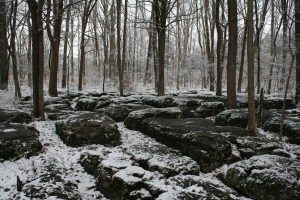
Slaughter Pen at Stones RiverThe battle opened at dawn on the 31st with a savagely successful attack by Bragg’s men upon the Union’s right flank. Preventing a total disaster was Philip Sheridan who organized a defense in a thicket of trees known hence as “the slaughter pen.”

Errant reports were that Rosecrans was retreating on the 1st of January. But the following day (the 2nd) would actually see reinforcements soon joining the reformed Union lines. That afternoon, General John Breckinridge’s division was ordered by Bragg to secure a hill in the rear of the Union position – with a view toward using it as an artillery base. The movement would need to be accomplished across open grounds in the face of cannon fire, and Breckenridge protested the command. Nonetheless it was ordered, and the fears of Breckenridge were realized in the destruction of his forces. Bragg was thereby obliged to retreat from the field.

  • Confederate officers protested bitterly about their distaste for Bragg, desiring his removal … all of which yielded deleterious effects upon the army into the summer.
  • Control of Middle Tennessee was lost to the Confederates for the duration of the War.
  • The strategic Union victory was one bright spot in an otherwise dismal winter for the Northern cause.
  • Stones River produced the highest percentage of casualties on both sides of all the major battles of the Civil War. For the Union, losses totaled about 13,000 of the 41,400 engaged; and for the Confederates about 12,000 of 35,000 engaged.

Visitors to Antietam 2012

2012 will go down as a great year for visitors to the Antietam Battlefield and Washington County, Maryland.

An article in our local newspaper, the Herald-Mail, gave statistics relative to tourism in our community. And our good friend Tom Riford – the president and CEO of the Hagerstown-Washington County Convention and Visitors Bureau – said that “Antietam National Battlefield had a major spike due to the sesquicentennial, including about 50,000 people visiting the battlefield the weekend leading up to the anniversary in September … During the year, they’ll have about 350,000 that go into the visitor center at Antietam and a total of about 900,000 that’ll go through all the park.”  The entire article may be found HERE.

Our Antietam Battlefield Guides organization tallied over 800 tours this year, the most ever. I personally met with and hosted families or groups a total of 63 times.

We believe this will all continue to grow, as the sesquicentennial of the Civil War moves through several more years until the spring of 1865. But the War is an item of timeless interest – even-numbered celebrations or not.

Of course this new year of 2013 will especially mark the 150th of the Battle of Gettysburg. We anticipate that many folks will come – as they often do – not only to that incredible field in Pennsylvania, but also to the nearby (and dare I say better preserved??) field at Antietam. A number of other local, smaller battles associated with the Gettysburg Campaign will be featured this year as well. Among these will be commemorations surely for Monterrey Pass, Hagerstown, Funkstown, and Williamsport.

The last of these will be especially interesting. The town of Williamsport has been building over several years toward a large celebration this year. This will be the week after Gettysburg, remembering the occasion of the Confederate Army’s retreat and their perilous position in Williamsport – pinned against the swollen Potomac River with the threat of Union attack. I’ll be sure to write a good bit about this event, in that Williamsport has become over the past 18 years essentially my home town.

So if you are an out-of-town reader of Enfilading Lines, I encourage you to visit Antietam and arrange for one of our guides to connect with you and show you this incredible place. To book such a visit, please visit the web page for Antietam Battlefield Guides at www.antietamguides.com.

This winter picture of the turn of the Roulette Farm lane in the Sunken Road is from guide candidate Sharon Murray:

winter bloody lane

Christmas Day 1862 with the Army of the Potomac

I saw a holiday special TV program about Christmas traditions that spoke of how the most popular of all seasonal songs, “I’m Dreaming of a White Christmas,” became popular because of the millions of soldiers away from home in World War 2.  Indeed, it is a day that, as much as any, would cause someone far from home in the unpleasantness of a war environment, to ponder the sadness and distress of it all.

Here today is an interesting post from George Noyes’ War from the Inside. Again, it is so well-written that it is a simple mental picture to imagine the scenes penned by the junior officer. Beyond that, it is filled with several of my passions and opinions! It features a story of a footrace – and as a long-time runner and running coach, this tickles me! It is presented by Noyes in the illustrative style of a David and Goliath account.  And then the story of the day reports of the dissipation resultant from an overabundance of alcohol … well, that supports one of my lifetime contentions – that nothing really good comes from any of that “vile liquid.”

After this, little of note occurred in camp until Christmas. We had made ourselves as comfortable as we could with the materials at hand, which were not in super-abundance. The weather was what we were told was characteristic of Virginia winters … rather mild, slush and mud, with its raw, disagreeable dampness being the prevailing conditions. It was exceedingly trying to our men, and many, in consequence, were on the sick list.

My diary notes that on Christmas day we actually had a little sunshine, and that by way of adding good cheer to the occasion a ration of whiskey was issued to the men. The ration consisted of a gill for each man. Each company was marched to the commissary tent, and every man received his gill in his cup or drank it from the measure, as he preferred. Some of the men, who evidently were familiar with the intricacies of repeating in ward elections, managed in various ways to repeat their rations of this vile stuff until we had a good deal more than a gill of whiskey’s worth of hilarity in camp. However, the noise was winked at, believing it would soon subside and pass off. All drills were suspended and the men were allowed passes freely out of camp, being required to be in quarters promptly at taps. The officers passed the day visiting and exchanging the compliments of the season. The wish for a “Merry Christmas” was about all there was to make it such. I remember our bill of fare for Christmas dinner consisted of boiled rice and molasses, “Lobskous” and stewed dried apples. The etymology of the euphonious word “Lobskous” I am unable to give. The dish consisted of hardtack broken up and thoroughly soaked in water, then fried in pork fat. I trust my readers will preserve the recipe for a side dish next Christmas.

4thInfMarker2001.0075The day was not without its fun, however. Among other things, an impromptu foot-race was gotten up between the Fourth New York and our regiment. <The 4th NY fought at Antietam as the first wave of attack upon Bloody Lane – directly in front of the most sunken portion between the Roulette Farm Lane and the current tower.> The former regiment, with which we were now brigaded, was from New York City, and in its general make-up was decidedly “sporty.” They had in their ranks specimens of almost all kinds of sports, such as professional boxers, wrestlers, fencers, and runners. One of the latter had been practicing in the morning, and some of our boys had remarked that “he wasn’t much of a runner,” whereupon they were promptly challenged to produce a man who could beat him, for a cash prize of twenty dollars in gold. Win or lose, our fellows were not to be bluffed, and so promptly accepted the challenge. Back they came to camp with their “bluff,” to look up a man to meet this professional. So far as our men were concerned, it was another case of the Philistine defying the armies of Israel. Where was our David? All hands entered into the fun, from the colonel down. The race was to be a one-hundred-yard dash from a standing mark. We found our man in Corporal Riley Tanner, of Company I. <Civil War records show him listed rather as a private, single, and from a railroading background.>  He was a lithe, wiry fellow, a great favorite in his company, and in some trial sprints easily showed himself superior to all of the others. He, however, had never run a race, except in boys’ play, and was not up on the professional tactics of such a contest. It was decided that the affair should take place at five o’clock P.M., on our regimental front, and should decide the championship of the two regiments in this particular. The course was duly measured and staked off, and was lined on both sides by a solid wall of the men, nearly our whole division being present, including most of the officers. If the championship of the world had been at stake, there could hardly have been more excitement, so much zest did every one put into it. On the minute, the Goliath of the bloody Fourth appeared, clad in the most approved racing garb. He was a stockily built young Irishman, and looked decidedly formidable, especially when our poor little David appeared a moment later, with no other preparation than his coat and cap off and pants rolled up. Nevertheless, our boys thoroughly believed in him, and we all gave him a rousing cheer. The signal was given and away leaped our little champion like a frightened deer, literally running away from the professional from the start and beating him leisurely in the end by more than a dozen feet. Great was the furor which followed. The victor was carried on the shoulders of his comrades of Company I triumphantly back to his quarters, and afterwards through all the company streets, the victim of an immense popularity.

Corporal Tanner, scarcely beyond his teens, was a good, brave, and true young man, popular with his comrades and faithful in all his duties. Was this little race, so short and gloriously won, prophetic of his life’s brief course? He came home to survive but a few years, and then die of injuries received in the service. He was as much a sacrifice upon the altar of his country as if he had been killed in battle. He was long ago laid to rest in a soldier’s grave. But he still lives in the hearts of his comrades.

Well, to get back to Christmas. After the foot-race the men were given free rein until ten o’clock P.M., and passes out of camp were not required. As the evening wore on, it became evident that John Barleycorn had been getting in some extra work, from the character of the noise emanating from the company streets …

The account goes on to speak of fighting and conflicts that broke out that involved a complicated and difficult relationship between officers. I know I am sooooo very out of step with the bulk of people on the issue of alcohol. But as a student of history, it is not possible to read very deeply into any era of our country’s past without soon coming upon accounts of how an abuse of drink led to difficulties, problems, and even deaths. But, enough of that. If you’re reading this on the 25th, the best of holiday greetings to you.

Minolta DSC

This is from Harper’s in January of 1863

Winter Life in the Army of the Potomac

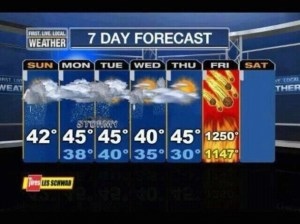
If you are reading this post – timed to go online one minute after the Mayan end of the world prediction – something good must have transpired. This date of December 21st is also the beginning of winter, and so the topic of this day seems appropriately fitting.Mayan-Weather-Forecast-630x472

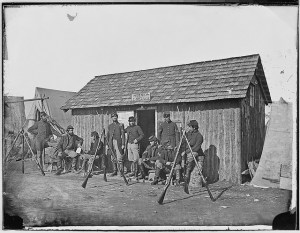
It may sound crazy, but the part of Civil War life that I think I would most dislike – perhaps more than the fighting itself – was the experience of winter quarters. Unable to navigate easily on alternately frozen and muddy roads, the armies in the east – as in Virginia particularly – would largely settle into winter living arrangements. The encampments became virtual towns, as the soldiers gave their full energies into making life as comfortable as possible while essentially living outside for the winter.

I’ll return here to some of my oft-referenced writers for a description of winter life over the cold months of 1862-1863. Here are three brief excerpts:

1.  From Frederick Hitchcock – of the 132nd PA and his book “War from the Inside” …

The weather was now getting very cold, and we set about making ourselves as comfortable as possible in camp. The men were allowed to fix up their tents as best they could without much regard for architectural beauty or regularity. Some of them dug cellars four to five feet deep, made puncheon floors, that is, floors made of split logs smoothed off and laid the flat side up, whilst the sides were made of logs plastered up with mud. Mud fireplaces were made with old barrels for chimneys. The roofs were canvas, of course, but fairly waterproof.

A favorite bit of horse-play of the men at this time was to watch when the occupants of some tent were having a good time, and smoke them out by throwing a wet blanket over the top of their barrel chimney. In about a second the smoke would be almost dense enough to suffocate, and every fellow would pile out and hunt for the culprit. Woe be unto him if they found him. A favorite ruse on the part of the culprit was to plunge into his tent and be placidly snoring when the victims began their hunt. Sometimes the simulation would be too sonorous, and give him away, and then he had trouble on hand for the next hour. The ingenuity of these sons of Belial in their pranks was beyond description. I have laughed until absolutely exhausted many a time. How did I know so much about them? Well, I had two of the liveliest of these boys in my office as clerks, and, as they were generally in the fun, I was kept posted, and to tell the truth, as long as it did not seriously transgress, and there was fun in it, I knew nothing about it “officially.” … I speak of these things, for they were the oases in army life and drudgery. Except for them it would have been unendurable. Seldom were things so bad but that some bit of raillery would relieve the strain and get up a laugh, and everybody would feel better.

4166105425_f666a62a33_zI have spoken of the men’s winter-quarters. We officers had our wall tents, and had them fixed up with puncheon floors also, and sheet-iron stoves, so that as long as we kept a fire burning all were fairly comfortable. But wood fires would last but an hour or so without replenishing, and so during the night we had great difficulty in keeping warm. Some of the coldest nights my clerks and myself took turns in keeping up our fire. I rather prided myself on the construction of my bed. It was made of two springy poles held in place by crotched sticks driven into the ground. On the poles nailed crosswise was a bottom made of barrel-staves, the hollow side down, and on these was laid a bed of hay, kept in place by some old canvas sacking. On cold nights the only article of clothing we took off was our shoes or boots. Then rolling ourselves in our blankets, with gum blanket outside tucked well around our feet and the whole surmounted with our overcoats, we managed to sleep pretty well. These puncheon floors were all the proceeds of foraging. No lumber of any kind was furnished by the government. The men cut the trees and split the logs wherever they could find them. Most of them were <brought> into camp anywhere from one to four miles.

2.  From George Noyes – Doubleday’s staff – from his book “The Bivouac and the Battlefield …

As the troops had now abundant leisure, they exhibited a good deal of taste and skill in the building and decoration of their huts. A good wide fireplace at one end, bunks for beds, carpets of cedar twigs, cracker-box tables, and pork-barrel armed chairs, with neat racks for their muskets and other equipments, made these winter houses almost luxurious. The rebels had passed the last winter here, and left behind them two villages of substantial log houses, to which our boys now fell heirs, and valued them accordingly.

From A.P. Smith – Historian of the 76th New York …4166984372_86d9e9060d_z

(near Belle Plain) Camp was regularly laid out, and building again commenced, when another march of two miles up the river brought them to a thick, tangled wood. This proved to be the real “winter quarters” which the men had so much desired. They set briskly at work, and soon a city of log houses, surmounted with canvas, rewarded their industry. The troops were now hid away in the woods which cover the rough and broken grounds lying between Aquia Creek, Belle Plain and Fredericksburg.

A vast change had come over the men since they first went into camp at Meridian Hill, less than a year before. Then the cloth tents went up awkwardly, the smoke of their sheet iron stoves wonderfully disturbed the equanimity of their owners, and fresh bread was considered a necessity. Now, stoves were not thought of, but the men were evidently as much at home, if not as happy, while sitting around their little fireplaces in their log huts, as when they used to sit in their quiet Northern homes on a winter evening. And hard tack had become a fixed institution.

The men were, for the first fortnight engaged in erecting their tents, and clearing the drill grounds, policing and preparing generally for winter. Then came the drill, interspersed with court martials, until the soldiers, even in winter quarters, found their time well employed.

Between my hatred of cold, and a terrible life-long case of attention deficit disorder, I would have never been able to stand such a winter ordeal! Just one more thing to be impressed about Civil War guys!

Blog Anniversary – One Year Ago Today

The Enfilading Lines Blog was born a year ago today on December 17, 2011.  And I must say, this has been a lot of fun. I hope those who read gain something from it; but this is like anything else where there is research and preparation for the a presentation either verbal or written, the person doing it is the one who learns the most.

This is written to especially connect with the Antietam Battlefield Guides organization – to be both a connection with guests either past or future … and along the way, I hope many others will enjoy it. It is written to be accessible and sensible to the general public who have a basic understanding of the Civil War, yet I would hope it is attractive as well to more serious students of our troubled history. At times, the blog turns a bit academic and geeky, but overall I trust it to be immensely readable.

Now for some anniversary celebration fun, and to prove I’m not totally geeky (although the following may definitively prove that I am indeed), I want to share a few paragraphs about the single blog posting out of the 164 of the past year that was – BY FAR – the most hit upon. WARNING: This Civil War blog is now going to start talking about vampires.

Most Popular Blog Post 2012: The Burial of Willie Lincoln (2/28/12)

Let me begin by telling you that I may well be the most illiterate person you know when it comes to pop culture. I seldom go to movies; I don’t listen to pop music or much of any music; I only watch news and sports on TV. I often need commercials explained to me by my boys to help me understand why it was funny or who was being lampooned.

Over this year, I have seen one of my blogs in particular have more than twice as many hits as any other. It was in my series of “150 Years Ago Today” postings – talking about the day that Abraham and Mary Lincoln buried their dear little boy Willie. Yes, a sad and compelling story – well written by me, I might add! But why would this one blog post be sooooooo beyond all others?

I recently had occasion in a church staff meeting to mention this phenomenon. The youngest of those in the room – a very gifted graphics design artist – looked at me and said, “Well, of course; that is related to the movie Abraham Lincoln: Vampire Hunter.  The death of Willie is part of the film.”

Silly me! Here I thought it was because of something so noble as an interest in HISTORY!  But no, it is actually all about vampires and people thinking about such, along with the movie’s portrayal of Willie being killed by a vampire assassin on the lawn of the White House!

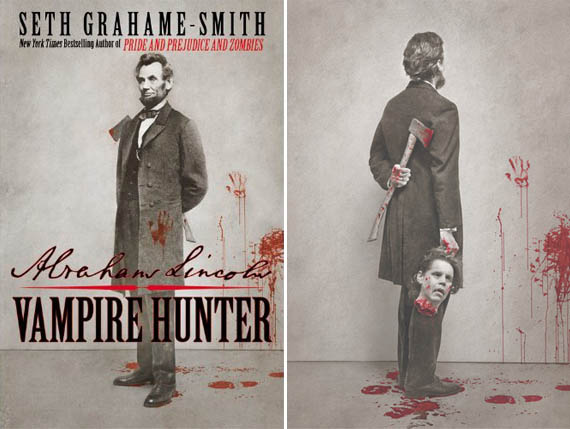
Among themes of this movie:  Abraham Lincoln becomes a vampire hunter at a young age. He becomes an abolitionist when he realizes that slavery makes it possible for vampires to buy their victims, thus to end slavery is to end the scourge of vampires. The First Battle of Bull Run involves Union troops being attacked by Confederate vampires. Leaderless Confederate vampires stage a final, massive assault against the Union, and are met by troops armed with their silver weapons; and the Union soldiers destroy the vampires and eventually win the war.

I am tempted to say that you can’t make up stuff like this, but, someone did! The 2012 film was based upon a 2010 novel of the same name by Seth Grahame-Smith. The film has grossed at the box office more than 114 million dollars more than has my blog.

OK… enough of that.

Fredericksburg: A Field upon which a Chicken could not Live

Being an Army of the Potomac guy most especially, I often fail to think or read very long about the perspective from “the other side.” So, as I wrap up some thoughts on the Battle of Fredericksburg, I’ll conclude with some Confederate perspectives and statements.

It was on December 11th that the Federals began to push their pontoon bridges across the Rappahannock, finding the sniping of union-artillery-on-stafford-heights-1212Barksdale’s men from the city of Fredericksburg to be especially severe. The Union artillery barrage upon the city of about 150 guns over 150 minutes wrought great destruction to buildings, as walls fell and fires were ignited. But Barksdale’s men re-emerged, being met by a Federal amphibious assault and house to house fighting. Barksdale asked in a message to Longstreet if the men should douse the fires, but Longstreet simply replied, “You have enough to do to watch the Yankees!”

The Confederate position in front of Marye’s Heights was of extraordinary strength, replete with pits and stone walls beyond a rising open plain. Lieutenant Colonel Porter Alexander described the artillery arrangement to Longstreet, saying, “General, we cover that ground now so well that we will comb it as with a fine-tooth comb. A chicken could not live on that field when we open on it.”  After the battle he would add, “I never conceived for a moment that Burnside would make his main attack right where we were the strongest – at Marye’s Heights.

The day of the battle opened with a thick fog, and it was toward late morning before it lifted and the conflict opened. In advance of the action, Stonewall Jackson and Longstreet met briefly, with Pete jokingly saying, “Are you not scared by the file of Yankees you have before you down there?”  Working up about as much humor as Jackson was capable, the grim commander said, “Wait till they come a little nearer and they shall either scare me or I’ll scare them.”

With wave after wave of Union troops falling before Longstreet’s lines, one had to wonder how long this could continue. Lee said to Longstreet, “General, they are massing very heavily and will break your line, I am afraid.”  But Longstreet’s reply was, “If you put every man now on the other side of the Potomac on that field to approach me over the same line, and give me plenty of ammunition, I will kill them all before they reach my line. Look to your right; you are in some danger there but not on my line.”

Longstreet issued a congratulatory communication to his men five days after the battle, honoring them for their stand, saying, “you stood by your post and filled the field before you with slain.” Beyond that, he also solicited financial contributions from his troops for the residents of Fredericksburg.

Of course, the most famous of quotes from this day was that of Robert E. Lee, who said, “It is well that war is so terrible, or we should grow too fond of it.”

The city of Fredericksburg as seen from Marye's Heights

The city of Fredericksburg as seen from Marye’s Heights

LOST COLORS of the 132nd PA RECOVERED

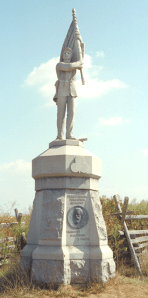
Yesterday, on the actual sesquicentennial date of the Battle of Fredericksburg, I wrote about the attack of the 132nd PA upon Marye’s Heights. Through the 132nd PA monument at Antietam – portraying their action at Fredericksburg – these two major conflicts of the Army of the Potomac are linked together.

The story of the monument is a depiction of a scene at Fredericksburg where the regiment’s colors were in continuous peril of falling to the ground – every person who carried them being a victim of the horrific frontal fire from the Confederate high ground position. The last to grasp the staff was Frederick Hitchcock, the author of the turn of the century book entitled “War from the Inside.” He begins a next chapter by saying, “In addition to our heavy loss of men at Fredericksburg was the loss of our colors, the stand whose staff had been shot away in my hand as described in a former chapter.”

Of course, no unit wanted to see their colors captured by the enemy. This was the ultimate shame. But here is the story as to what actually happened…

“It can be well understood that we felt very keenly the loss of our flag, although we knew that it had been most honorably lost. It was known to have been brought off the field in the night by Corporal William I. D. Parks, Company H, one of the color-guard, who was mortally wounded, and left by him in a church used as a temporary hospital. Corporal Parks was removed to a hospital at Washington, where he died shortly afterwards, and the colors mysteriously disappeared. The act of this color-bearer in crawling off the field with his colors, wounded as he was to the death, was a deed of heroism that has few parallels. We made every effort to find the flag, but without success, and had concluded that it must have been left in Fredericksburg, and so fallen into the hands of the enemy …”

DSC_0208In Samuel P. Bates’ History of Pennsylvania Volunteers, he lists this person as a William J.D. Parks of Company H – raised from Columbia County, PA. The listing indicates him as wounded indeed on 12/13 and dying in Washington on 12/28. It further states that he was buried in the Military Asylum Cemetery. This is now the Soldiers Home National Cemetery – the location of the Lincoln Summer Cottage, about which you may read my post from March of this year by clicking HERE. The picture is of this cemetery, and the next time I visit this location, I am going to search out the actual grave of Mr. Parks. Let me go back to the story, but at the end I’ll include why this name is especially interesting to me personally.

Hitchcock continued the account:  “… a couple of weeks after the battle, on returning from a ride down to Falmouth, I noticed a regiment of our troops having dress parade. I rode near them, and my attention was at once attracted to the fact that they paraded three stands of colors, a most unusual circumstance. My suspicion was at once aroused that here were our lost colors. Riding closer, my joy was great on recognizing our number and letters on their bullet-and shell-tattered folds, “132 P. V.” Anger immediately succeeded my joy as I saw that our precious colors were being paraded as a sort of trophy. This flag, under whose folds so many of our brave men had fallen, and which had been so heroically rescued from the field, exhibited to the army and the world as a trophy of the battle by another regiment! It was, in effect, a public proclamation of our cowardice and dishonor and of their prowess in possessing what we had failed to hold and guard, our sacred colors. It stung me to the quick. I do not remember ever to have been more beside myself with anger.”

Hitchcock wrote extensively as to how this caused quite a stir – as this regiment was parading them as from a runaway regiment who left their colors on the field. A court of inquiry was formed, and along the way no less than Generals O.O. Howard and William French were involved in the rightful restoration of the colors to the 132nd PA.

Personal Note:  I grew up in the Lehigh Valley of Pennsylvania and in the portion of it connecting to western New Jersey (Easton/Phillipsburg). I was adopted as a child and never knew my natural father’s side whatsoever beyond a name and a handful of stories. His family name is “Parks.”  I’ve researched this extensively in the past year, and certainly there were ancestors from this William Parks’ portion of Pennsylvania in the family line. It is quite remote that this particular Parks who took the colors off the field is some sort of ancestor of mine, but it could be possible I suppose. My great-grandfather’s father would be of Civil War age, but I’ve been unable to find out exactly who he is.

Another Note:  Early in the history of the Antietam Battlefield Guides, a writer from the Washington Times came and took a tour with me in preparation for what turned out to be a lengthy article promoting the 145th anniversary. It was well-written, but she had a few details confused. One of these was of the story of today’s post – which seemed to capture her imagination, even if she did have it as occurring at Antietam rather than Fredericksburg.

The Attack of the 132nd PA upon Marye’s Heights

A Personal Account of Frederick Hitchcock of the 132nd PA Regiment – 150 Years Ago Today

A favorite story I tell guests at Antietam (when time permits) is the connection of the 132nd PA and their monument to the Battle of Fredericksburg. And so it will be great fun today to also include it in this blog – as this event happened 150 years ago on this date!

The 132nd PA was a 9-month regiment that had their baptism of fire at Antietam while assaulting the Sunken Road. Their second major conflict was at Fredericksburg, with a third and final participation at Chancellorsville before being mustered out upon expiration of time of enlistment. For their service, the Pennsylvania monument commission honored them with a memorial at Antietam – at their first place of battle – but with a sculpture depicting an event that actually occurred at Fredericksburg. That event is what I want to specifically share with you today.

OLYMPUS DIGITAL CAMERAThe individual on the monument is Frederick Hitchcock of Scranton, PA.  He wrote his war-time reminiscences in a book entitled “War from the Inside.”  A colorful work for sure – I’ve quoted it on other occasions in this Enfilading Lines blog.

As always when I include excerpts, his writing is in italics, whereas my writing and comments are [included in this manner]. I am putting together a series of select paragraphs, though the original contains more information than what I am including today. We’ll pick up the story where Hitchcock writes about returning from a sick leave just in time to rejoin his men as they enter into the Battle of Fredericksburg.

The next morning [December 13th] I picked up an old “crow-bait” of a horse, the only four-footed transportation possibly obtainable, and started for Fredericksburg to find my regiment. The only directions I had about disposing of this frame of a horse was to “turn the bones loose when you get through with him.” He could go only at a snail’s pace, and when I reached Fredericksburg it must have been nine o’clock. I crossed the pontoon bridge, which had been laid the morning before under circumstances of the greatest gallantry by Howard’s division of our corps.

[Through a strange and complicated set of circumstances, Hitchcock was able to find and reconnect quickly with his regiment.]

About ten o’clock the command “Forward” was sounded, and our brigade moved out towards Marye’s Heights. Some idea of the topography of Fredericksburg and its rear I find is necessary to an understanding of what follows. Marye’s Heights, which encircle the city back some five hundred yards, are the termination of a plateau which rises from one hundred and fifty to two hundred feet in an abrupt terrace from the plain upon which the city stands. These heights form a half-circle from the river above to a point below the city some little distance from the river, and are from a mile to a mile and a half long and are most admirably adapted for defensive purposes. The rebel batteries, numbering at least one hundred guns, were massed on these heights, and covered not only every street leading out from the city, but every square foot of ground of the plain below. A third of the way down the terrace was an earthwork filled with infantry, whilst at its foot ran the famous stone wall extending southward from the cemetery above the city, and was continued by an earthwork around the whole circle. Behind this stone wall was massed a double line of Confederate infantry. To enter either street leading out to those heights was to face the concentrated fire of that mass of artillery and the deadly work of those three lines of infantry. Yet that was just what we had before us.

Our division (French’s) led the assault. Our regiment brought up the rear of our brigade column. As each regiment turned into the street leading out, it took up the run to cover this exposed ground as quickly as possible. Lieutenant-Colonel Albright was leading our regiment and I was by his side. We passed rapidly up the street, already covered with the dead and wounded which had fallen from the regiments that had preceded us, until we reached the embankment of a railroad, which was nearly parallel with the enemy’s works. A temporary halt was made here preparatory to moving forward in line of battle.

Turning to see that our men were in position, I was amazed to find that we had but one company with us. It was my duty as adjutant to go back and find and bring up the balance of the regiment. The distance was about four hundred yards. I can truthfully say that in that moment I gave my life up. I do not expect ever again to face death more certainly than I thought I did then. It did not seem possible that I could go through that fire again and return alive. The grass did not grow under my feet going back. My sprinting record was probably made then. It may be possible to see the humorous side at this distance, but it was verily a life and death matter then.

[Hitchcock found the men in the city, and he records the challenges of sorting them out while shells were killing men all around them, yet quickly to the front they charged to rejoin those in the lead.]

Proceeding now with my narrative, we were evidently in a fearful slaughter-pen. Our men were being swept away as by a terrific whirlwind. The ground was soft and spongy from recent rains, and our faces and clothes were bespattered with mud from bullets and fragments of shells striking the ground about us, whilst men were every moment being hit by the storm of projectiles that filled the air. In the midst of that frightful carnage a man rushing by grasped my hand and spoke. I turned and looked into the face of a friend from a distant city. There was a glance of recognition and he was swept away. What his fate was I do not know.

That same moment I received what was supposed to be my death wound. Whilst the men were lying down, my duties kept me on my feet. Lieutenant Charles McDougal, commanding the color company, called to me that the color-guard were all either killed or wounded. We had two stands of colors, the national and State flags. These colors were carried by two color-sergeants, protected by six color-corporals, which made up the color-guard. If either sergeant became disabled the nearest corporal took the colors, and so on until the color-guard were down.       

This was the condition when this officer called to me to replace these disabled men, so that the colors should be kept flying. He had one flag in his hand as I approached him, and he was in the act of handing it to me when a bullet crashed through his arm and wrist, spattering my face with his warm blood. I seized the staff as it fell from his shattered arm. The next instant a bullet cut the staff away just below my hand.

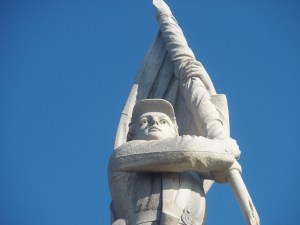
132nd Monument at Antietam[This is the exact moment depicted in the 132nd PA monument at Antietam. I tell guests to look closely at it and to tell me what seems odd and out of proportion. The obvious answer is that the flag staff is far too short. I then direct their attention to the feet of Mr. Hitchcock, where one can see (against the backdrop of the sky) that the shot-off portion of the staff is included in the monument. And the rest of the story is fascinating … ]

An instant later I was struck on the head by the fragment of a shell and fell unconscious with the colors in my hand. How long I remained unconscious I do not know, possibly twenty minutes or more. What were my sensations when hit? I felt a terrific blow, but without pain, and the thought flashed through my mind, “This is the end,” and then everything was black. I do not remember falling. It takes time to write this, but events moved then with startling rapidity. From the time we went forward from the embankment until the line was swept back could have been but a few minutes, otherwise all must have been killed.

When I revived I was alone with the dead and wounded. The line of battle had been swept away. The field about me was literally covered with the blue uniforms of our dead and wounded men. The firing had very perceptibly decreased. I had worn into the battle my overcoat, with my sword buckled on the outside. I had been hit on the left side of my head, and that side of my body was covered with blood down to my feet, which was still flowing. My first thought was as to my condition, whether mortally wounded or not. I was perceptibly weakened from loss of blood, but lying there I could not tell how much strength I had left. I did not dare move, for that would make me a target for the guns that covered that terrible wall, the muzzles of which I could plainly see.

Many of them were still spitting out their fire with a venom that made my position exceedingly uncomfortable. What should I do? What could I do? To remain there was either to bleed to death or be taken prisoner and sent to Libby, which I felt would mean for me a sure lingering death. To make a move to get off the field would draw the fire of those guns, which would surely finish me. These were the alternatives.

I carefully stretched my legs to test my strength, and I made up my mind I had enough left to carry me off the field, and I resolved to take my chances in the effort. I determined that I would zigzag my course to the rear so as not to give them a line shot at me. So getting myself together I made a supreme effort and sprang up and off in jumps, first to the right, then to the left. As I expected, they opened on me, and the bullets flew thick and fast about me. The first turn I got a bullet through my right leg just above the ankle. It felt like the stinging cut of a whip and rather accelerated my speed. About fifty yards back was an old slab fence to my right, and I plunged headlong behind that, hoping to find shelter from those bullets. I fell directly behind several other wounded men, two of whom rolled over dead from bullets that came through the slabs and which were probably aimed at me. This flushed me again, and by the same zigzag tactics I succeeded in getting back to the railroad embankment, where, to my great joy, I found Colonel Albright with what remained of the regiment. Colonel Albright grasped me in his arms as I came over, with the exclamation, “We thought you were killed.” Sergeant-Major Clapp told me that he had rolled me over and satisfied himself that I was dead before they went back.

[In fact, Hitchcock lived for a long time after the War – writing these reminiscences as a series of articles around the turn of the century.  My next post will tell the story of the colors that fell when Hitchcock hit the ground between the contending armies.]

A Fredericksburg Letter from Clara Barton

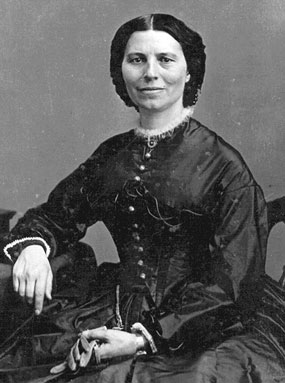
One of the major characters at the Battle of Antietam is Clara Barton. It was here that she really made a mark that causing her to become well-known for her assistance to the soldiers in the Civil War – earning her the name as “the Angel of the Battlefield.” And on the 100th anniversary of the Battle in 1962, the Red Cross placed a monument on the Poffenberger Farm that spoke of her service there. The advance being made in medical care is one of the major interpretive themes we share with guests who come to Antietam.

Clara-Barton_1Clara Barton was an excellent communicator and prolific writer. Here today is a letter that Clara wrote to a cousin just prior to the Battle of Fredericksburg – exactly 150 years ago on December 12th.  I have this letter in my notebook I carry on tours. I usually do not have time to include it on the typical tour, unless I have been made aware that the guests desire a special emphasis on her life.

This is really a great letter that takes you right there with her in those creepy and dark hours just before a major battle.

Head Quarters 2nd Div.
9th Army Corps-Army of the Potomac
Camp near Falmouth, Va.
December 12th, 1862 – 2 o’clock A.M.

My dear Cousin Vira:

Five minutes time with you; and God only knows what those five minutes might be worth to the many doomed thousands sleeping around me.

It is the night before a battle. The enemy, Fredericksburg, and its mighty entrenchments lie before us, the river between – at tomorrow’s dawn our troops will assay to cross, and the guns of the enemy will sweep those frail bridges at every breath.

The moon is shining through the soft haze with a brightness almost prophetic. For the last half hour I have stood alone in the awful stillness of its glimmering light gazing upon the strange sad scene around me striving to say, “Thy will Oh God be done.”

The camp fires blaze with unwanted brightness, the sentry’s tread is still but quick – the acres of little shelter tents are dark and still as death, no wonder for us as I gazed sorrowfully upon them. I thought I could almost hear the slow flap of the grim messenger’s wings, as one by one he sought and selected his victims for the morning. Sleep weary one, sleep and rest for tomorrow’s toil. Oh! Sleep and visit in dreams once more the loved ones nestling at home. They may yet live to dream of you, cold lifeless and bloody, but this dream soldier is thy last, paint it brightly, dream it well. Oh northern mothers, wives, and sisters, all unconscious of the hour … would to Heaven that I could bear for you the concentrated woe which is so soon to follow, would that Christ would teach my soul a prayer that would plead to the Father for grace sufficient for you, God pity and strengthen you every one.

Mine are not the only waking hours, the light yet burns brightly in our kind-hearted General’s** tent where he pens what may be a last farewell to his wife and children and thinks sadly of his fated men.

Already the roll of the moving artillery is sounded in my ears. The battle draws near and I must catch one hour’s sleep for tomorrow’s labor.

Good night dear cousin and heaven grant you strength for your more peaceful and less terrible, but not less weary days than mine.

Yours in love,
Clara

Samuel Sturgis

Samuel Sturgis

** The kind-hearted general must have been Samuel Sturgis – judging from her location reference as with the 2nd Division of the 9th Corps. He had a wife and four children. Sturgis is also famous for one of the single best quotes of the War:  “I don’t care for John Pope one pinch of owl dung.”  He would survive the Civil War and fight in the Indian Wars – serving with Custer. And yes, the motorcycle-made-famous town of Sturgis, South Dakota is named after him. He is also sort of a local to our quad-state area around Antietam, having been born in Shippensburg, PA.